A Daily Cleaning Routine That Takes 15 Real Minutes
A daily cleaning routine that actually takes fifteen minutes has exactly six moves: make the beds, run the dishwasher at night and empty it in the morning, wipe the counters after dinner, do one timed ten-minute family pickup, move the laundry along, and clear the entry table. That’s it. Everything else — bathrooms, floors, dusting — belongs to a weekly day, not to today. The reason most “daily routines” secretly take an hour is that they smuggle in weekly work; the reason this one holds at fifteen minutes is that it refuses to.
The six moves, and when they happen
The trick isn’t the task list — it’s the anchoring. Each habit attaches to something that already happens every day, so the routine runs on the household’s existing motion instead of on willpower:
- Beds, at wake-up. Sixty seconds a bed, done by whoever slept in it. My five-year-old’s version is lumpy. Lumpy counts.
- Dishwasher: run at night, empty at breakfast. Emptying while the coffee brews means the sink stays usable all day, because dirty dishes have somewhere to go. An empty dishwasher is the whole secret to a clean kitchen.
- Counters, after dinner. Clear first, then wipe. Two minutes while someone else handles pajamas.
- The ten-minute pickup, before bath time. Timer on, everyone plays, everything visible goes home. The timer matters: it converts tidying from an open-ended sentence into a game with a finish line.
- Laundry moved along. Not necessarily washed — just moved: basket to machine, machine to dryer, dryer to folded. On wash day this step is the main event; other days it’s thirty seconds.
- Entry table cleared. Mail, school papers, pocket contents — the daily paper tide lands in one place and gets sorted before it metastasizes.
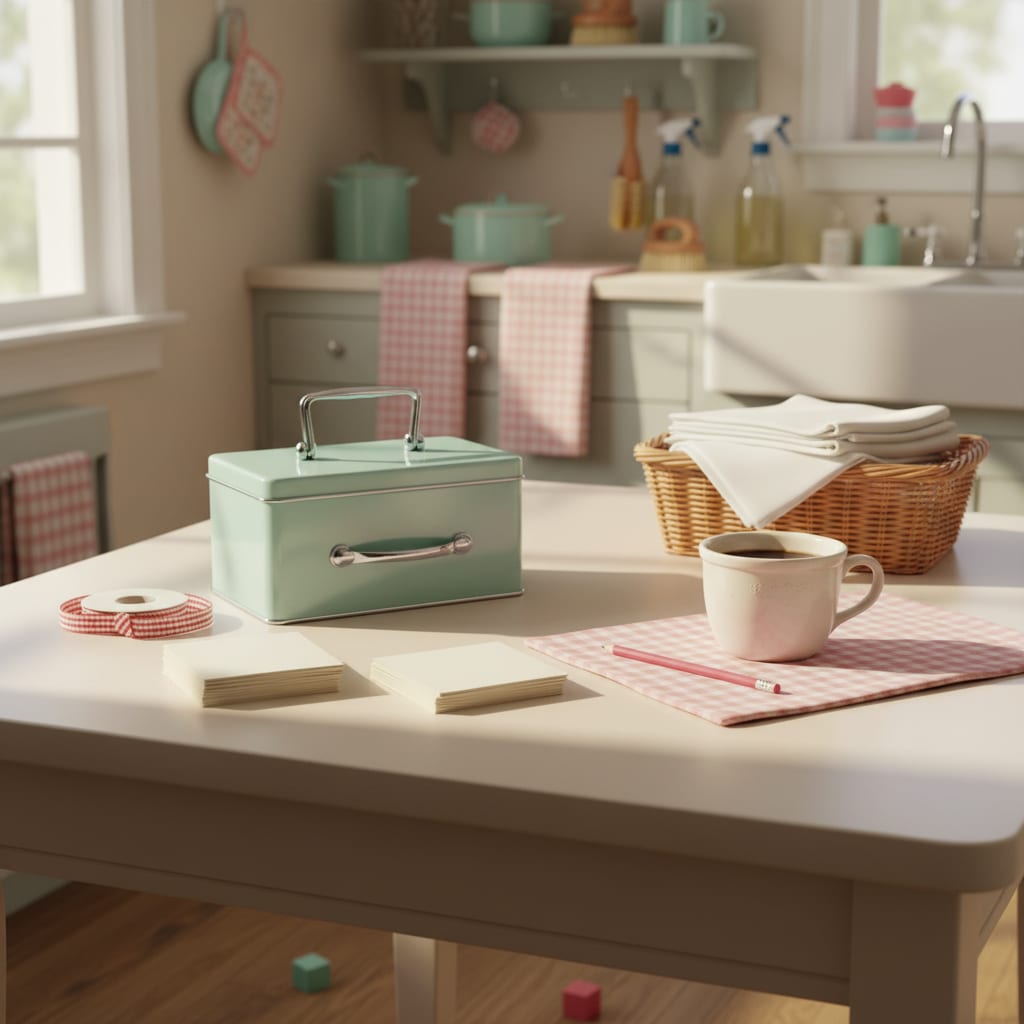
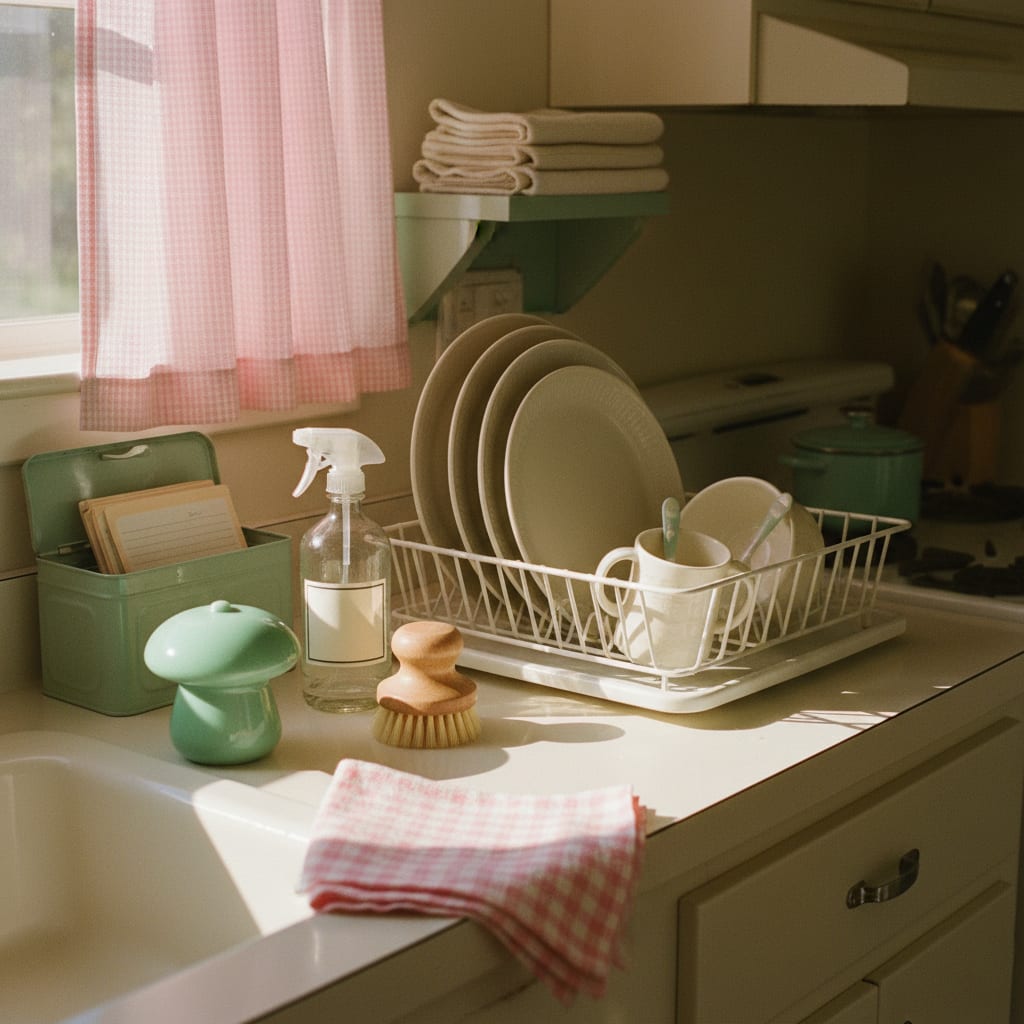
The card in the tin file says "morning work" — beds aired and made, dishes done, sink scoured, stoop swept, all before the day's real task began. A tidy baseline was the price of admission to the day, every day.
Same principle, machine-assisted: the dishwasher is the scoured sink, the pickup timer is the swept stoop, and "before the day begins" became "attached to breakfast and bedtime," because that's where a modern family's fixed points actually are.
Why fifteen minutes is enough
The daily routine’s job is not to clean the house — it’s to stop the house from compounding. Mess grows like interest: a cleared counter stays cleared with one wipe, but a counter left three days develops strata and needs twenty minutes and a spatula. The six moves each interrupt one compounding loop (dishes, laundry, floor clutter, paper), which is why fifteen minutes daily buys you more visible order than a two-hour weekend blitz. The deeper work still exists — it just lives on the weekly cleaning schedule, where each day has one job and the job stays small because the daily layer ran.
Making it survive small children
Give away every job a child can plausibly hold. The two-year-old delivers laundry to the machine with the gravity of a federal courier; the five-year-old owns her bed and the shoe basket. Their versions are worse than yours, and you will accept the worse version, because the alternative is doing six people’s baseline forever. Second rule: the routine runs at the anchors even on bad days — a fifteen-minute routine you do at 80% daily beats a perfect one you restart every other Monday. And on genuinely sunk days, do the dishwasher move only. The kitchen resets the tone of the whole house, and tomorrow’s routine starts from almost-zero instead of from archaeology.
The evening edge
Five of the six moves cluster around dinner-to-bedtime, which means the routine is mostly an evening shape. That’s deliberate: a baseline-clean kitchen and picked-up floor at 8pm is what makes tomorrow feel possible, and it’s the launch pad for the fuller Sunday reset that puts the whole house back to zero once a week. If you print one thing, print the six lines — they’re the daily card in the free printable cleaning schedule — and tape them inside a cabinet you open every morning.
FAQ: daily cleaning routines
What should a daily cleaning routine include?
Only the tasks that compound if skipped: dishes, counters, one general pickup, beds, laundry motion, and incoming paper. Bathrooms, floors and dusting don’t decay daily — schedule them weekly instead.
When is the best time to do a daily cleaning routine?
Attach tasks to existing fixed points rather than clock times: beds at wake-up, dishwasher at breakfast and bedtime, counters and pickup after dinner. Anchored habits survive schedule chaos; clock-time habits don’t.
How do I keep the house clean with a toddler at home?
Lower the bar to “baseline, twice a day” and run the pickup as a timed game. Toddlers undo continuously, so aim for reset points — after lunch, before bed — instead of a house that stays clean between them.
Is a 15-minute cleaning routine really enough?
For maintenance, yes — provided a weekly rhythm handles the real cleaning. The daily layer keeps compounding messes at zero; the weekly day-per-task schedule does the scrubbing. Each fails without the other.