Cleaning With Vinegar: What Works, What It Ruins
Plain white vinegar cleans well wherever the problem is mineral or greasy film — hard-water spots, kettle scale, foggy glass, sticky stovetop haze — and it should never touch natural stone, hardwood finishes, rubber gaskets, or anything recently bleached. That one sentence is most of what a century of vinegar folklore boils down to, and it’s the card my grandmother’s tin file gets both right and wrong: right that vinegar earns its keep, wrong that it’s good for everything. Here’s the honest map, tested in this house — what works, what it ruins, and the two safety rules that aren’t optional.
The safety rules first
- Never mix vinegar with bleach — the combination releases chlorine gas, which is genuinely dangerous, not “old wives’ tale” dangerous. Keep them in different rooms of your routine entirely.
- Don’t mix vinegar directly with hydrogen peroxide in one bottle — that makes peracetic acid, an irritant. Used separately, one after the other with a rinse between, they’re fine.
- Mixing vinegar and baking soda isn’t dangerous — it’s just mostly pointless. The fizz neutralizes both into salty water. Use them in sequence (baking soda scrub, vinegar rinse), not as a cocktail.
Where vinegar genuinely wins
Vinegar is a mild acid, so it excels exactly where the enemy is alkaline: mineral deposits and soap scum.
- Kettle, coffee maker, showerhead scale. Soak or run through diluted, rinse well. Nothing modern beats it by enough to matter.
- Glass and mirrors. Diluted roughly half-and-half with water, wiped with a flat-weave cloth like a flour-sack towel — streak-free without buying a blue liquid.
- Faucets and shower glass. Hard-water film wipes off with warmed vinegar and a little patience.
- Fabric softener replacement. A splash in the rinse compartment softens and helps rinse detergent residue — an old wash-day trick that pairs nicely with a proper laundry schedule, and one reason vintage linens survived decades.
- Microwave steam-clean. A bowl of half vinegar, half water, two minutes on high, then everything wipes off.
What vinegar quietly ruins
The acid that dissolves scale also dissolves the wrong things. Keep vinegar away from:
- Natural stone — marble, granite, limestone, travertine. Acid etches them permanently; the dull spot never buffs out.
- Hardwood floors and waxed wood. It dulls finishes over time. Soap-based cleaners are the old-fashioned answer there — that’s castile soap’s territory.
- Rubber gaskets and seals — dishwasher and washing machine door seals degrade with regular acid contact. Use it in those machines occasionally, not weekly.
- Cast iron and knife edges. Acid strips seasoning and pits fine edges.
- Phone, laptop and glasses coatings. Anti-glare and oleophobic layers are acid-sensitive.
- Grout, long-term. Occasional use is fine; constant strong vinegar slowly erodes cement-based grout lines.
The vinegar card in the file says, more or less, "windows, kettle, rinse water, and don't argue." It also says to use it on the parquet, which is how her hallway lost its shine — even the card file has errata.
Same bottle, narrower job description. Vinegar keeps the mineral-and-film beat — glass, scale, scum — and loses wood, stone and seals to soap-based cleaners. Tested on our own 1950s surfaces, some of which forgave us.
How to use it (dilutions and technique)
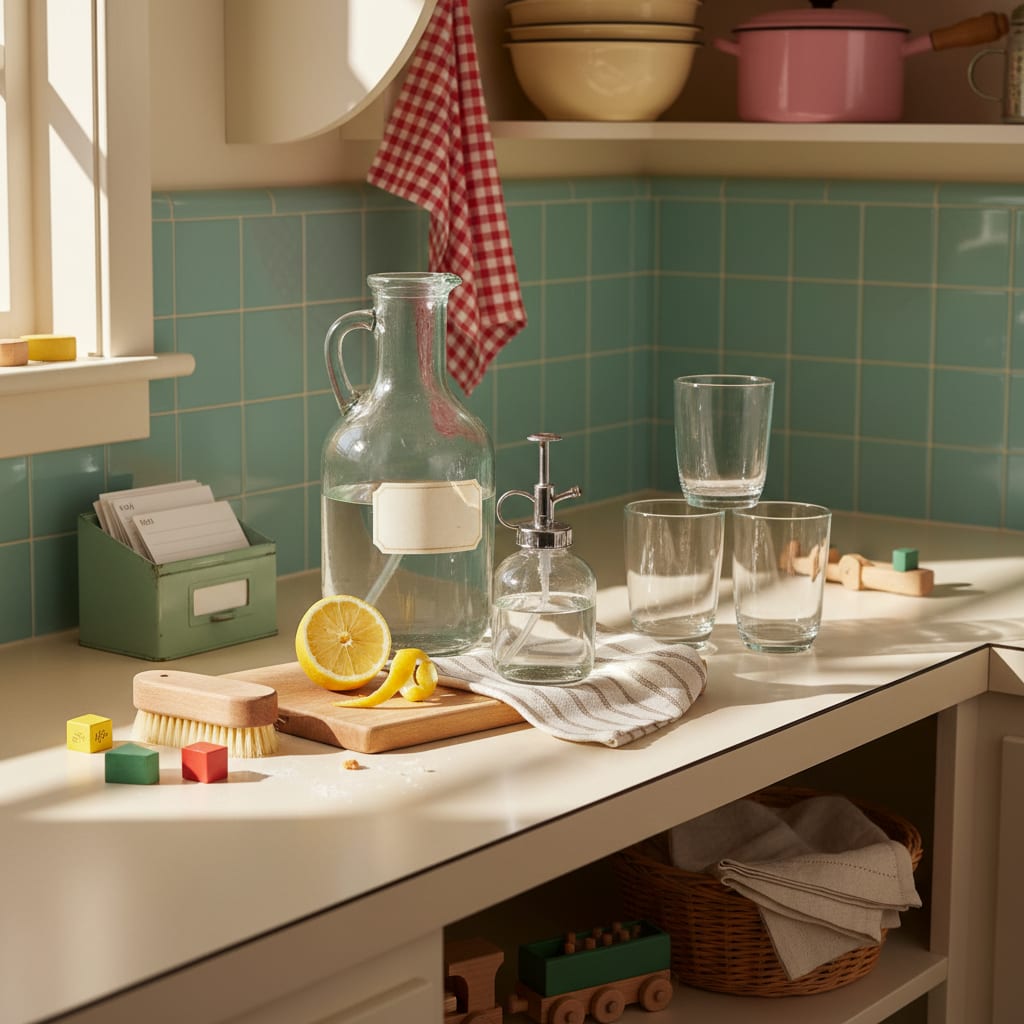
For general use, equal parts vinegar and water in a spray bottle is plenty; full strength is for soaking scale, not for spraying rooms. Warm vinegar works noticeably faster on scale than cold. The smell reads strong for a few minutes and then vanishes as it dries — but if it bothers you, a strip of lemon peel steeped in the bottle for a week mellows it, which is the prettiest trick in the tin file. And know when to reach past it: vinegar cleans, but it is not a registered disinfectant — for genuine germ jobs (raw chicken counters, stomach-bug bathrooms) use a proper disinfectant and follow its label. For the daily-wipe jobs in between, a homemade all-purpose cleaner covers most of the kitchen with less acid and less smell.
Where it fits in the weekly rhythm
In this house vinegar belongs to two slots: Tuesday bathrooms (scale, glass, scum) and the monthly kettle-and-showerhead soak. It’s a specialist, not the whole toolkit — the weekly cleaning schedule decides when, and vinegar is just one of the tools the day reaches for.
FAQ: cleaning with vinegar
What should you never clean with vinegar?
Natural stone (marble, granite, limestone), hardwood and waxed finishes, rubber door seals, cast iron, electronics coatings — and never combine it with bleach, which releases toxic chlorine gas.
Does vinegar disinfect?
Not reliably, and it isn’t an EPA-registered disinfectant. It cleans mineral deposits and light grease well, but for surfaces that need actual germ-kill, use a registered disinfectant per its label.
What’s the correct vinegar-to-water ratio for cleaning?
Around 1:1 for general spraying and glass; closer to full strength for soaking scale off kettles and showerheads. Stronger isn’t better on surfaces — it’s just harder on them.
Is cleaning vinegar different from white vinegar?
Cleaning vinegar is modestly more acidic than standard white vinegar. It cuts scale a bit faster, but the everyday jobs — and the ruin list above — are the same for both.