Castile Soap Uses: One Bar, Whole House
Castile soap — plain vegetable-oil soap, sold as bars or liquid (Dr. Bronner’s unscented is the standard-issue liquid) — handles most of a house’s washable jobs: hardwood and tile floors, hand soap, dish-by-hand duty, general spray cleaning, produce rinsing, even the dog. The rules that make it work are short: dilute it far more than feels right, rinse where shine matters, and never combine it in one bottle with vinegar or lemon juice, which unmakes the soap on contact. It’s the single most versatile card in my grandmother’s tin file, and the one modern “non-toxic” marketing has puffed up the most — so here’s the honest version: what it’s genuinely best at, and where it’s the wrong tool.
What castile soap actually is
True soap — oils reacted with lye until no lye remains — rather than a synthetic detergent. That chemistry explains both its charms and its limits. It’s gentle, biodegradable, and cuts grease and grime well. But it’s alkaline, it reacts with acids, and in hard water it can leave a filmy soap residue. Everything below follows from those three facts.
The uses that earn their keep
- Floor soap (the headline act). A small squirt — a tablespoon or two — in a bucket of warm water mops hardwood, tile and linoleum beautifully, no rinse needed at that dilution. This is the answer to “what do I use if vinegar ruins hardwood?”
- Hand soap. Diluted in a foaming dispenser, roughly one part soap to three or four parts water. A bar by the sink is the even older answer.
- Dishes by hand. Works well, with two caveats: it won’t out-degrease modern dish liquid on a roasting pan, and in hard water you’ll want a good hot rinse.
- General-purpose spray. A teaspoon in a spray bottle of water wipes tables, painted walls, cabinet fronts, high chairs — the everyday film of family life. (For the kitchen-counter version with more cut, see the homemade all-purpose cleaner.)
- Produce wash. A drop in a bowl of water, agitate, rinse well.
- Delicates and hand-wash laundry. Wool and hand-washables like it; it rinses cleaner from fibers than many detergents. It also makes a decent stain pre-scrub on collars and cuffs before wash day.
- Kids and dogs. Diluted, it’s a serviceable body wash and a genuinely good dog shampoo — one bottle fewer in the tub, which in a small 1950s bathroom is a renovation.
Where it’s the wrong tool
Honesty section. Castile soap is not a disinfectant — it removes grime and many germs mechanically, but for real germ-kill jobs use a registered disinfectant. It underperforms in dishwashers and washing machines (it’s not formulated for them and can leave residue, especially in hard water). It won’t touch mineral scale — that’s acid work, vinegar’s beat. And on glass it streaks; skip it there entirely.
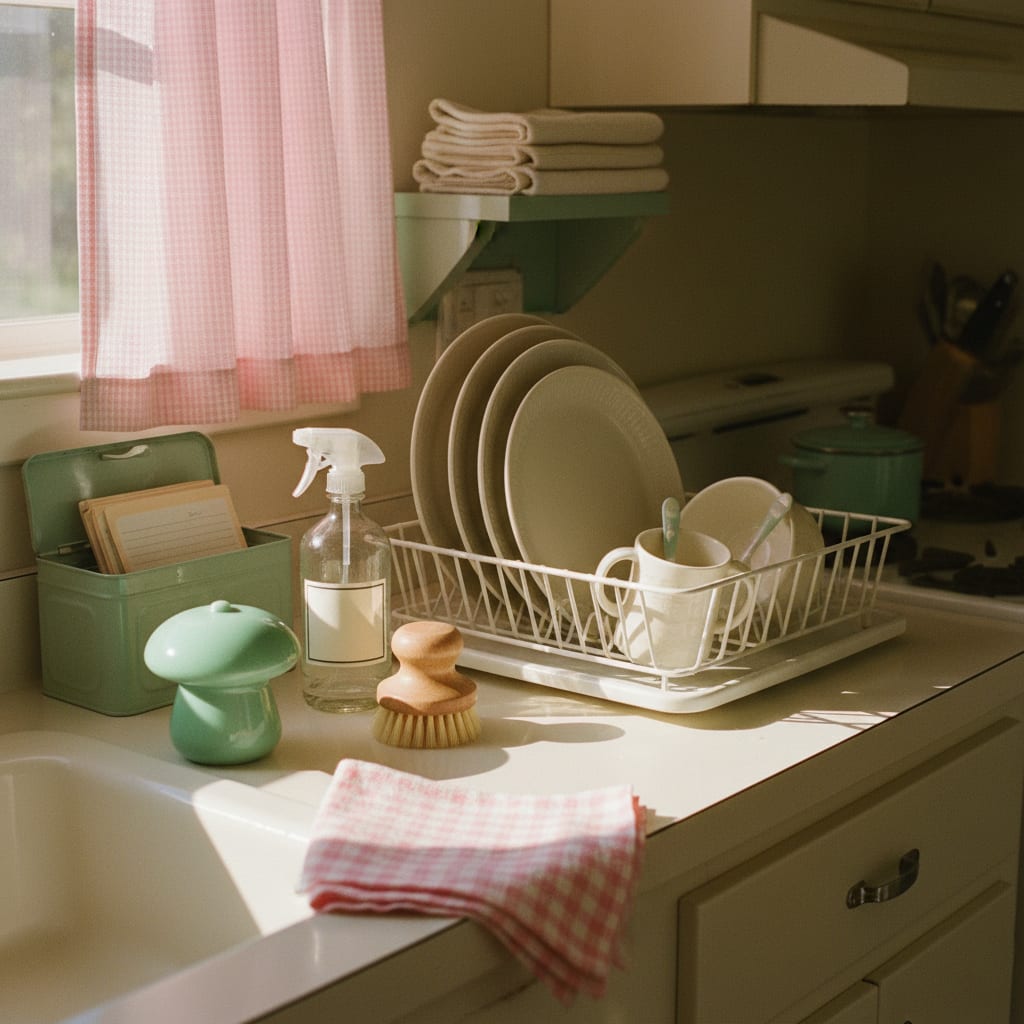
One bar of plain soap, grated into hot water, was the floor cleaner, the laundry helper and the hand soap — bought once, used everywhere, wasted never. The card file's dilution advice is a shrug: "a little."
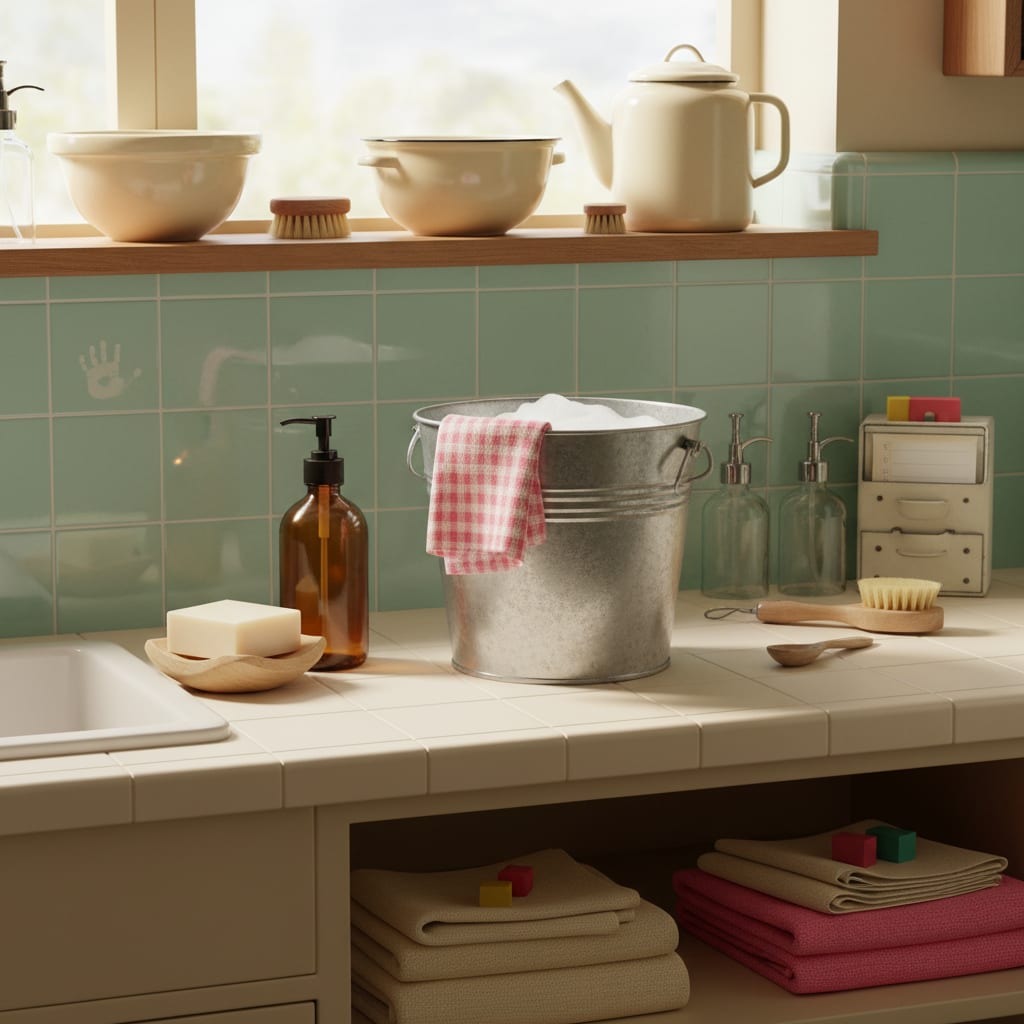
Same soap, now mostly liquid for convenience, with actual measurements — because the most common modern mistake is using ten times too much and blaming the soap for the film. "A little" turns out to mean a tablespoon per bucket.
The two rules that prevent every castile disaster
Rule one: never mix it with acids. Vinegar or lemon juice added to castile soap doesn’t make a super-cleaner — the acid instantly breaks the soap back toward its original oils, leaving a curdled white mess that adds film to whatever you’re cleaning. If you want both (say, soap-wash then vinegar-rinse on a grimy tub), use them in sequence, rinsing between. Rule two: dilute hard. Nearly every complaint about castile soap — streaks, film, squeaky residue — is an overdose symptom. Start with less than the bottle suggests; you can always add. In very hard water, expect some film at any dilution and either rinse or switch that job to a detergent.
Where it lives in the rhythm
In this house the castile bottle comes out on Thursday floor day and lives diluted by every sink the rest of the week. One ingredient, five or six standing jobs — which is the whole retro-thrift argument in a single bottle, and why this card has survived four generations of the file without being retired.
FAQ: castile soap
What is the ratio of castile soap to water for cleaning?
Roughly: 1–2 tablespoons per bucket for floors, a teaspoon per spray bottle for surfaces, 1:3 or 1:4 in a foaming hand-soap dispenser, a drop per bowl for produce. When in doubt, start weaker.
Why can’t you mix castile soap and vinegar?
The acid reacts with the soap and un-saponifies it — you get a curdled, oily residue instead of a cleaner. Use them sequentially with a rinse between, never together in one bottle.
Does castile soap disinfect?
No — it cleans by lifting grime and rinsing it away, which removes many germs but doesn’t kill them to a disinfectant standard. For sick-house or raw-meat jobs, use a registered disinfectant.
Is castile soap safe for hardwood floors?
Yes, well diluted — it’s one of the classic hardwood cleaners, and far safer for finishes than vinegar. Use a well-wrung mop, not a wet one; standing water harms wood more than any cleaner.