Old-Fashioned Stain Removal That Beats the Spray
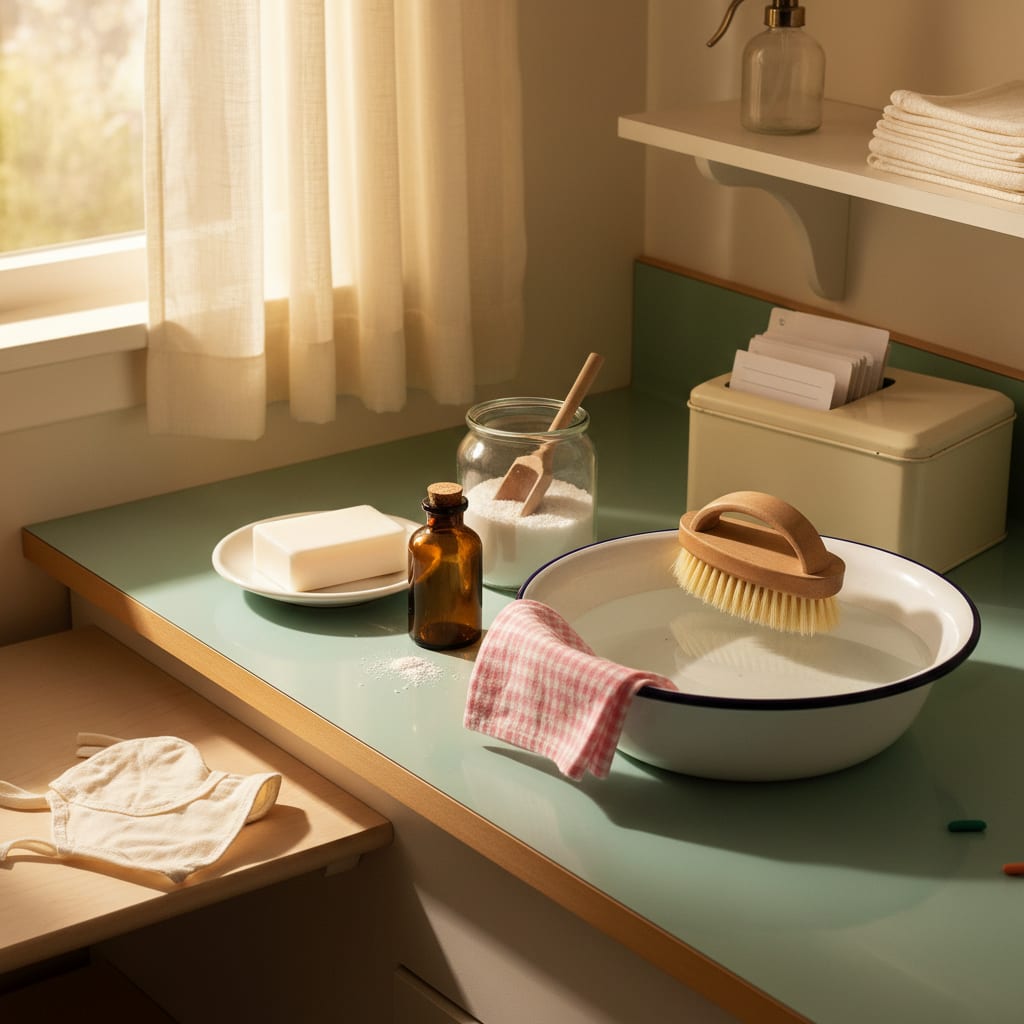
Old-fashioned stain removal beats the all-purpose spray because it treats stains as four different problems instead of one. Protein (blood, milk, spit-up, egg) needs cold water and never heat. Grease and oil need soap, which is the only thing that lifts them. Tannin and dye (coffee, berry, grass, wine) need an oxygen soak and time. Ink and paint need a solvent. Match the family and most stains come out with things that cost a few dollars; mismatch it — one hot rinse on blood, one hot dryer cycle on tomato — and you set the stain permanently, which is what the spray-and-hope method does most of the time.
The two rules that decide everything
Cold first, always, until you know what you’re dealing with. Heat cooks protein into the fibers and bakes tannin into a permanent tint. Cold water is never the wrong opening move, and it’s reversible; hot is not.
Nothing goes in the dryer unchecked. The dryer is where a removable stain becomes a rag. Look at the wet garment in good light before it goes in — a stain still visible when wet is still there, and it deserves a second treatment, not a tumble. My grandmother’s card file says this in five words: sun dries out, dryer sets in.
The four stain families
Protein — blood, milk, formula, spit-up, egg, sweat. Rinse under cold running water from the back of the fabric, pushing the stain out the way it came in rather than through. Then soak in cold water with a spoonful of oxygen powder or a little salt for fresh blood. Enzyme detergents work on these; heat is the enemy at every stage.
Grease and oil — butter, salad dressing, sunscreen, engine grease, lipstick, formula’s fatty half. Blot, then work in soap. A bar of Fels-Naptha dampened and rubbed straight onto the mark is the century-old version and still one of the most effective pre-treats sold; a plain unscented castile bar does the same job more gently on baby clothes. For a set grease spot, cover it in cornstarch or baby powder first, leave it an hour to draw the oil up, brush it off, then soap it. Grease is the one family where warm water helps.
Tannin and dye — coffee, tea, red wine, berry, tomato, grass, juice. These want time in an oxygen soak rather than scrubbing. Dissolve oxygen powder — OxiClean’s versatile powder is the common one, and plain sodium percarbonate is the same active ingredient — in warm water, submerge fully, and leave it for several hours or overnight. Grass responds to a soap pre-treat first because it’s part pigment, part oil.
Solvent — ballpoint ink, permanent marker, nail polish, latex paint. Lay the stain face down on a folded towel and dab rubbing alcohol through the back, so it drives the ink into the towel instead of spreading it in the fabric. Move to a clean part of the towel constantly. Wet latex paint rinses out with water; dry latex paint essentially doesn’t.
The stain chart
| Stain | Family | First move | Then |
|---|---|---|---|
| Blood | Protein | Cold rinse from the back | Cold soak with salt or oxygen powder |
| Spit-up, formula, milk | Protein + grease | Cold rinse | Soap the greasy shadow, then cold soak |
| Grass | Dye + oil | Bar soap rubbed in | Oxygen soak, wash warm |
| Tomato, spaghetti | Tannin | Cold rinse, blot | Oxygen soak; sunlight finishes it |
| Coffee, tea, juice | Tannin | Cold flush | Oxygen soak several hours |
| Red wine | Tannin | Blot, cover in salt | Oxygen soak; boiling-water flush on cotton only |
| Grease, butter, dressing | Oil | Cornstarch to absorb | Bar soap or dish soap, warm wash |
| Sunscreen | Oil + mineral | Cornstarch, then soap | Oxygen soak for the orange cast |
| Ballpoint ink | Solvent | Rubbing alcohol from the back | Soap, then wash |
| Crayon | Wax + dye | Scrape, then warm iron into paper | Dish soap, hot wash |
| Chocolate | Protein + oil | Scrape, cold rinse | Soap the residue, warm wash |
| Mud | Particulate | Let it dry completely | Brush off, then wash normally |
Two entries deserve a note. Mud is the one stain that’s better handled by waiting — wet mud smears into fibers, dry mud brushes off in flakes. And crayon behaves the same on fabric as it does on paintwork, which is why the heat-and-blot method in getting crayon off walls transfers straight to the laundry room.
A shelf of single-purpose supplies — a bar of laundry soap, a box of borax, washing soda, salt, a bottle of ammonia, and the clothesline for sun-bleaching whites. Each one did one job and she knew which.
Same shelf, minus the ammonia. A bar soap, oxygen powder, washing soda, rubbing alcohol and cornstarch handle nearly everything a household throws at them — and the sun still works, free, on the line.
The pantry kit, and the safety notes
Five things live in a small basket by our machine: a bar of laundry soap, a tub of oxygen powder, washing soda, rubbing alcohol, and cornstarch. Baking soda earns its spot too, mostly for odor and as a gentle scrub on set-in marks. That’s the whole kit, and it replaces a cabinet of branded sprays.
Three rules that are not negotiable. Never mix chlorine bleach with vinegar or ammonia — that combination releases toxic gas, and there is no laundry result worth it. Test colorfastness on an inside seam before soaking anything dark or vintage in oxygen powder. And treat “old-fashioned” as a claim about method, not safety: oxygen powder is not chlorine bleach, and none of the pantry items here are registered disinfectants.
Sun: the free finisher
The oldest trick on the list still works. Lay a damp, washed-but-still-shadowed white item — bibs, muslins, cotton sheets, a tomato-stained onesie — in direct sun and check it in an hour or two. Sunlight bleaches organic stains remarkably well, and it’s the standard rescue for baby clothes that come out of the wash faintly yellow. The same UV that lifts stains from whites will fade colors, so this is a whites-and-neutrals move only. It’s one of several honest arguments in favor of line drying.
Make it a card, not a memory
None of this survives contact with a real Tuesday unless it’s written down where the machine is. Ours is one index card in the tin file, taped inside the cabinet door above the washer: four families, four first moves. When something arrives on a shirt you don’t have to remember whether tomato is protein or tannin — you read the card, do the first move in thirty seconds, and put the shirt in the soak bucket until wash day comes round.
That bucket is the real innovation. A stained item that has to wait three days for laundry day either gets treated now and soaks, or gets dropped in the hamper and forgotten until the dryer sets it forever.
FAQ: old-fashioned stain removal
Does hot or cold water remove stains better?
Cold, unless you know the stain is grease. Heat sets protein stains like blood and milk permanently and bakes tannin stains into the fabric, so cold is the safe default for anything unidentified.
What is the best homemade stain remover?
There isn’t one — that’s the point of sorting by family. Bar soap for grease, an oxygen-powder soak for tannin and dye, cold water for protein, rubbing alcohol for ink. A single all-purpose mix is always a compromise.
Can old set-in stains still come out?
Sometimes. A long oxygen soak — overnight, repeated across two or three nights — recovers a fair number of set-in tannin stains, and sunlight helps on whites. Anything that has been through a hot dryer several times is usually permanent.
Is vinegar good for stains?
It’s useful for odor, mineral residue and some dye transfer, but it’s weak on the four main stain families and it must never be mixed with chlorine bleach. For general laundry use, see cleaning with vinegar for what it does and doesn’t do well.
Next cards in the file

Nursery Organization: Set Up for the 2am You
July 17, 2026
Castile Soap Uses: One Bar, Whole House
July 17, 2026
Toddler Wakes at 4am? Check the Overnight Heating
September 15, 2026