Declutter Checklist: Room by Room, One Box a Day
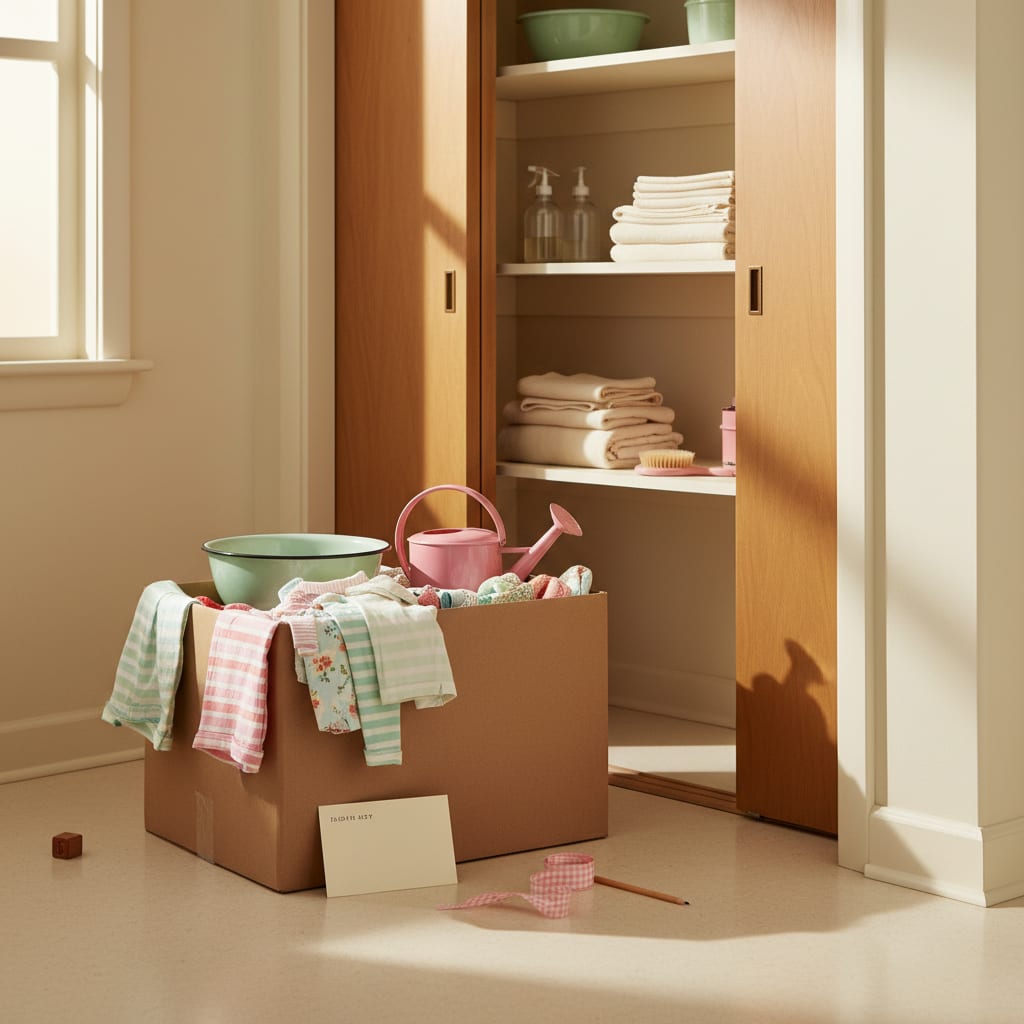
The declutter checklist that actually finishes is one box a day: each day you fill a single box from one zone on the list below — outgoing donations, trash, or returns to where things live — and then you stop. No weekend purge, no dumpster-rental fantasy, no fifteen-tab method. A box a day clears a room a week and a house in about a month, and it fits inside a nap time, which is the only project-planning constraint that matters in a house with small children. Below is the room order, what to look for in each, and the three rules that keep the clutter from re-forming behind you.
The three rules before the list
- One box, then stop. Decluttering fails as a marathon for the same reason cleaning does — the weekly rhythm logic applies to possessions too. Small daily lap, compounding results.
- The box leaves the house the same week. A filled donation box stored in the garage is not decluttering; it’s relocating. Trunk of the car, drop-off on the next errand.
- Declutter before you organize. Never buy bins first. Containers purchased for clutter become clutter with clutter inside — the card-file version of this rule says “don’t build shelves for what you shouldn’t keep.”
The room order (easiest wins first)
Work the list top to bottom — it’s sequenced so early rooms build the deciding muscle before you face the sentimental ones:
- Bathroom. Expired everything, hotel bottles, the fourth hairbrush. Almost nothing here has feelings attached; you’ll fill the first box in twenty minutes.
- Linen closet. Ragged towels (animal shelters want them), sheet sets with no surviving fitted sheet, the comforter no bed fits. What remains gets the folded-sets treatment in linen closet organization.
- Kitchen. Unitaskers, mystery lids, mugs beyond the family headcount plus guests, the appliance graveyard cabinet. If it hasn’t cooked since last summer, it goes in the box.
- Entry and paper. The mail delta, dead catalogs, school-paper strata. Keep a single shallow tray as the only sanctioned landing zone going forward.
- Kids’ clothes. Outgrown sizes into labeled hand-me-down bins (one bin per size, garage shelf), stained-past-saving into rags or out.
- Toys. The loudest chapter — broken out, outgrown out, never-played donated. The full sorting system is in how to organize toys; the box-a-day version is simply “one bin audited per day.”
- Your closet. The didn’t-fit-in-two-years shelf, the aspirational-occasion section. Hard, but you’re trained now.
- Garage / storage. Last, once the house has stopped feeding it. This is where relocated clutter goes to hide, which is why it can’t be first.
What “keep” has to mean
A thing earns its shelf by being used, loved, or genuinely seasonal — not by being theoretically useful. The tin card file’s phrasing is better than anything modern: “if you wouldn’t fetch it back from a neighbor, don’t store it.” For kid items the test is even easier: is a real child in this house going to use it before they outgrow it? For duplicates, keep the best one; the backup can openers are a museum nobody visits. And for the guilt objects — gifts, inheritances, the expensive mistake — the honest rule is that the money is already spent and the giver’s love is not stored in the object. One photo, then the box.
When it feels heavier than a checklist
Sometimes the clutter isn’t the problem — it’s the weight of being the only person who sees it, and a checklist can’t fix that. If the piles come with that particular flavor of exhaustion, The Stay-at-Home Mom’s Digest on mom burnout is the companion read for what’s underneath; the boxes will still be here, one a day, when you’re ready. Decluttering is easier from steadier ground, and there’s no prize for doing it depleted.
Keeping it decluttered
Three maintenance habits, all small: the one-in-one-out rule for toys and clothes (new thing in, old thing to the box), a permanent donation box living where the coats are (full = trunk = gone), and a seasonal lap of the worst three zones — which takes an afternoon once the first full pass exists. Clutter is inflow minus outflow; the checklist fixes the stock, these habits fix the flow.
FAQ: decluttering
How do I start decluttering when I’m overwhelmed?
Start with the bathroom and a single box — it’s the room with the least sentiment and the fastest visible win. One box a day, twenty minutes, then stop. Momentum does the rest of the recruiting.
What is the 12-12-12 rule (and do I need it)?
It’s a quick game: find 12 things to trash, 12 to donate, 12 to return home. It’s a fine warm-up lap, but the box-a-day room order finishes houses; games just start them.
How long should decluttering a whole house take?
At one box a day, most family homes take about a month for the first full pass. Slower is fine — a sustainable pace that finishes beats a blitz weekend that stalls at the garage.
Should I declutter with my kids or without them?
Toys: with them past age three or so — they keep the system credible and often release more than you’d dare. Their outgrown clothes and the deep never-played pile: without them, during nap, like a professional.
Next cards in the file
Nursery Organization: Set Up for the 2am You
July 17, 2026
Entryway Organization Ideas: Coats, Boots, Backpacks
September 23, 2026
Painting a Kid's Room Without Wrecking Bedtime
August 23, 2026