Nursery Organization: Set Up for the 2am You
Organize a nursery for the person who will actually use it most: you, at 2am, one-handed, in the dark. That means three zones — sleep, change, feed — each stocked to be worked by feel; blackout and white noise treated as furniture, not accessories; and storage arranged by size-you’re-in-now, not by cuteness. Daylight nurseries are for Instagram; this one is for the 2am you. It’s also the room where organization and sleep are the same project — a well-set-up nursery is mostly a well-set-up sleep environment with storage around it.
Zone 1: sleep — the room’s actual job
Everything else in the nursery is negotiable; this zone isn’t. The crib stays bare (firm flat mattress, fitted sheet, nothing else — that’s current safe-sleep guidance, not decor advice), positioned away from the window and off the wall shared with the noisiest room. Then build the sleep environment trifecta:
- Blackout. Proper blackout — the kind where you can’t tell it’s 6am in June. Curtains plus a blackout liner beat a decorative curtain alone; painter’s-tape-and-foil is the honest budget version while you decide.
- White noise, placed right. A steady machine like the Yogasleep Dohm goes between the crib and the noise you’re masking (usually the door or the street window), not inside the crib rail, and at a moderate volume — across the room, not against the mattress.
- Temperature you can check without guessing. A small room thermometer like the TempPro TP50 ends the nightly “is it too hot in here?” debate; a sleep sack in the right weight (the Halo SleepSack comes in every TOG) replaces the blankets the crib can’t have.
If you want the gear side of this settled by someone who reviews it for a living, Only Mom Reviews’ white noise machine verdicts and crib mattress picks are the two rabbit holes worth your time.
Getting the environment right is half of baby sleep; the other half is running a rhythm that fits your actual baby, and that’s the half I outsource. Betteroo builds a personalized, gentle day-by-day sleep plan — today’s nap windows, tonight’s bedtime, adjusted as the baby grows — so the beautifully blacked-out room also gets used at the right times. The room is the hardware; the plan is the software.

Zone 2: change — everything within one arm’s reach
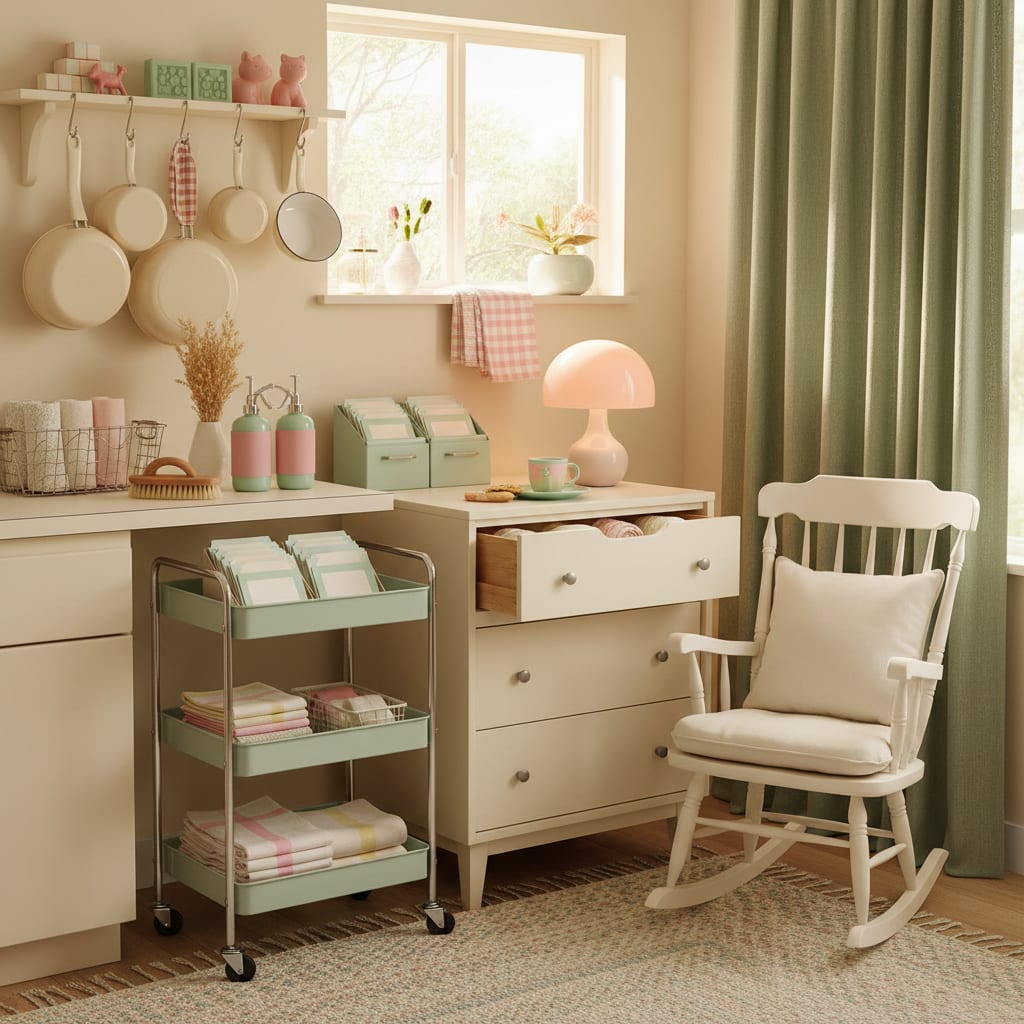
The changing station works when you can complete an entire change without your feet moving or your one free hand leaving the baby. Diapers, wipes, cream and a spare sleeper live in the top drawer or a caddy at the table — never across the room. Two retro tricks from my grandmother’s card file, both of which hold up: line the drawer with a folded towel instead of buying organizers you’ll outgrow, and keep a “next size up” bin already stocked, because babies change sizes on a Tuesday night with no warning. A small covered pail, a hook for the wet bag, done. Resist the themed accessories; this zone is a pit stop, and pit stops win on layout.
Zone 3: feed — the chair and its satellite
A comfortable chair, and beside it one small table or rolling cart holding the night-feed kit: water for you, burp cloths, a dim red-toned light you can switch one-handed, phone charger with a long cable. The dim light matters more than it looks — a bright overhead at 2am wakes everyone fully, and the whole art of night feeds is keeping both of you half-asleep. This corner is also where the sleep plan earns its keep: knowing tonight’s likely wake windows turns 2am from a mystery into a shift you clock in and out of.
Storage that survives the growth spurts
Babies outgrow storage systems faster than clothes. The setup that survives: open bins by current size (one “now,” one “next,” one “outgrown → out of the room weekly”), hooks instead of hangers for the daily rotation, and a strict one-in-one-out rule for toys in the nursery — the full toy system lives in how to organize toys, but the nursery corollary is simple: this room sleeps, so it holds few toys. When the outgrown bin overflows, that’s a declutter checklist trigger, not a bigger-bin trigger. And if you’re reading this pregnant and buzzing with the urge to fold tiny socks at midnight — that’s nesting, it’s real, and Tales of a New Mom’s nesting guide is the companion piece for the feelings half of what this post does with bins.
The 2am test
Before you call the room done, run it once in the dark: walk in, change a diaper by nightlight, settle into the chair, find everything one-handed. Whatever you fumbled for, move. The nursery that passes this test stays organized, because a room that works at 2am requires no willpower at 2pm.
FAQ: nursery organization
How do I organize a nursery in a small space?
Zones over furniture: a crib, a changing pad on any dresser, and a chair with a cart make a complete nursery. Go vertical with hooks and wall shelves, and keep only the current clothing size in the room.
What do you actually need in a nursery?
A safe crib with a bare mattress, a changing surface with supplies in reach, a feeding chair with a dim light, blackout, white noise, and size-sorted clothing storage. Most everything else is decor wearing a lanyard.
When should I set up the nursery?
Most parents aim for a functional room a month or so before the due date — early enough to test it, late enough that the sizes and gear reflect reality. The 2am layout matters more than the finish date.
How do I keep the nursery organized after the baby comes?
Weekly, not daily: empty the outgrown bin, restock the change zone, return strays. Ten minutes during one nap — ideally a nap you saw coming because the day’s sleep plan told you it was coming.