How to Get Crayon Off Walls: 5 Methods, Ranked
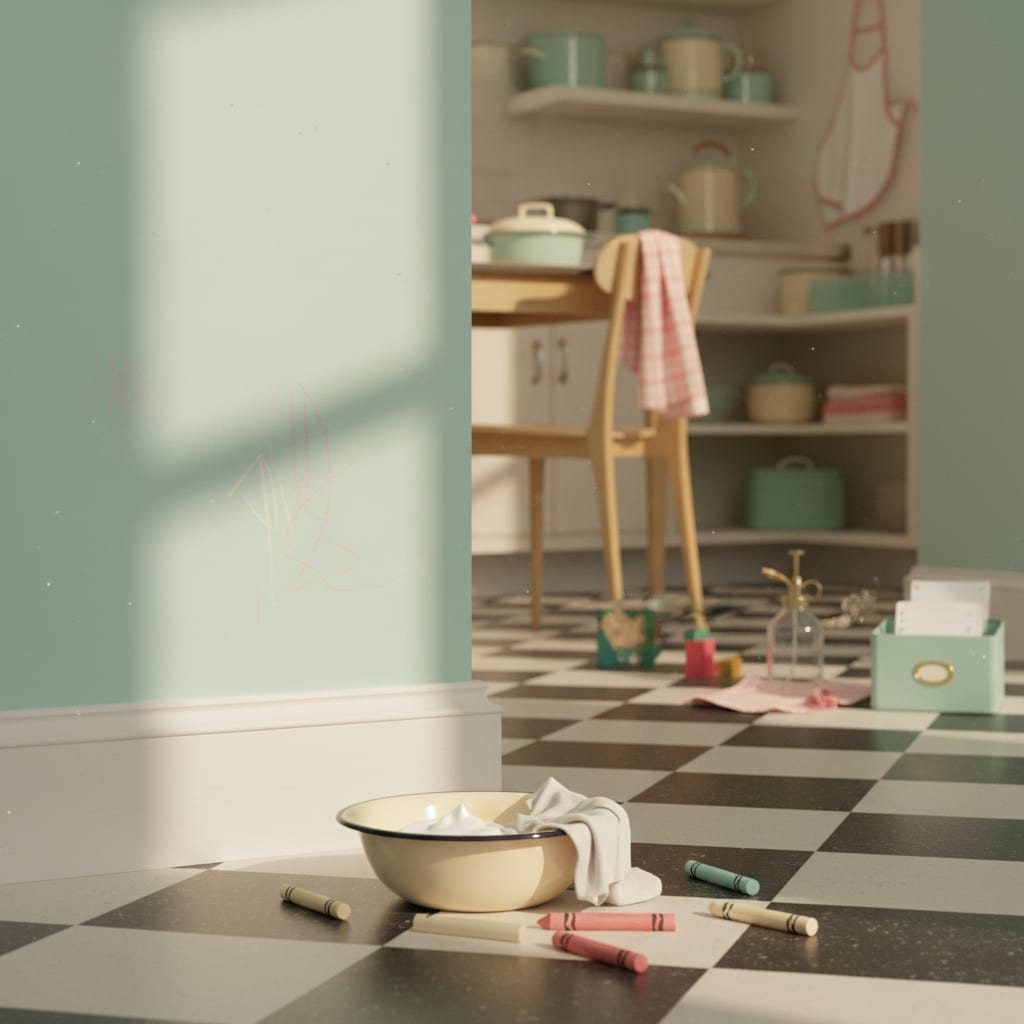
How to get crayon off walls, ranked by what actually worked in this house: start with a damp cloth dipped in dry baking soda (winner on most painted walls), escalate to warm soapy water for light marks, use gentle warmth from a hair dryer plus a soapy wipe for heavy wax buildup, and save the melamine eraser for glossy paint only — it burnishes flat finishes. Plain pencil-style erasers rank last but are the safest opener on delicate paint. Crayon is wax plus pigment, so every working method either lifts the wax mechanically or softens it first; here’s each method with its technique and its paint-finish caveats.
First, know your wall
The mark matters less than the finish under it. Gloss and semi-gloss walls tolerate nearly every method below; flat and matte paint can lose the fight even when the crayon does, ending up with a shiny scrubbed patch. If you’re not sure what finish you have, treat it as delicate and work up the ranking gently — the full finish-by-finish rulebook lives in how to clean walls.
The ranking
1. Baking soda on a damp cloth (the all-rounder). Dip a damp cloth in dry baking soda and rub the mark in small, light circles. The mild abrasive shears the wax off the paint’s texture without needing pressure, and it rinsed clean off every finish in this house, including the hallway’s ancient flat paint (tested in a hidden spot first — do the same). Wipe residue away with a clean damp cloth and blot dry. This is the reason the orange box holds job #9 on its fifteen-jobs card.
2. Warm water and dish soap (for light marks). A soapy cloth, a little patience, and light circular rubbing dissolves the softer, lightly-applied scribbles — dish soap is a mild degreaser and crayon binder is basically grease. It’s the safest wet method on every finish, and where it works, nothing gentler exists. Where a determined artist pressed hard, it usually only fades the mark, which is when you move up to baking soda.
3. Warmth plus a soapy wipe (for thick wax). For heavy, waxy deposits — the full-crayon-lying-sideways mural — soften the wax first with a hair dryer on its low setting, held moving and at a respectful distance, then wipe with a soapy cloth while the wax is warm. The wax lifts in satisfying smears. Caveats: low heat only, keep the dryer moving (concentrated heat can affect paint), and this is strictly a parent-operated method with the artist observing from a distance.
4. Melamine eraser (glossy paint only). A magic eraser takes crayon off semi-gloss trim and doors almost instantly — it’s ultra-fine abrasion, which is also why it burnishes flat and satin walls into shiny patches. On gloss: lightly, with water, works beautifully. On anything matte: skip it, or trade a crayon mark for a permanent sheen mark that touch-up paint alone will fix.
5. A plain eraser (the gentle opener). An ordinary white rubber eraser, rubbed lightly, lifts faint marks from any finish with zero risk. It ranks last on power, first on safety — a reasonable opening move on delicate paint before anything damp gets involved.
The card file's answer to wall marks was general-purpose: soap flakes, a soft rag, and repainting the hallway every few years anyway. Crayon barely rates a mention — wax crayons were rationed treasures, not a sixty-four-count invitation.
Same soap-first instinct, plus a ranked escalation path and one modern rule Grandma didn't need: know your paint finish before you scrub. The baking soda cloth is the house standard; the eraser stays in the trim-and-doors drawer.
What not to do
Skip solvents and aggressive degreasers as an opening move — many take paint or tint with the crayon, especially on flat finishes. Don’t scrub hard with anything; every method above works with light pressure and patience or it doesn’t work at all. And if a mark survives methods one through three, stop and touch up the paint — twenty minutes with a sample pot beats an hour of scrubbing and a burnished wall.
The prevention clause
The permanent fix is boring: crayons live in a lidded box that comes out for table time and goes back at the end of it, and paper lives where the crayons live. In this house that’s a card-table rule enforced by storage design, not vigilance — the same put-away-shapes-behavior logic as the rest of the toy system. Ambitious artists get a designated easel wall of taped kraft paper: a sanctioned mural beats a hallway one.
FAQ: getting crayon off walls
What removes crayon from walls best?
A damp cloth dipped in dry baking soda, rubbed in light circles, is the best all-around method — effective on most finishes and cheap. Dish soap and warm water handles light marks; warmth plus a soapy wipe handles thick wax.
Does a magic eraser remove crayon?
Yes, quickly — but it’s micro-abrasive, so keep it to gloss and semi-gloss surfaces like trim and doors. On flat, matte, or satin walls it tends to leave a shiny burnished patch that’s more visible than the crayon was.
How do you get crayon off walls without removing paint?
Start gentle and escalate: a plain eraser, then soapy water, then the baking soda cloth — light pressure throughout, testing in a hidden spot on flat or older paint. If a mark won’t lift with those, touch-up paint is the paint-safe answer.
Does crayon come off flat paint?
Usually, with the baking soda method used gently — but flat paint is the finish most likely to scrub shiny, so test first, use minimal pressure, and accept touch-up paint as the fallback for deep marks.
Next cards in the file
Nursery Organization: Set Up for the 2am You
July 17, 2026
How to Get Red Wine Out of Carpet (Fresh or Dried)
October 7, 2026
The Sunday Reset: A 90-Minute Family Version
July 17, 2026