Painting a Kid's Room Without Wrecking Bedtime
Repainting a child’s room is a sleep problem wearing a decorating hat. The short version: paint in the morning rather than the evening, open the windows and keep them open long after the last coat, and plan on that child sleeping somewhere else for at least one night. Keep the bedtime routine identical wherever they land — same order, same words, same lights-out — so the room is the only thing that changed. And if the house predates 1978, the dust matters more than the smell.
Batch the disruption into one day
The worst version of this job runs across three weekends: furniture in the hall on Friday, one wall done Saturday, everything shoved back on Sunday because the week is coming, repeat. That is three weekends of a child sleeping in a half-dismantled room, and small children read a dismantled room as a reason to get up again.
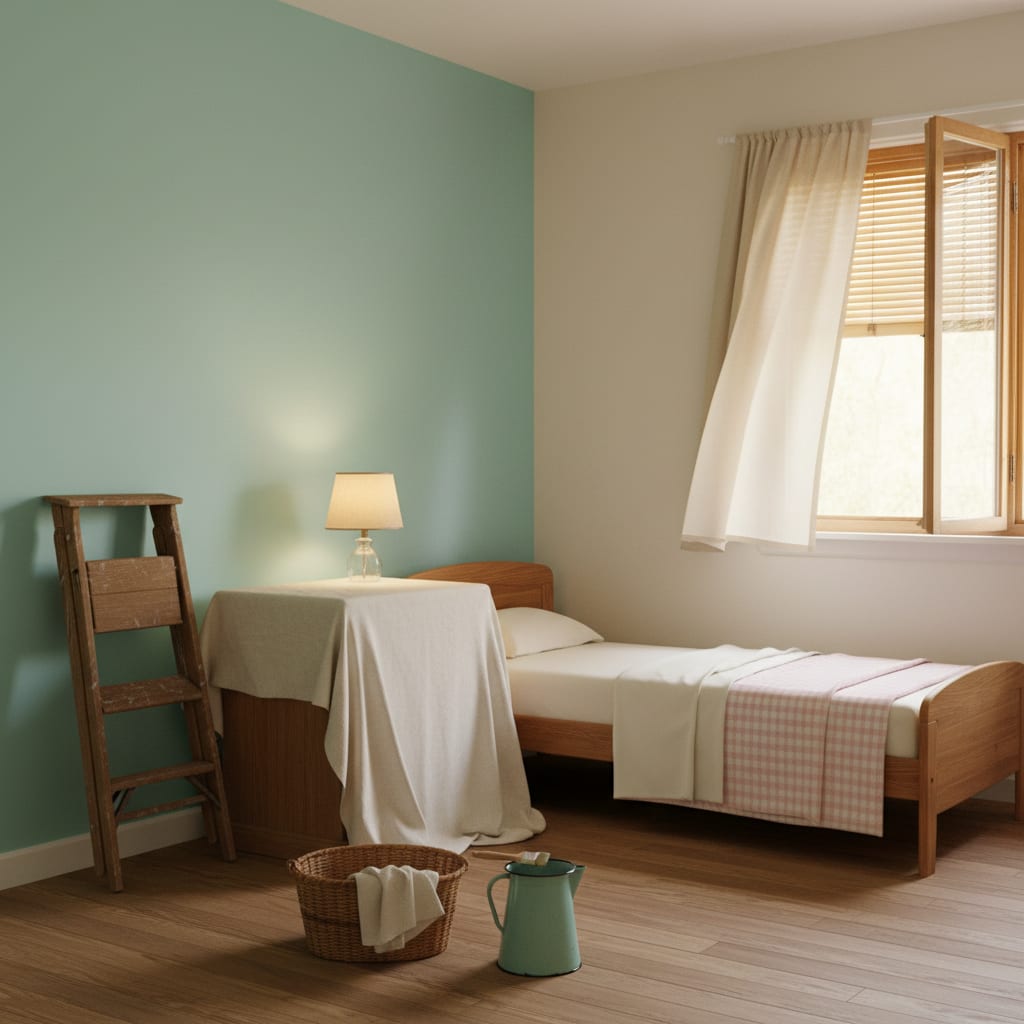
Do it as one block instead. Thursday evening: strip the room to the walls — bed apart, drawers out, everything into another room, curtains off the pole. Friday: patch, then wash the walls, because paint over a year of small greasy handprints lifts off in exactly the shape of the handprints. Saturday morning: cut in and roll with the windows already open, then air it all day. Sunday morning: rebuild, remake the bed, finish before the light goes.
That shape puts the whole disturbance where nobody has school in the morning, and gives the room a full day and night of air before anyone breathes it lying down.
Where they sleep while the room is out of action
A mattress on the floor of a sibling’s room is the easiest answer, and the one most children like best — a night in with a brother or sister reads as an event rather than a punishment. Clear the floor first, the same way you would for two children sharing a room permanently — a rug edge or a laundry basket is a trip hazard in the dark. A tri-fold foam mattress with a washable cover, like Milliard’s, folds into a closet afterwards and comes out again for sleepovers — the only reason I own one.
Sleeping on the floor is a real arrangement rather than a compromise — it is the setup a Montessori floor bed is built around. Camping in with the adults is the other option, fine for a night, though read what the evidence says about sleeping in their own room before you make it a fortnight.
Whichever it is, take the sleep kit with you: the room can change, the pillow and blanket and animal cannot. A child who sleeps beautifully somewhere unfamiliar is telling you about light and noise, and the same rules hold on a landing as in a bedroom — dark, quiet, cool, boring.
Air the room out longer than you think
Wet paint releases volatile organic compounds, and the EPA lists paints, strippers and solvents among the household sources of them. Its advice is blunt — provide for maximum ventilation during painting — and it notes that during and for several hours after work like paint stripping, indoor levels can run far above the outdoor background. Airing is not a finishing touch you do if you remember.
In practice: windows open before the lid comes off and left open all day; a fan in the window blowing outward, pulling air out rather than stirring it around inside; the interior door shut, so you vent the room and not the house. And nobody sleeps in there that night, even if the wall is dry to the touch — dry to touch and finished off-gassing are not the same afternoon.
Before 1978, the dust is the part that matters
This is why a 1950s house gets treated differently. The EPA’s estimate is that roughly three-quarters of US homes built before 1978 still contain some lead-based paint, and that any renovation, repair or painting project in one can create dangerous lead dust. Its stated concern is children who crawl, play on floors and put hands and toys in their mouths.
So in an older house the method changes before the colour does. Fix small areas of damaged paint without sanding where you can; if you must sand, wet the surface first, sand the smallest area that does the job, and clean up thoroughly afterwards. Lift chips and dust with a damp paper towel into the bin, then wipe again with a clean wet one. Never dry-sweep, and vacuum only with a HEPA-filtered machine. Keep the children out of the room until the cleanup is done, not until the painting is.
The rule has teeth if you are hiring: the EPA requires anyone paid to disturb painted surfaces in a pre-1978 home to be certified in lead-safe practices. It generally does not bind a homeowner doing their own house — but the dust does not know the difference, so work that way anyway.
The card in my grandmother's tin says only: spring, windows wide, beds out on the porch. Decorating was a warm-weather job because airing a room in February was not possible — and the beds left the house entirely.
We paint whenever a room needs it, but both instincts underneath hers hold: do it when you can open everything, and get the bed out rather than pushing it into the middle.
Keep the routine and change only the address
Everything about bedtime should be identical on the Saturday: same bath, same books, same song, same words at the door, same hour. The room is the variable. Let bedtime slide an hour as well because the house is chaos and supper ran late, and you have run two experiments at once without knowing which caused the eleven o’clock visit.
Tell them in the afternoon, once, plainly: tonight you sleep here, tomorrow your room is finished and you go back. Show them the spot before dark, so it is not a surprise at lights-out — and decide it on the Wednesday, not at half past seven on Saturday with a tired four-year-old in the doorway. Then expect one wobble; a new ceiling in the dark earns one.

The night you move them back
Rebuild in the morning, not at six in the evening. Bed reassembled in daylight, sheets on, curtains rehung, floor clear by lunchtime — so the child walks into a finished room rather than a building site with a duvet in it.
Put the furniture back where it was unless you have a reason not to. A fresh wall is already one change; a fresh wall plus a bed on the opposite side is two, and this is the wrong week to rethink where the toy shelves live. Do the proper reorganisation a fortnight later, once everyone has stopped noticing the paint.
FAQ: painting a child’s room
How long after painting can a child sleep in the room?
Give it at least a full day and night of open windows after the last coat, and longer if you can still smell it. The EPA’s guidance is to ventilate as much as possible; dry to the touch is not the same thing as finished off-gassing, and a child sleeping in there breathes that air for eleven hours at close range.
Is low-VOC paint safe enough to skip airing the room?
No. Low-VOC and low-odour paints smell less and are a sensible choice for a bedroom, but “low” is not “none” and the label does not replace an open window. I use them in the children’s rooms; they still get the full airing.
Should I repaint while my baby naps in the house?
Painting a room the baby is not sleeping in, with that door shut and its window open, is workable. Painting the nap room itself during naps is not — it puts them straight back into the freshest air in the house. Move the naps for the day, the same way you move the night.
Do I need a professional for an old house?
Not necessarily for the painting. But in a pre-1978 house anyone you pay to disturb painted surfaces has to be certified in lead-safe work practices, and that rule exists because the dust is genuinely hazardous to small children. If the paint is flaking over a large area, or the job means sanding a lot of it, that is the point to call someone certified rather than to buy a sander.