How to Declutter Toys Without a Meltdown (Theirs or Yours)
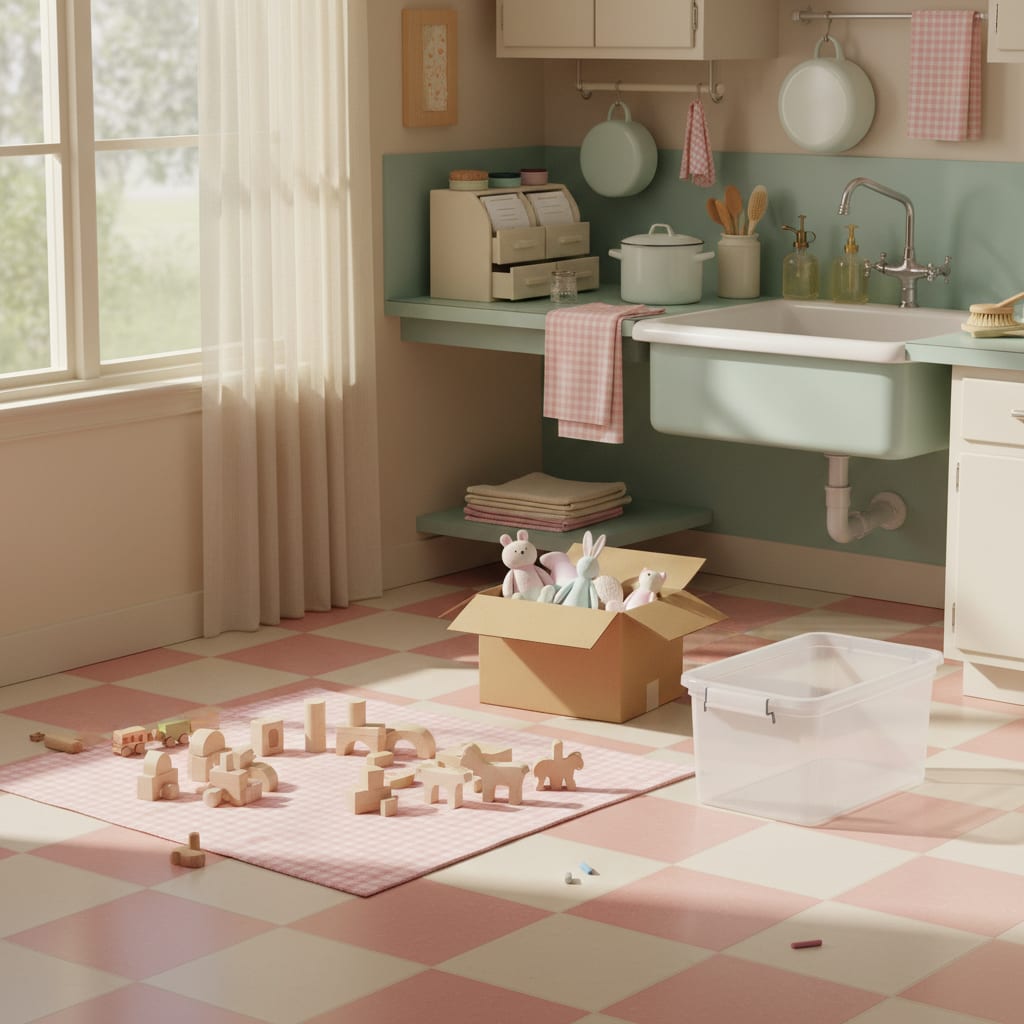
Declutter toys without a meltdown by splitting the job in two: the invisible edit — broken pieces, outgrown baby toys, fast-food trinkets, duplicates — happens without the children, during a nap or a school day, and nobody grieves what they never saw leave. The visible edit — the toys they’d notice missing — happens with them, on a good day, with a maybe box standing by so nothing has to be decided forever. Do those in the right order and toy decluttering stops being a battle and starts being a twenty-minute chore.
Time it right, and half the meltdowns never happen
Most toy-purge disasters are timing failures, not parenting failures. Don’t do this at bedtime, an hour before dinner, on a day someone is sick, or in the week after a birthday or Christmas when everything is precious and the pile is emotionally live. Do it mid-morning on a slow day, after breakfast, when everyone has eaten and nothing is scheduled.
Keep the session short — twenty minutes with a small child, thirty with a bigger one — and stop while it’s still going well. Two good twenty-minute sessions clear more than one exhausting ninety-minute session, because the second one never happens.
The invisible edit (do this alone)
Some things are not decisions; they’re maintenance. Alone, and without ceremony, remove:
- Broken toys. Missing wheels, dead batteries in a sealed unit, cracked plastic, puzzles with pieces gone. A broken toy is trash wearing a face.
- Outgrown. Rattles when the youngest is four, board books when everyone reads chapter books. Into the hand-me-down bin or out.
- Trinkets. Party-bag junk, cereal prizes, the seventeenth bouncy ball. These have a half-life of about four days; catch them at the end of it.
- Duplicates. Three toy cash registers, two identical sets. Keep the best, release the rest.
- The genuinely never-played. Not “she might come back to it.” Never touched, not once, since it arrived last winter.
That list is usually a third of the room, and it is not a moral event. My grandmother’s card file had no entry for toy decluttering — the volume didn’t exist to need one — but it did have the housekeeping principle underneath it: the things you keep should be earning their shelf. That’s the whole test. A toy earns its shelf by being played with.
The visible edit (do this together)
What’s left is the part they’d notice, and here the goal is not maximum removal — it’s a child who trusts the process enough to do it again in three months. That trust is the actual asset.
Frame it as sorting, not losing. “We’re finding out which toys you love most” beats “we’re getting rid of stuff.” Both are true; only one is workable.
Sort by category, not by room. Bring all the stuffed animals into one place, all the vehicles into another. Seeing eleven stuffed animals at once does more persuading than any argument you can make.
Let the container do the arguing. “All the animals that fit in this basket get to stay” is a rule the basket enforces, not you. It also teaches the limit that keeps the room organized later — the same container-is-the-limit rule that runs the storage system in how to organize toys.
Give them real veto power over a few things. Three untouchable toys, chosen by them, exempt from the whole conversation. Cheap to grant, and it turns the exercise from something done to them into something they’re running.
Ask better questions. “Do you want to keep this?” gets a yes every time. “If a kid who had no toys came over, which one would you want to give them?” and “which of these two do you play with more?” get real answers.
The maybe box ends most arguments
Anything contested goes in a lidded clear latching bin in the garage — not the bedroom, not the hall — with the date written on a strip of masking tape. Nobody has to decide today. If a child asks for something from the box, it comes back, no I-told-you-so. If nothing has been asked for in about two months, the box goes to donation, unopened, on a day you’re already driving past the drop-off.
Two rules make it work rather than becoming a second attic. The box has a size — one box, not a shelf of boxes. And the box has a date, because an undated maybe box is just storage with optimism on it. In our house the ask-back rate runs at roughly one item a box, and that item is never the one I’d have guessed.
When the meltdown happens anyway
Sometimes it does, usually over an object of no apparent value. Stop the session — the sorting is over for today; nothing good gets decided from there. Don’t bargain, don’t remove the item under protest, and don’t finish the pile “quickly” while they cry. The grief is real to them, and being talked out of it teaches them that their preferences aren’t information.
Let the item stay. Try again in a fortnight. And if the reason you can’t stop is that the mess has become unbearable to you personally — that particular exhaustion where the floor feels like a verdict — that’s a different problem than clutter, and The Stay-at-Home Mom’s Digest on mom burnout is the honest companion read. Decluttering goes better from steadier ground.
Keep it from rebuilding
The purge is the stock; the habits are the flow. One-in-one-out at birthdays and holidays, agreed with the child before the presents arrive. A permanent donation box where the coats live — full means trunk means gone. A quiet monthly pass through the outgrown bin. And on the inflow side, the honest conversation with grandparents: experiences, consumables and books instead of another plastic set, which most grandparents accept happily if asked before the shopping rather than after.
This is the toy chapter of a bigger sequence — the room-by-room version, one box a day, is in the declutter checklist — and once the volume is down, the storage question gets easy. What’s left slots straight into the zone-and-bin setup in playroom organization on a budget, which is a much shorter job with fewer toys in the room.
FAQ: decluttering toys
Should I declutter toys without my child knowing?
For broken, outgrown, duplicate and never-played items, yes — those aren’t decisions and secrecy spares everyone the drama. For toys they’d notice missing, no; removing those behind a child’s back is what makes the next round a fight.
At what age can kids help declutter their own toys?
Around three most children can choose between two toys; by five or six they can sort a whole category with you and often release more than you’d dare. Under three, sort during naps and keep the visible inventory small instead.
What do I do with toys my child never plays with but won’t give up?
Maybe box, dated, in the garage. If it isn’t requested in about two months, donate it unopened. The box removes the need to win the argument today.
How often should you declutter toys?
A light pass monthly on the outgrown bin, a real sort about twice a year, and always before a birthday or the holidays rather than after — the pile is easier to edit while it’s still boring.
Next cards in the file
Nursery Organization: Set Up for the 2am You
July 17, 2026
Linen Closet Organization (The Folded-Sets Trick)
July 17, 2026
How to Sleep in a Heatwave With No Air Conditioning
August 15, 2026