How Often Should You Wash Your Sheets? A Real Schedule
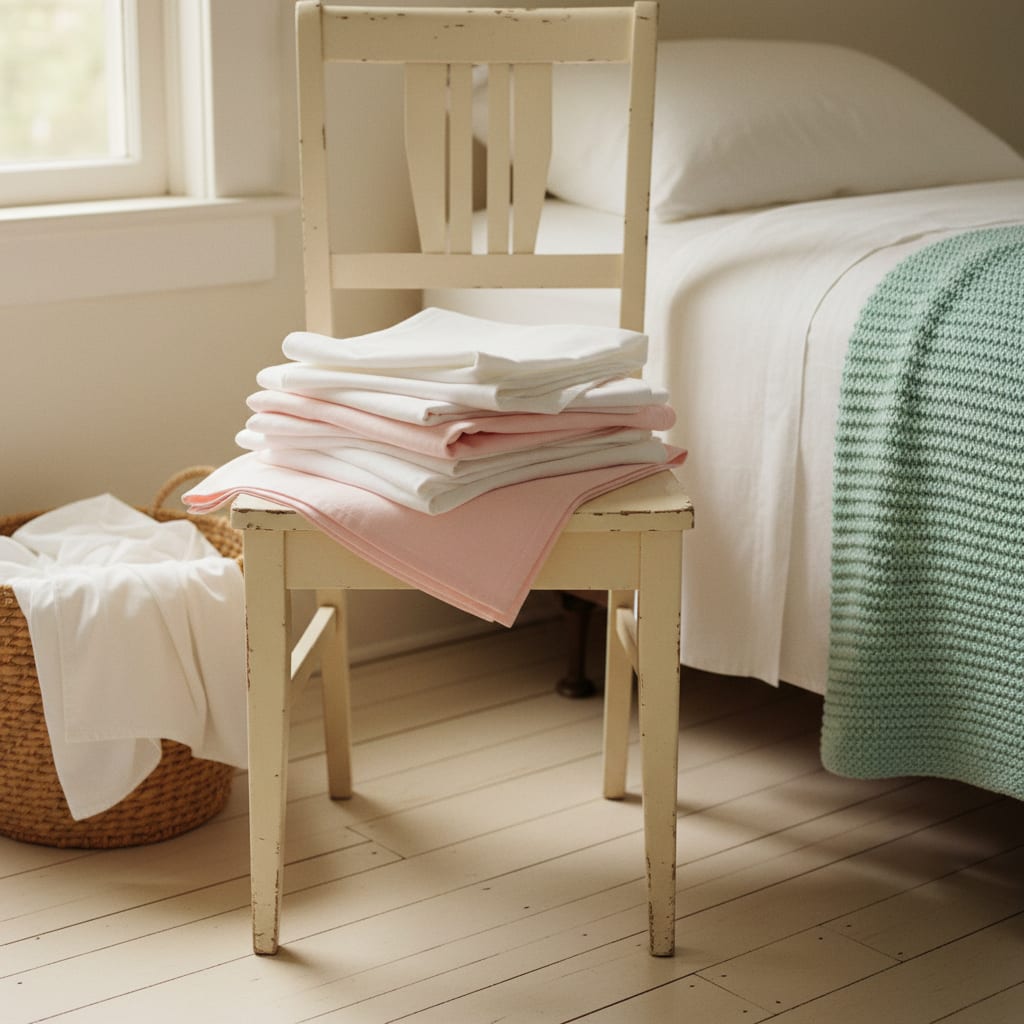
Wash your sheets once a week. That’s the Sleep Foundation’s answer for most people, and it stretches to every two weeks for a bed that isn’t slept in every night. Some beds need more: every three to four days if a pet sleeps on it, more often in a hot summer, weekly in hot water for anyone with a dust mite allergy, and straight away, on a separate hot wash, after vomit or a bedwetting accident. Pillowcases follow the sheets. Duvet covers, blankets, comforters and pillows each run on a slower clock of their own, set out in the table below.
The weekly baseline, and where it comes from
The Sleep Foundation’s guide to washing sheets puts it simply: “Most people should wash their sheets once per week. If you don’t sleep on your mattress every day, you may be able to stretch this to once every two weeks or so.” The reasoning is the obvious one. Over a week, a bed collects sweat, skin, body oil and whatever came in on the children’s feet.
Its washing instructions are short. Read the care label, then “wash using the hottest water that the label lists (cotton can generally handle hot water, while polyester and some other materials should be washed on warm).” For sensitive skin, a second rinse removes leftover detergent. Using too much detergent is the more common problem than too little.
Your schedule, by household
A household with small children has several beds on several clocks. Here is the whole set in one table. Every interval is from the source named in its row; the ones marked “house habit” are not from any source, only what tends to hold up in a busy house.
| Bed or situation | How often | Source |
|---|---|---|
| An adult’s bed, slept in nightly | Once a week | Sleep Foundation |
| A guest or spare bed used now and then | After each guest, or every two weeks if slept in | Sleep Foundation (two weeks); house habit (after guests) |
| A pet sleeps on the bed | Every 3 to 4 days | Sleep Foundation |
| Hot summer weeks, or night sweats | More often than weekly | Sleep Foundation |
| Someone in the house has a dust mite allergy | Weekly, in hot water, 130 to 140°F | NIEHS |
| Vomit, diarrhea or poo on the bedding | Straight away, on a 60°C (140°F) wash, separately | NHS |
| A bedwetting accident | Straight away; waterproof covers make it a smaller job | NHS (covers); house habit (timing) |
| A child’s bed with no accidents | Weekly, on the same day as the adults’ | House habit |
On allergies. The National Institute of Environmental Health Sciences’ page on dust mites says to “wash all bedding and blankets once a week in hot water, 130 to 140 degrees Fahrenheit, to kill dust mites.” It adds that “non-washable bedding can be frozen overnight.” Check the care label before you turn the dial that far; not every fabric takes it.
On illness. The NHS norovirus page says to “wash clothes and bedding that has poo or vomit on it on a 60°C wash and separately from other laundry.” That’s a straight-away job, not a wash-day one. The middle-of-the-night side of it, changing a bed without fully waking a child, is in how to change a bed at 2am.
On bedwetting. The NHS bedwetting page suggests “waterproof covers on their mattress and duvet.” A cover turns an accident into a sheet change rather than a mattress problem. A SafeRest waterproof mattress protector is a common example; buy the size of the mattress it goes on.
Everything else on the bed
Sheets are the weekly job. The rest of the bed runs slower, and most of the intervals below come from the Sleep Foundation’s own bedding table.
| Item | How often | Source |
|---|---|---|
| Pillowcases | Once a week, with the sheets | Sleep Foundation |
| Duvet cover | Every 2 weeks to a month | Sleep Foundation |
| Comforter | Every 2 to 3 months | Sleep Foundation |
| Blankets | Every 2 to 3 months | Sleep Foundation |
| Pillows (if washable) | Every 4 to 6 months | Sleep Foundation |
| Mattress | Cleaned every 6 months or so | Sleep Foundation |
| Mattress protector | With the sheets every few weeks, and after any accident | House habit |
Sources differ on the comforter. Samsung’s bedding care page says “2 to 3 times a year”, once a season, which is less often than the Sleep Foundation’s every 2 to 3 months. The difference is mostly about what sits on top of it. A comforter that lives inside a duvet cover, or under a top sheet, gets far less of the body oil and sweat, so the less frequent end is reasonable. One slept on directly needs the more frequent one. How to do the job is in how to wash a comforter.
Monday was sheets. The bottom sheet went to the wash, the top sheet moved down to become the bottom one, and a clean top sheet went on. It halved the sheets on wash day, and the card calls it "turning the bed."
Both sheets every week, because a fitted bottom sheet can't move up. Two sets per bed, so the bed is remade the same morning and the wash can wait for the load.
Making a weekly wash actually happen
A schedule that depends on stripping, washing, drying and remaking four beds in one afternoon breaks by the third week. Two changes make it stick.
Two sets per bed. The Sleep Foundation suggests the same thing: “Because washing and drying your sheets takes a few hours, many people find it easier to have a couple of sets of sheets.” Strip the bed, put the clean set on, and the dirty set waits for a load. Stored as folded sets, one per bed, the right sheets are always together; that system is in linen closet organization.
One bed day, not one bed hour. Give sheets their own day in the week, so they don’t fight the clothes for the machine. The whole week’s laundry rhythm, with sheets on their day, is in the laundry schedule.
Sheets that have gone grey or stiff need a deep reset, a few times a year, not more frequent washing.
FAQ: how often to wash sheets
Is it OK to wash sheets every two weeks?
For a bed that isn’t slept in every night, yes. The Sleep Foundation says “once every two weeks or so” is reasonable there. For a bed used nightly, once a week is the standard.
How often should you wash sheets if your dog or cat sleeps in the bed?
Every three to four days, according to the Sleep Foundation.
What temperature should you wash sheets on?
The hottest the care label allows. For dust mite allergies, NIEHS says 130 to 140°F; after vomit or diarrhea, the NHS says a 60°C wash, separately from other laundry.
How often should you wash pillowcases?
Weekly, with the sheets. The Sleep Foundation’s bedding table gives the same interval for both.
How often should a child’s sheets be washed?
The same weekly rhythm as an adult bed, and straight away after illness or an accident. A waterproof mattress cover makes the accidents quicker to deal with.