How to Clean a Cast Iron Skillet (and Rescue a Rusty One)
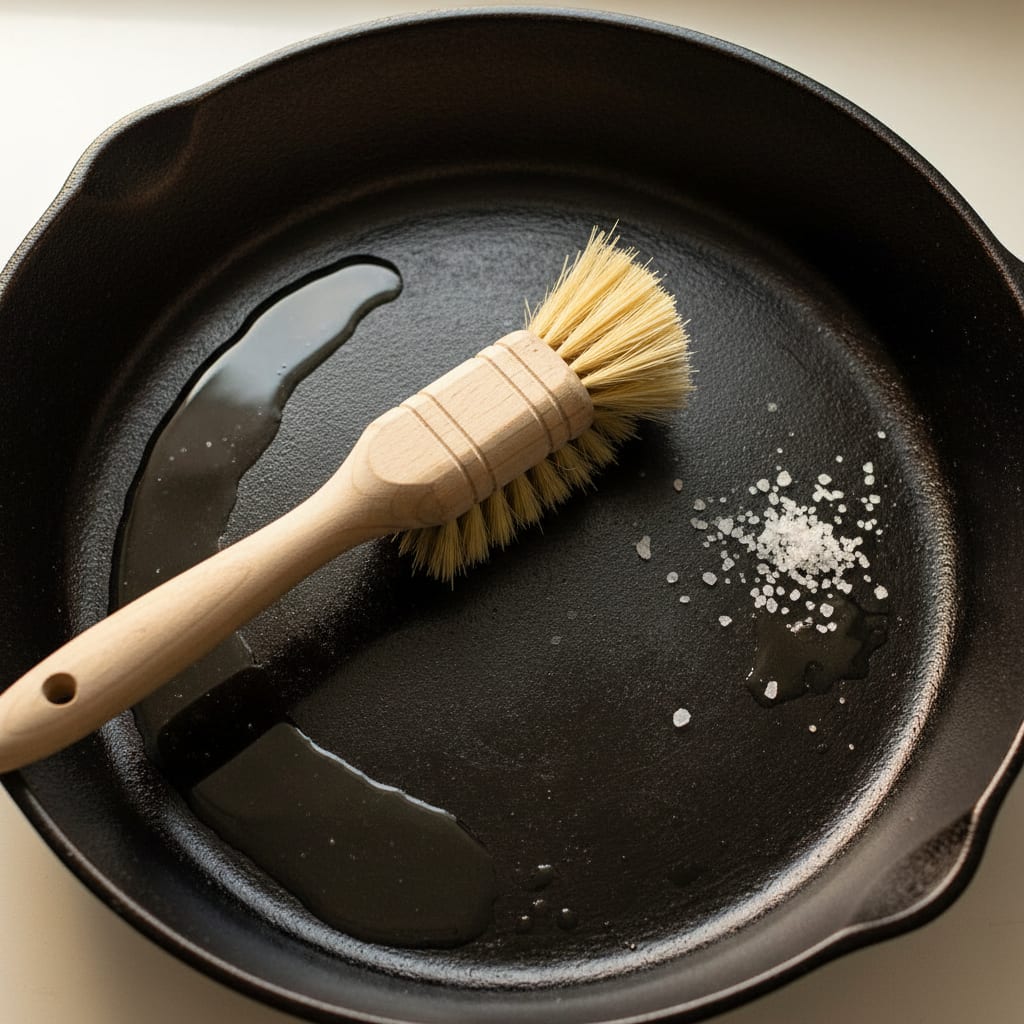
To clean a cast iron skillet, wash it by hand with warm water, a stiff brush and, if you like, a small amount of mild soap. Loosen stuck-on bits with a pan scraper, or simmer a little water in the pan for a few minutes first. Dry it completely straight away, then rub a very thin layer of cooking oil over the surface and wipe off the excess. Never soak it or put it in the dishwasher. If it has rusted, scour the rust off, wash and dry it, oil it thinly and bake it upside down to rebuild the seasoning.
What you’re protecting: the seasoning
Seasoning is the dark, slick layer on a cast iron pan. Lodge, the Tennessee foundry, describes it on its rusty cast iron restoration page as “the protective layer of carbonized oil,” and says that without it, “cast iron is susceptible to rust.” Every cleaning rule below exists to get food off without stripping that layer, and to stop water sitting on the iron.
How to clean a cast iron skillet after use
From Lodge’s how to clean cast iron guide:
- Wash it by hand with warm water and a stiff-bristled brush or scrubbing pad.
- Use a pan scraper for stuck-on food. A plastic scraper such as Lodge’s pan scrapers does it without metal on metal. For really stubborn residue, simmer a little water in the pan for 3 to 5 minutes, let it cool, then scrape.
- Dry it completely, with a lint-free cloth or paper towel. Lodge also suggests a few minutes on the stovetop over low heat to drive off the last of the water.
- Oil it thinly. Rub a very light layer of cooking oil over the surface with a paper towel, then keep wiping until no oil residue remains. Too much oil turns sticky.
A chainmail scrubber, such as the Lodge chainmail scrubbing pad, is the heavy-duty version of the brush for baked-on patches. Lodge keeps steel wool for rust removal rather than everyday cleaning.
The soap question
This is the one place the sources disagree, so here are both sides. Lodge, which makes the pans, says “Soap is totally okay!” for everyday washing. Mississippi State University Extension’s cast iron care post says the opposite for daily cleaning: “don’t use soap or cleaning tools like steel wool that will remove the seasoning,” just water and a towel once the pan has cooled.
The practical middle: a small squirt of mild dish soap on a well-seasoned pan is the maker’s own advice, and hot water with a brush is enough most days. What both sources agree on matters more than the soap: never leave it soaking, and always dry it.
What not to do
- Don’t soak it. Lodge says soaking leads to rust, and MSU calls a submerged pan “the perfect recipe for rusting.”
- Don’t put it in the dishwasher. Lodge says the dishwasher strips seasoning and is likely to cause rust.
- Don’t let it air-dry or store it damp. Lodge lists both among the ways even a well-seasoned pan rusts.
- Don’t use long acid soaks. As cleaning with vinegar warns, acid strips seasoning. The short, timed vinegar step below is for rust only, and it is always followed by re-seasoning.
How to remove rust from cast iron
Rust is the cast iron problem with the most worry attached, and it is usually the most fixable. A pan left in the sink or put away wet is how most of it starts: orange patches of surface rust on bare iron where the seasoning has failed, and the fix is to take it back to clean metal and season it again. Work from gentlest to strongest and stop when the rust is gone.
Light rust: salt and a wet towel
MSU Extension’s first step for a few spots is that “rust can likely be removed with a wet towel and kosher salt.” The coarse salt acts as a mild scouring powder. Rub the spots, rinse, and check.
More rust: scour it
Lodge’s restoration method starts here: “Scour the rusty sections with steel wool or the Lodge Rust Eraser.” The Lodge Rust Eraser is an abrasive cleaning block made for the job. Scour only until you reach gray or black iron; you’re removing rust, not the whole pan’s seasoning.
Stubborn rust: short vinegar soaks
If scouring doesn’t shift it, MSU’s next step is to “soak the rusted area in vinegar for no longer than 15 minutes at a time,” checking every 15 minutes whether the rust will flake off, then washing the pan once it does. The time limit is the important part. Vinegar dissolves rust and seasoning alike, so a pan forgotten in a vinegar bath overnight trades a rust problem for bare iron that has to be seasoned from scratch. Set a kitchen timer.
Then re-season it, the same day
Bare iron rusts fast, so finish the job in one go. Lodge’s steps:
- Wash the pan with warm, soapy water.
- Dry it completely. A few minutes on low heat on the stovetop helps.
- Oil it very thinly all over, inside, outside and the handle, with just enough that it won’t drip or run when you tilt the pan.
- Bake it upside down on the center rack at 450 to 500°F for 1 hour, with aluminum foil on the rack below to catch drips.
- Turn off the oven and let it cool inside.
MSU’s version bakes at 350°F for an hour and repeats the oil-and-bake cycle 3 to 4 times. Either way, more thin coats beat one thick one. Lodge’s troubleshooting: if the finish looks dull, repeat until it has a slight sheen; if it feels sticky, there was too much oil, so put it back in the oven for another hour. If drips land on the foil anyway, the oven cleaning method deals with what gets past it.
The skillet was never washed with soap, lived on the back of the stove, and got wiped with a rag and a dab of lard while it was still warm.
Hot water and a brush, a drop of soap when it needs it, the stovetop to dry it, and a thin wipe of oil. The rust card stays in the file for the day someone helpfully leaves it to soak.
Storing it so it doesn’t rust again
Lodge’s rust causes point to the prevention: put it away only when it is bone dry, with its thin coat of oil, somewhere that isn’t damp. If pans are stacked, a folded paper towel between them keeps the surfaces from scraping and soaks up any moisture; that is a house habit rather than a maker’s rule. A pan in regular use is the easiest one to keep, which is why the card file says to cook in it. The rest of the stovetop routine is in old-fashioned cleaning tips.
FAQ: cleaning cast iron
Can you use soap on a cast iron skillet?
Lodge, the manufacturer, says a small amount of soap is fine. MSU Extension recommends water and a towel instead. Either way, rinse, dry it straight away and oil it thinly.
Can you soak a cast iron pan?
No. Soaking is one of the main causes of rust. For stuck-on food, simmer a little water in the pan for 3 to 5 minutes, then scrape.
How do you clean a rusty cast iron skillet?
Scour the rust off with salt, steel wool or a rust eraser, wash it with warm soapy water, dry it completely, oil it thinly and bake it upside down for an hour to rebuild the seasoning.
Can cast iron go in the dishwasher?
No. Lodge says the dishwasher strips the seasoning and is likely to make the pan rust.
Sources loaded and read on 2026-10-27: Lodge Cast Iron (how to clean cast iron; restore and season rusty cast iron), Mississippi State University Extension (How to Care for Cast Iron).
Next cards in the file
Toddler Wakes at 4am? Check the Overnight Heating
September 15, 2026

Linen Closet Organization (The Folded-Sets Trick)
July 17, 2026
How to Wash a Wool Blanket Without Felting It
October 27, 2026