Child Snores and Keeps Their Sibling Awake? Room Fixes
You cannot make the snorer quieter from the other bed, so stop trying to and fix the two things a household actually controls: the running order and the room. Put the light sleeper down first, with a fifteen- to twenty-minute head start, so they are asleep before the snoring begins. Raise the room’s sound floor so a snore is not a step up out of total silence. Move the beds apart and put soft surfaces between them. And treat loud, habitual snoring as a doctor’s question in its own right, because it is not only a noise problem.
First: snoring is a symptom before it is a nuisance
I am not qualified to diagnose anything, and this is the one part of the job that does not belong in the card file. The American Academy of Pediatrics lists “frequent snoring” first among the signs of sleep apnea in children, alongside “problems breathing during the night,” daytime sleepiness, difficulty paying attention and behaviour problems — and says that if you notice any of those, “let your pediatrician know right away.”
The usual mechanism is unglamorous and fixable: “large tonsils and adenoid may block a child’s airway while they sleep. This causes them to snore and wake up often during the night.” Untreated apnea, the AAP notes, can lead to “heart, behavior, learning and growth problems,” so a child who snores most nights gets an appointment, not a louder fan. If breathing stops for more than 20 seconds, that is a 911 call, not a morning phone call.
Book the appointment. Then do everything below anyway, because the waiting list is real and the other child has school tomorrow.
Stagger the lights-out
This is the single change that fixes the most nights, and it costs nothing.
Falling asleep is the vulnerable window. Once the light sleeper is properly under, a familiar rumble across the room is far less likely to surface them than it is to keep them from dropping off in the first place. So build the head start into the evening rather than hoping for it:
- Light sleeper first, by fifteen to twenty minutes. Not thirty — you will simply move the problem to a second child lying awake waiting.
- Give the snorer the tail end of the routine. The longer story, the extra song, the drink of water. It is more attention, not less, so nobody reads the split as a punishment.
- Do the noisy half of the routine outside the room. Teeth, pyjamas and the bathroom trip happen in the hall so the second arrival is one quiet crossing of the floor, not a whole procedure.
- Keep the whole thing on the same clock. If the running order has been drifting longer for months, fix that first — a bedtime that already takes ninety minutes cannot absorb a stagger. That audit is in trimming a bedtime routine that got too long.
Written on a card inside the linen cupboard door, it survives a Tuesday. Held in your head, it lasts until the first evening somebody has swimming.
Raise the sound floor
A snore is only startling because the room around it is silent. The same principle that governs a washing machine at 9pm applies here, and I wrote out the airborne-versus-structure-borne version of it in re-timing the wash so the spin doesn’t wake the baby.
A steady, broadband sound running all night gives the room a floor to sit on, so the snore stops being a step up out of nothing and becomes one more thing in a textured background. A mechanical fan-based machine like the Yogasleep Dohm is my worked example because it makes its sound by moving air rather than looping a recording, so there is no seam for a half-awake child to notice. A plain box fan aimed at the wall does most of the same work for less money.
Two rules about placement, both learned the hard way. Put it between the two beds rather than beside the light sleeper’s head, and set the volume where you can still hear a cough from the doorway. Betteroo’s rundown of white noise for babies covers the volume-and-distance question properly if you want the reasoning rather than my rule of thumb.

Rearrange the room, in this order
Furniture moving is free, and in a small bedroom it does more than any purchase. Work down the list and stop when the nights improve.
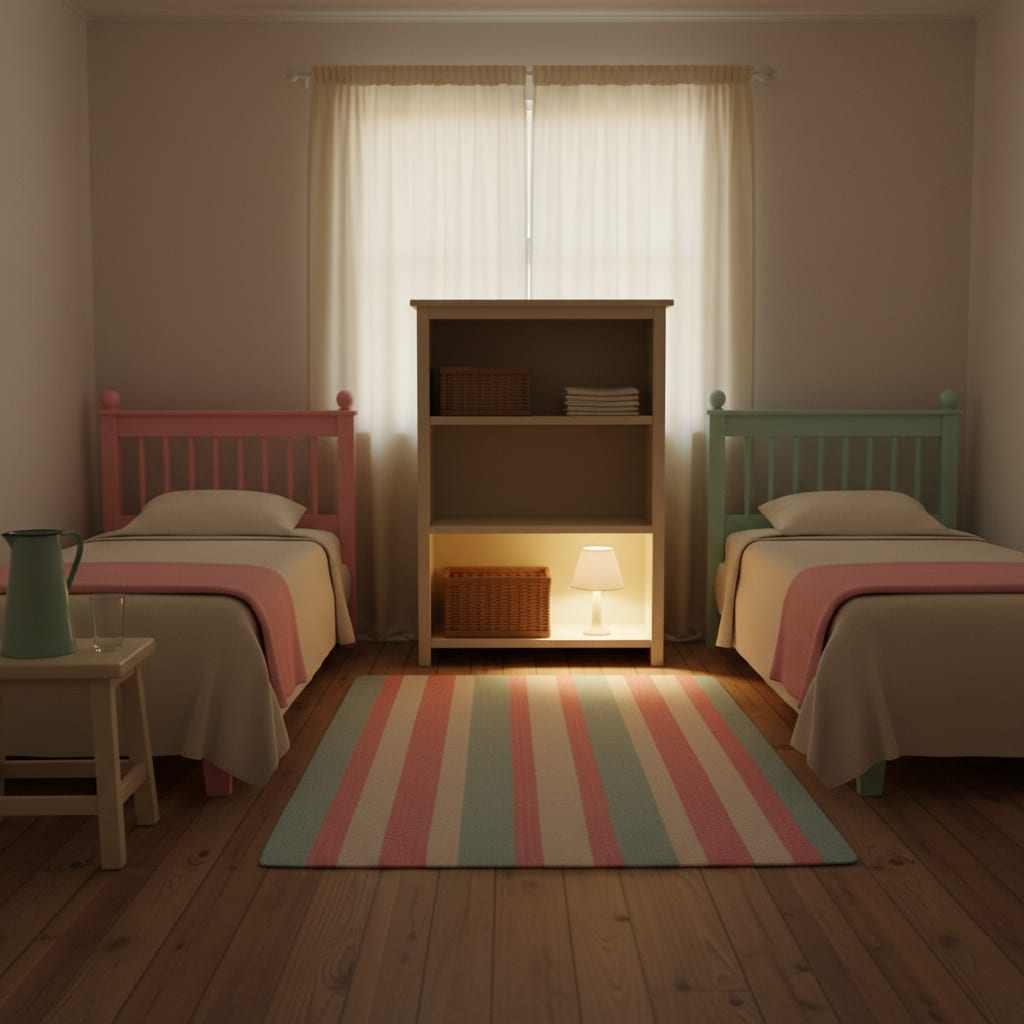
Maximum distance, diagonal if you can get it. Opposite corners beats side by side, and heads at opposite ends of the room beats heads at the same end. If the beds must stay along one wall, reverse one of them so the sleepers’ heads are as far apart as the wall allows.
Put something absorbent in between. A tall open bookcase, a fabric-fronted wardrobe, a curtain hung on a ceiling track. It does not have to be soundproof — breaking the direct line between two pillows takes the edge off, and in a shared room it buys a bit of privacy the older child will want anyway.
Soften the hard surfaces. Bare walls, bare floor and an uncurtained window make a bedroom ring. A rug under the beds, lined curtains and a fabric headboard cost the room some of its echo, and the same treatment quietens the door, the drawers and the 6am negotiations. The wider version of laying out a two-child bedroom is in organizing a shared kids’ room.
Give the snorer the door end. They are the one who will be got up for a glass of water or taken out for a bathroom trip, and the light sleeper should not be on the traffic route.
Then check the room’s basics, which get blamed on the snoring. Temperature, light leak and how much is in the room are the three that masquerade as a noise problem; the checklist is in setting up a room for sleep.
The two-night test before you buy anything
Before spending money or splitting the children up, find out what you are actually fixing. Move the light sleeper somewhere else for two nights — a floor mattress in another room, a weekend at the grandparents’ — and keep everything else identical.
If they sleep straight through both nights, the snore is the problem and the list above is the work. If they still surface at 1am in a silent room, the snore is a passenger and you are looking at the timing, the wake windows or a stage; a stagger will not touch it.
When to give up on the shared room
Sometimes the honest answer is that the arrangement is wrong for now. If one child is losing sleep most nights across a fortnight, the fix is a room change rather than a better fan — an office corner, a divided larger bedroom, a bunk swap with a third sibling. It is not a failure of the household; two children with genuinely incompatible sleep are simply expensive to house together. Betteroo’s guide to moving a child into their own room walks the decision at around $20 a month for the planning side; the furniture is still yours to shift.
FAQ: sharing a room with a snorer
Is it safe to give the light sleeper ear plugs? Ask your pediatrician rather than the internet, and never for a child too young to remove them independently. In practice a sound floor across the room solves the same problem without anything in anyone’s ears.
My child only snores when they have a cold. Do I still call the doctor? Snoring that arrives with a blocked nose and leaves with it is different from snoring most nights. The AAP’s concern is with frequent snoring alongside breathing pauses, daytime sleepiness or attention and behaviour changes — that combination is the appointment.
Should I just move the snorer instead of the light sleeper? Whichever is easier to move is the right one to move. But keep the routine identical for both children and change only the address; a child who has lost their bedtime as well as their bedroom will make the fortnight worse.
Will a humidifier stop the snoring? Do not count on it. Treat comfort measures as comfort measures and let the appointment do the diagnostic work.
How long before I decide the changes haven’t worked? Two weeks, with the stagger and the sound floor running every night. Household changes are judged over a fortnight, not one bad Tuesday.