Baby Sleep Environment: White Noise, Blackout, Temperature
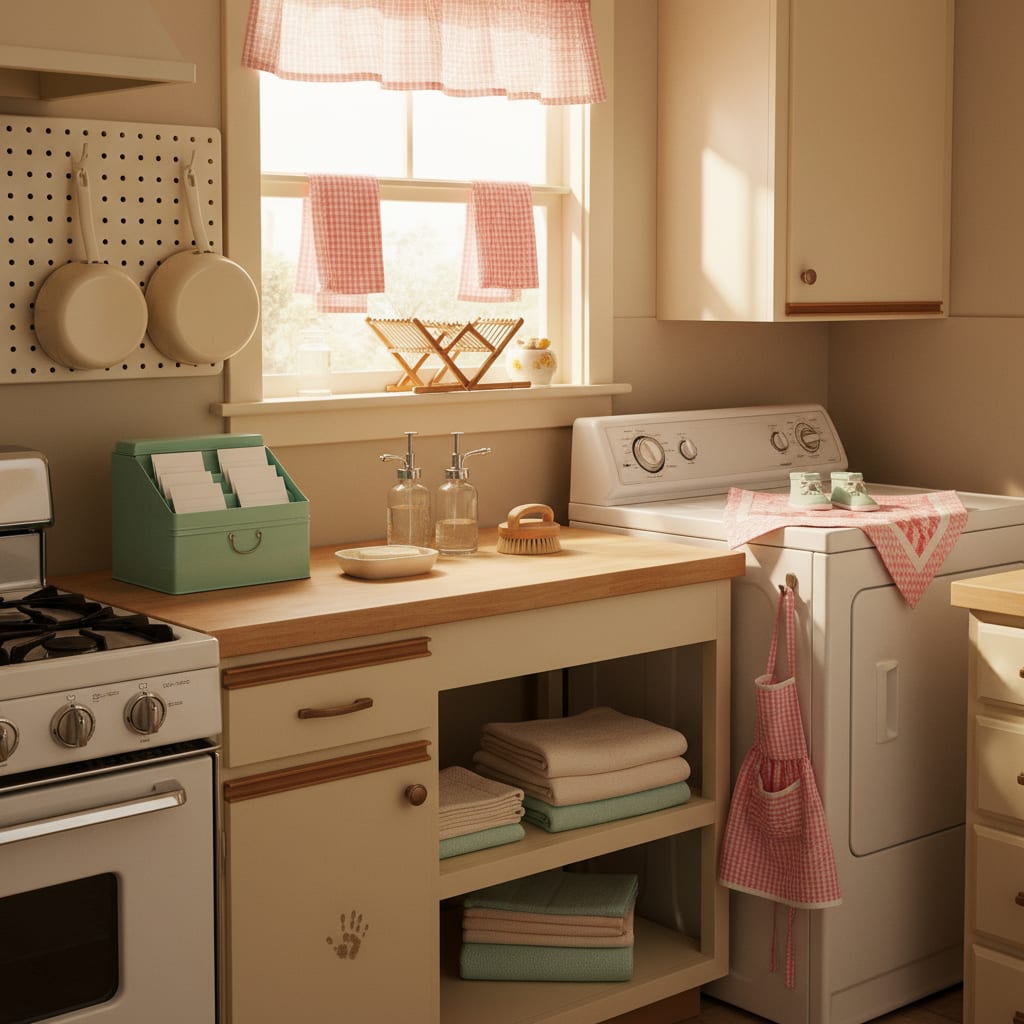
A good baby sleep environment comes down to a trifecta: steady white noise at a moderate volume with the machine placed well across the room, genuine darkness from blackout curtains or shades (cordless only), and a comfortably cool room — many sources suggest somewhere around 68–72°F, dressed for with a sleep sack rather than blankets. All three sit on top of the non-negotiable safety base: baby on their back, on a firm flat mattress, in a crib that’s completely bare. Get the environment layer right and the schedule layer — naps, wake windows, bedtime — has something solid to run on. Here’s how we built ours in a 1950s ranch house, keeping the era’s charm and none of its hazards.
What the 1950s nursery got right — and wrong
The vintage nursery understood calm. Quiet dim rooms, heavy curtains, early fixed bedtimes, a rocking chair that meant business — the atmosphere card in the file holds up. The safety card does not: that same nursery had drop-side cribs, soft quilts and pillows in the crib, padded bumpers, corded blinds within reach, and era advice that put babies to sleep on their tummies. Every one of those has since been retired for good reason. So the project here is honest un-renovating: keep the calm, the gingham, and the rocking chair; rebuild everything the baby actually touches to modern safe-sleep standards.
Dark, quiet, cool, and a bedtime you could set a clock by — the environment instincts were genuinely good. But the crib held quilts, bumpers, and a pillow, the blinds had cords, and babies slept face-down because that was the era's advice.
Same dark, quiet, cool room — delivered by blackout shades, a white noise machine, and a thermostat — with the crib stripped to exactly what belongs there: a firm flat mattress, a fitted sheet, a baby on their back in a sleep sack. Charm lives on the walls, not in the crib.
Layer 1: white noise (the furnace-hum principle)
Old houses were accidentally good at this — radiators hissed, furnaces hummed, and nobody tiptoed. A white noise machine — the Yogasleep Dohm, a real-fan machine made since 1962, is the era-appropriate classic — recreates that steady backdrop on purpose: it masks the door latches, dinner dishes, and a five-year-old’s entire personality so they stop registering as wake-up calls. Two placement rules do most of the safety work: keep the machine across the room from the crib, never on or beside it, and keep the volume moderate — a soft-shower sound, not a loud one. Continuous steady noise beats the fancy modes; the point is a consistent floor of sound, not entertainment. If you’re unsure about volume for your baby’s room, it’s a fine pediatrician question.
Layer 2: blackout (darkness is a vintage virtue)
Darkness tells a baby’s body clock the truth, which matters most for early bedtimes and summer evenings when the sun disagrees with the schedule. Blackout curtains in a vintage print — or a plain workhorse pair like NICETOWN’s blackout panels layered behind pretty cotton curtains — get a 1950s look with a modern function. The one hard rule: window coverings near a crib must be cordless. Blind and curtain cords are a strangulation hazard, and this is the single most common place vintage nursery styling goes wrong. Check the room at nap time, not just at night — a room that’s dark at 7pm can be striped with sunlight at 1pm, and naps care.
Layer 3: temperature (cool beats cozy)
The instinct to bundle a baby warmly at night is the one grandmotherly instinct to overrule: overheating is a real risk, and a comfortably cool room — many sources suggest around 68–72°F — is the target. Dress for it with layers that can’t come loose: a fitted sleep sack (the Halo SleepSack is the standard) over a onesie instead of any blanket — Betteroo’s what should baby wear to bed guide covers the same layering question in more depth. A quick check at the back of the neck (warm is right; sweaty is too hot) beats guessing from the thermostat. In our un-insulated ranch house, the summer answer is a fan circulating air (pointed away from the crib) and the winter answer is a warmer sleep sack, never a quilt — however beautiful the quilt is on the wall, which is where ours hangs.
The base layer under all three: safe sleep, always
None of the trifecta matters more than the basics, which stay consistent with AAP guidance: baby sleeps on their back, on a firm, flat mattress with a fitted sheet, in a crib or bassinet that is otherwise completely bare — no pillows, quilts, bumpers, stuffed animals, or loose anything. Vintage style lives outside the crib: the gingham on the rocking chair cushion, the print on the curtains, the quilt on the wall. If a styling idea involves putting something soft in the crib, it’s a no. Questions about your specific baby’s sleep setup belong with your pediatrician.
The schedule layer on top
Here’s the honest limit of the environment trifecta: a dark, cool, white-noised room can’t fix a nap that’s happening at the wrong time. The environment is the stage; the schedule is the play. For the schedule layer we use Betteroo, a personalized baby-and-toddler sleep app that builds nap windows and a bedtime around your actual child and keeps adjusting as they grow — it runs around $20 a month, and it’s a tool, not magic: it won’t override a teething week (that’s its own survival card), but it means the room and the clock are finally arguing the same case. The physical setup — where the machine sits, which drawer holds the spare sheets for a 2am swap — is covered shelf-by-shelf in nursery organization.

FAQ: baby sleep environment
What is the ideal sleep environment for a baby?
A dark room (blackout shades, cordless coverings), steady white noise at a moderate volume from across the room, and a comfortably cool temperature — with the baby on their back on a firm, flat, completely bare mattress, dressed in a sleep sack.
How loud should white noise be for a baby?
Moderate — think the sound of a soft shower, with the machine placed well across the room from the crib rather than next to it. Louder isn’t better; the goal is a steady floor of sound that masks household noise. Ask your pediatrician if you’re unsure.
What temperature should a baby’s room be?
Many sources suggest somewhere around 68–72°F — comfortably cool rather than cozy. Dress the baby in a sleep sack instead of using blankets, and check the back of the neck: warm is right, sweaty means too hot.
Do blackout curtains really help babies sleep?
Darkness supports the body clock, and it matters most for early bedtimes, summer evenings, and daytime naps. Whatever style you choose, window coverings anywhere near a crib must be cordless — cords are a strangulation hazard.
Next cards in the file
Nursery Organization: Set Up for the 2am You
July 17, 2026
Furnace Replacement Week: How to Protect Bedtime
September 7, 2026
Rewiring or Replumbing? Bedtime Around the Works
September 19, 2026