Teething at Night: What Actually Helps (And What to Skip)
What actually helps with teething at night: a chilled (never frozen-solid) teether or cool damp washcloth to gnaw before bed, gentle gum pressure from a clean finger, extra rocking and comfort, a bedtime routine you keep even when the night falls apart, and a bedside station stocked so 2am doesn’t require lights and rummaging. What doesn’t belong anymore: numbing teething gels, amber teething necklaces, and anything alcoholic “rubbed on the gums.” And the standing rule of this whole post: for anything medicine-shaped — pain relievers included — your pediatrician makes the call, not a blog.
I’m a systems person, not a medical one, so this is a teething post the way this site does everything: old methods on the table, tested against what’s now known, kept or retired accordingly.
Grandma’s way vs. our way, tooth by tooth
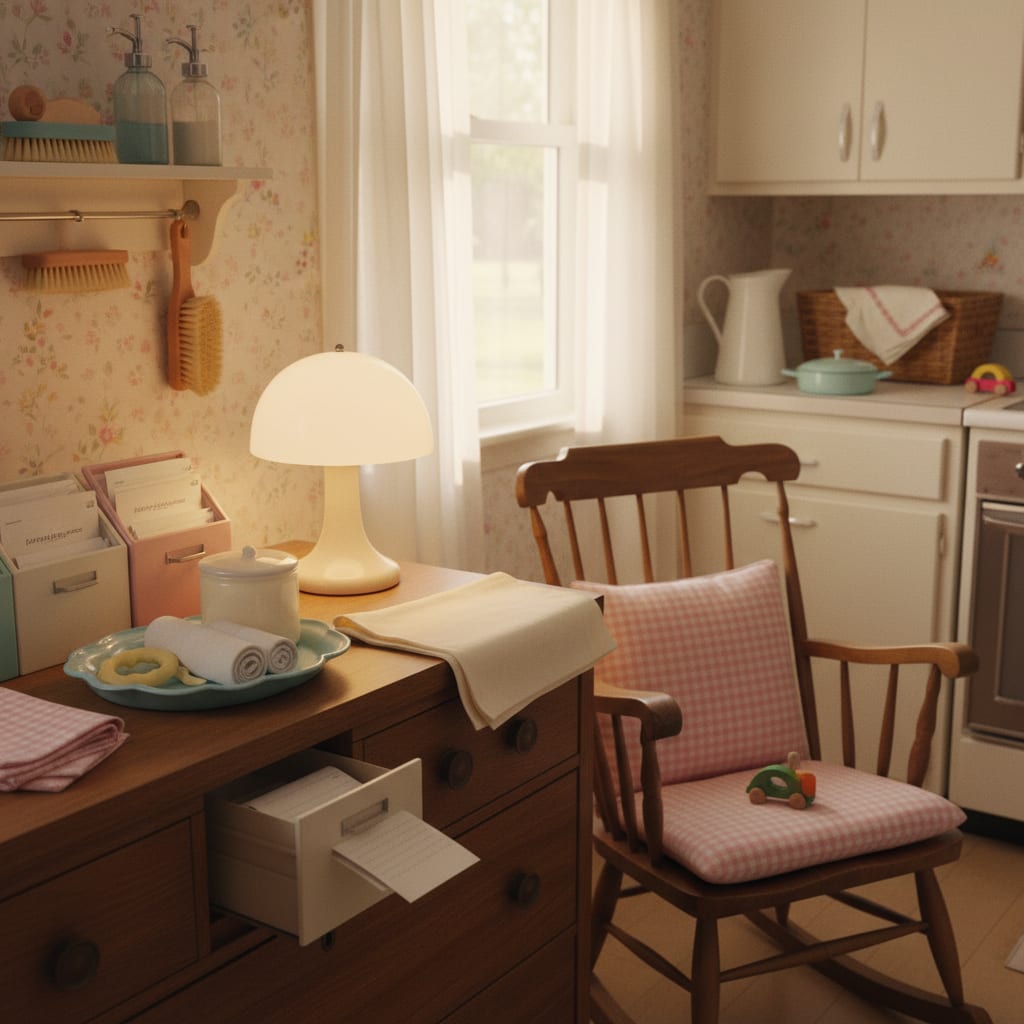
A washcloth dipped in cool water to chew, a rocking chair, a spare gum rubbed with a clean finger, and a lot of walking the hallway. The comfort toolkit was patience plus cold plus pressure — and honestly, that part of the card file holds up.
Same cold, same pressure, same rocking — delivered via refrigerated teethers and a stocked night station. What changed is the safety file: the era's gels, whiskey tricks, and teething necklaces have been retired, and dosing questions go to the pediatrician, always.
The comfort measures that survived testing
Cold, but never frozen solid. A teether chilled in the refrigerator (Nuby’s Ice Gel Teether Keys are the modern take on the old ring of keys), or a clean damp washcloth cooled the same way, gives sore gums something numbing-ish to work on before sleep. Freezer-hard items are the wrong tool — too hard on gums and too cold for little mouths — so the fridge, not the freezer, is the appliance in this system.
Counter-pressure. A clean adult finger rubbing gently along the gum is the oldest trick in the file and still one of the best. Thirty seconds of it during the bedtime wind-down costs nothing.
The routine, held steady. Teething weeks tempt you to abandon the bedtime routine because “everything’s ruined anyway.” Hold it anyway — the familiar sequence is itself a comfort measure, and it’s the thing that lets normal nights resume the moment the tooth is through.
Comfort without apology. Extra rocking, extra holding, an extra verse of the song. A teething night is not the night to worry about habits; it’s the night to be the mother with the rocking chair.
The old remedies to retire (this is the important part)
Every era’s card file has entries that don’t survive review, and teething has three big ones.
Numbing teething gels: regulators have warned against benzocaine teething products for babies, and the old numbing-gel reflex should be considered retired. If you’re wondering whether any gel or homeopathic tablet is appropriate for your baby, that is exactly a question for your pediatrician, not the pharmacy aisle.
Amber teething necklaces: anything strung around a sleeping baby’s neck is a strangulation and choking hazard, and safety authorities have warned about teething jewelry specifically. Vintage-looking does not mean time-tested. This one goes in the drawer labeled “decorative, never worn.”
Alcohol on the gums: the whiskey-on-the-gums story gets told at every family gathering, and the answer is simply never — no amount of alcohol is safe for a baby. Grandma’s rocking chair stays; this one does not.
And on pain relievers: whether, when, and how much of any infant pain medicine is a pediatrician conversation — dosing depends on your actual baby, and no blog (this one included) should be in that loop. Same rule for symptoms that don’t fit teething: a genuinely high fever, refusal to eat, or an inconsolable baby is a call-the-doctor situation, not a teething situation.
Set up the night station before the sun goes down
The systems contribution to teething week is entirely logistical: make 2am require zero searching. A small tray or basket on the changing table — chilled teether in a lidded container fetched at your own bedtime, two clean washcloths, water for you — plus a spare crib sheet within arm’s reach. If the nursery already runs on the set-up-for-the-2am-you principle, teething week is just a temporary module added to it; the folded-sets trick from the linen closet is what makes the spare sheet a ten-second swap instead of a hallway expedition.
The other half of surviving teething season is knowing what the rest of the night is supposed to look like — wake windows, bedtime drift, whether tonight’s chaos is the tooth or the schedule. That’s the half I hand to software: Betteroo builds a personalized, gentle sleep plan around your actual baby and keeps adjusting it as they grow, which means that when a teething stretch scrambles a week of nights, you’re rebuilding toward a known plan instead of guessing from scratch. It plans sleep — it doesn’t diagnose anything, and neither do I; the pediatrician keeps that job.

FAQ: teething at night
How do I soothe a teething baby at night?
Offer a refrigerator-chilled teether or cool damp washcloth during the wind-down, add gentle gum pressure with a clean finger, keep the bedtime routine steady, and lean on rocking and comfort. For any medicine question, ask your pediatrician.
Are teething gels or amber necklaces safe?
No — regulators have warned against benzocaine teething gels for babies, and teething necklaces carry strangulation and choking risks. Both belong on the retired list, however traditional they feel. Ask your pediatrician about safe alternatives for hard nights.
How long do teething night-wakings last?
It varies by baby and by tooth — often the roughest stretch is the few days around a tooth breaking through, then nights drift back to baseline. If sleep stays wrecked well past a tooth’s arrival, look at the schedule too — a sleep regression can hide behind a teething story — and raise persistent problems with your pediatrician.
Does teething cause fever?
Teething is often blamed for more than it does. A slightly warm, drooly, gnawing-on-everything baby fits the picture; a genuinely high fever, significant illness, or an inconsolable baby doesn’t — treat those as call-the-pediatrician situations rather than teething.
Next cards in the file
Nursery Organization: Set Up for the 2am You
July 17, 2026
Castile Soap Uses: One Bar, Whole House
July 17, 2026
Baby Sleeps Better Away From Home? Read the Room
August 3, 2026