The Back-to-School Home Reset (August Week One)
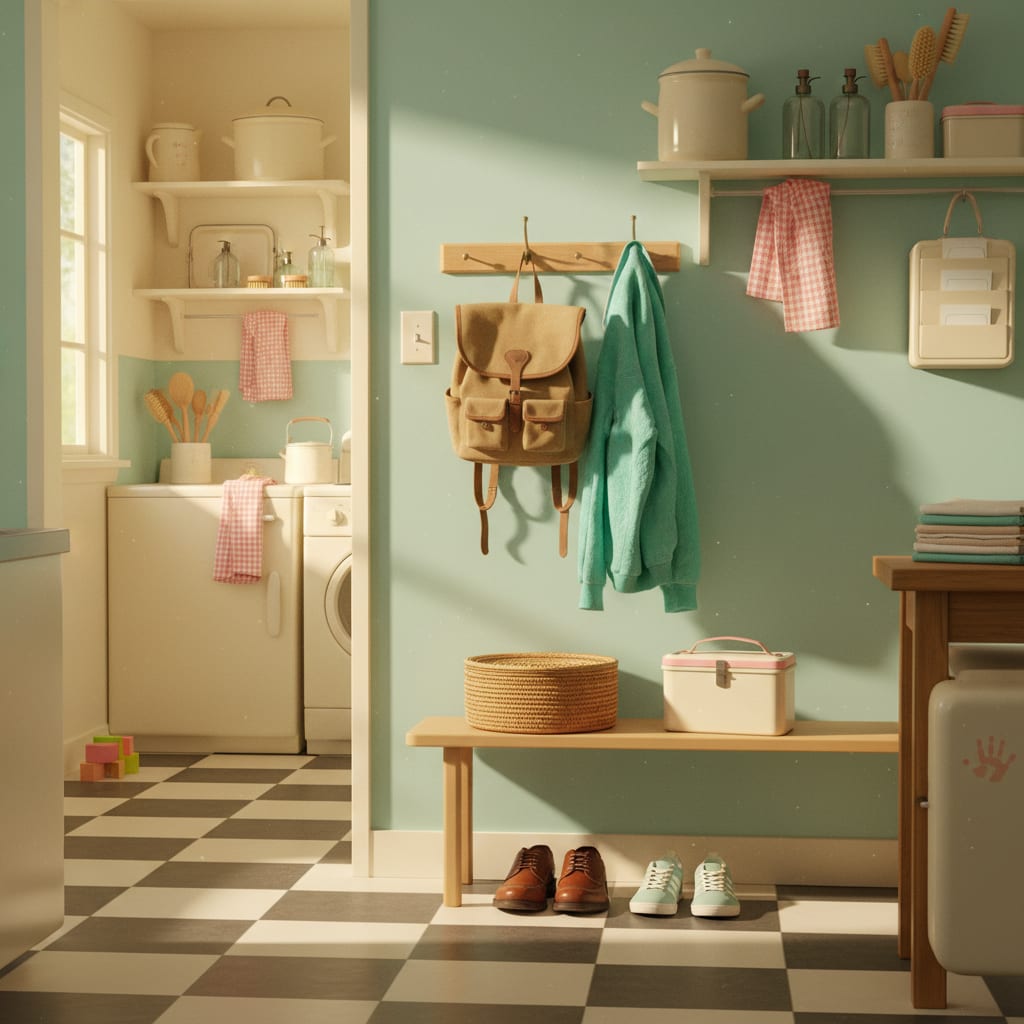
The back-to-school reset is five short days of work in the first week of August, and it is not shopping. Day one builds the launch pad by the door. Day two triages the closets. Day three gives paper a landing place before any arrives. Day four sets the lunch-and-laundry loop that has to survive September. Day five walks bedtime and wake-up back toward the school clock, fifteen minutes at a time. An hour a day, done a full three weeks before the first bell, which is the whole trick: the reset has to be finished before the schedule needs it.
Why the week matters more than the supply list
Nothing on the school-supply list will save a September morning. What saves it is a house that has somewhere to put the things school sends home, and a body clock that isn’t three weeks behind. Both of those take time to settle — a launch pad needs a week of misuse before it earns its spot, and a bedtime shift needs about ten days to stop feeling like a punishment.
So the reset front-loads. Do it now, live in it through the back half of August, and let the first bell arrive to a house that’s already been running the routine for a fortnight. A reset finished the night before is not a reset; it’s a costume.
Day 1: build the launch pad
One horizontal surface near the door you actually use, plus vertical storage above it. Each kid gets a hook at their own height and one bin — not a shared basket, because shared baskets become archaeology by October. A nine-cube organizer like ClosetMaid’s Cubeicals does the job in a hallway if you have the wall for it; an old bench with baskets underneath does it just as well.
The rule that makes it work: the launch pad holds only what leaves the house tomorrow. Backpack, shoes, water bottle, library book, the signed thing. Everything else is storage and belongs elsewhere. Test it by standing at the door and asking whether you could leave in ninety seconds without going upstairs. If not, something is missing from the pad — or something extra is squatting on it.
Day 2: triage the closets before the weather turns
Two piles, one afternoon: fits and doesn’t. Try on the shoes first, because shoes are the thing that quietly goes a size and a half over one summer and nobody notices until the first cold morning. Then five complete school outfits per child — top, bottom, socks, shoes — which is the real number you need, and the number that stops the 7:10am wardrobe negotiation.
The outgrown pile splits into pass-down (labeled bin, stored by size) and out of the house this week, not “eventually.” The whole hand-me-down bin system, including the labeling that keeps it from becoming a garage problem, is in kids’ closet organization. While the closet is open, pull the fall layers forward and push the summer things to the back — a ten-minute swap that buys you a month of easier mornings.
Day 3: give paper a place to land
School paper arrives on day one and does not stop. If it has no destination, it goes on the counter, and the counter becomes the household’s unread inbox.
Set up three destinations before any paper exists: an action spot for things needing a signature or a date, a hold spot for the current term’s reference sheets, and a keepsake box per child that is deliberately small. Small is the point — a shoebox forces the choice; a plastic tote defers it for eighteen years. The full keep-toss-treasure method, including the weekly five-minute sort that keeps the action spot honest, is in the school-paper system.
Put the family calendar where paper lands, not in a different room. Dates arrive on paper; the calendar should be within arm’s reach when they do.
Day 4: set the lunch-and-laundry loop
These two are one system, because they are the two things that must happen every single school night.
For lunch, build a bin: a shelf in the pantry and a shelf in the fridge holding only lunch components, so packing is assembly rather than a scavenger hunt. Stock enough for four days, not twenty. And put the packing in the evening, always — a lunch packed at 7am is a different, worse lunch, and it costs the exact fifteen minutes you don’t have.
For laundry, pick the two school-uniform loads and pin them to fixed days. Whatever your usual rhythm, the school year needs one specific weekday when the sports kit and the good clothes wash, chosen and written down. If your current rhythm is vague, the fixed-day version is the laundry schedule — pick the day now, while August is forgiving.
Day 5: walk the clock back
Bedtime drifts an hour or more over a summer, and it does not spring back on its own. Move it in fifteen-minute steps every second or third night — bedtime earlier and wake-up earlier by the same amount — so a ninety-minute correction takes about ten days. Starting now means the new clock is a habit before the first alarm matters.
Two things make the shift stick. Morning light, first: get everyone outside or by a bright window within half an hour of waking, because light does more for a body clock than willpower does. And keep the last hour before bed dim, screen-free and repeatable — the same order of operations every night, so the body reads it as an instruction rather than a suggestion.
The last week of summer was a household campaign — hems let down, shoes fitted, the winter coats aired, and bedtime marched backward without discussion because the school clock was simply the clock now.
Same campaign, run three weeks early and in one-hour pieces, because our August has camps and travel in it. The negotiation over bedtime we allow; the direction is not up for a vote.
What to leave alone
The reset is not a deep clean, and August is a bad month to attempt one. Skip the windows, skip the baseboards, skip the garage. The only cleaning inside this week is whatever the launch pad and closets require to be usable.
Skip the elaborate command center, too. The morning routine chart that took a whole Sunday will be ignored by the second week; a hook, a bin and a bedtime that already works will not. Keep the ordinary weekly rhythm running underneath all of this — the reset sits on top of the Sunday reset, which is what carries the school year once the novelty wears off.
FAQ: the back-to-school home reset
When should I start getting the house ready for school?
About three weeks before the first day. That gives the launch pad time to be tested and the bedtime shift time to take — roughly ten days at fifteen minutes every second or third night. Starting the weekend before means the systems are brand new exactly when the pressure arrives.
How do I fix a bedtime that drifted all summer?
Move bedtime and wake-up earlier together, fifteen minutes at a time, holding each step for two or three nights. Add bright light in the morning and a dim, screen-free last hour. Jumping the whole hour in one night usually produces a child who lies awake and a household that gives up by Thursday.
What actually belongs on a launch pad?
Only what leaves the house tomorrow: backpack, shoes, water bottle, library book, anything signed. One hook and one bin per child, at their height. Coats, sports gear for other seasons and craft supplies are storage — they live somewhere else, or the pad stops working within a month.
Do I need a family command center for the school year?
No. A calendar within reach of where paper lands, an action spot for things needing a signature, and a fixed weekly five minutes to sort both will outperform an elaborate wall system. Command centers fail because they need maintenance; a landing place and a habit do not.
Next cards in the file
Nursery Organization: Set Up for the 2am You
July 17, 2026
How to Clean Blinds (Slats, Cords and All)
September 23, 2026

How to Use Borax in Laundry (and Whether You Should)
August 15, 2026