Kids' Closet Organization That Survives a Growth Spurt
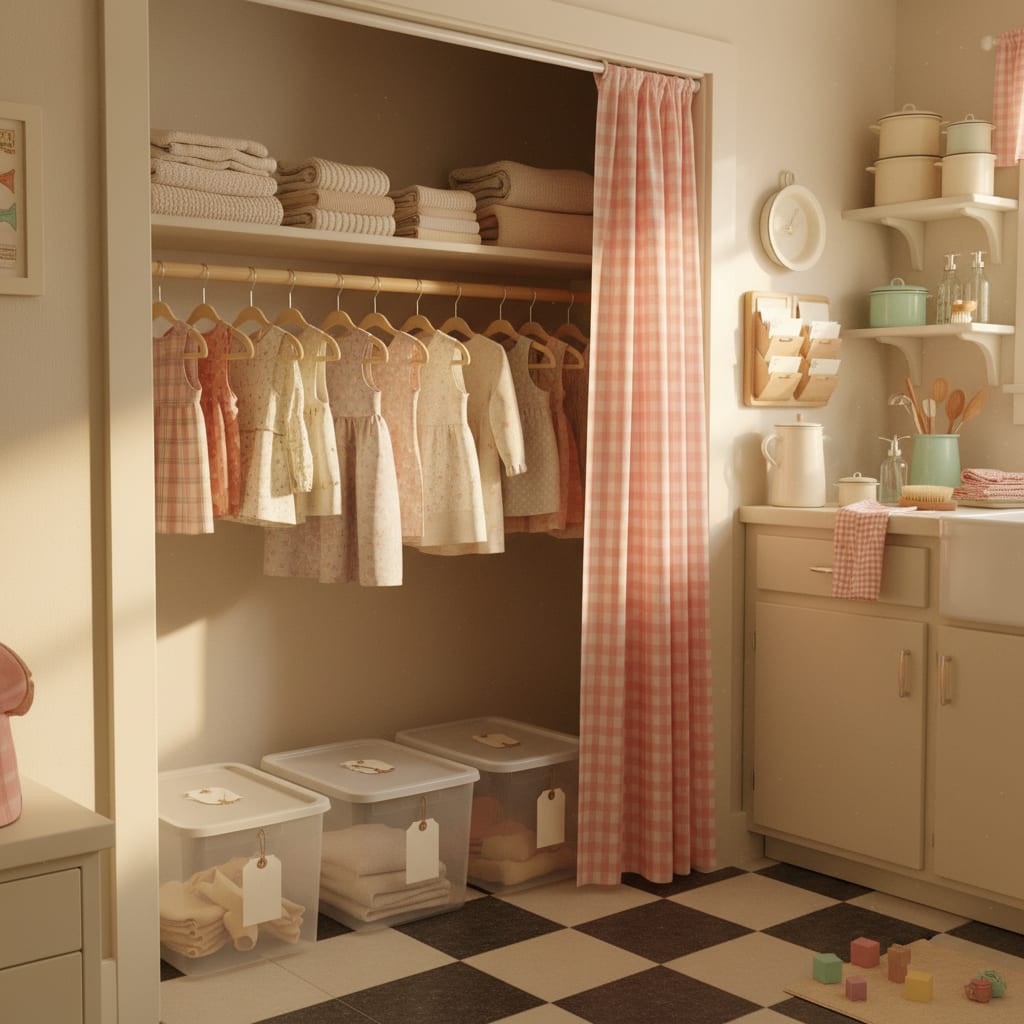
A kids’ closet survives a growth spurt when it holds one size only — the size they are wearing right now — and everything else is already sorted into labeled bins by size, waiting its turn. Drop the rod to kid height, double-hang it so you get two useful levels instead of one wasted one, mark the sizes on the rod, and give every future and past size its own bin somewhere that isn’t this closet. Then the growth spurt stops being a crisis and becomes a twenty-minute swap.
Why kids’ closets fail
Kids’ closets are built like adult closets: one rod at five feet, one shelf above it, and about four feet of dead air underneath where a small person could actually reach their own clothes. Then we fill that adult-shaped space with four sizes at once — the 3T they’ve outgrown, the 4T they wear, the 5T from Grandma, and the snow pants for a winter that is five months away — and wonder why nobody can find a shirt.
Every rule below comes out of that single diagnosis. One size in the closet. Everything else in a bin with a size on it.
Build the closet in one nap time
Empty it and sort by size, not by type. Everything on the floor, sorted into piles by tag size: too small, current, too big. Ignore the impulse to sort by category first — size is the only sort that matters here, because size is what changes.
Lower the rod, then double it. Most kids’ closets have a single rod mounted for a grown-up. Either remount it at about your child’s shoulder height, or hang a double closet rod off the existing one — it drops a second bar into the dead space below, which gives you a reachable level for their daily clothes and keeps the high rod for coats, dresses and things you’d rather they didn’t help themselves to. A four-year-old who can reach their own shirts hangs up their own shirts roughly one time in three, which is infinitely more than zero.
Put the sizes on the rod. Closet size dividers — the little collars that ride on the rod — are the single cheapest fix in this whole post. They tell you at a glance where 4T ends and 5T begins, which means the “does this still fit?” audit takes forty seconds instead of an afternoon. They’re sold as a nursery item; they work straight through elementary school.
Switch to one hanger type. Mismatched hangers eat about a third of your rod. A set of slim velvet hangers in kid size buys back real inches and stops the shoulder-bump slide that lands cardigans on the closet floor. This is the one place I’ll cheerfully recommend buying containers — but only after the sort, never before.
The hand-me-down bin system
This is the part that makes the whole closet self-healing, and it’s straight out of my grandmother’s card file — she called it “the next-size box,” singular, because she had one child’s worth of clothes and a cedar chest. Modern version, scaled for two kids and a stream of hand-me-downs from three directions:
- One bin per size. Not one bin for “hand-me-downs.” Size 4, size 5, size 6, each its own clear latching box, each labeled on the short end that faces out.
- Clear bins beat opaque ones. You will look for the winter coat at 7am in November. Being able to see through the box is worth more than the box being pretty.
- Store them out of the bedroom. Garage shelf, basement, top of a hall closet. Bedroom storage should hold what’s in use; anything else is just clutter with a lid on it.
- Wash and sort before storing, always. Clothes go into the bin clean, folded, and having already failed the stain test — because a stain that’s invisible now will be brown and permanent in eighteen months. Cheerful truth from the card file: an unwashed hand-me-down is a donation you haven’t made yet.
- A note on mothballs. They’re the classic old-house answer and I don’t use them: naphthalene fumes are genuinely hazardous, especially around kids, and they permanently scent everything they touch. Cedar blocks, a lavender sachet, or simply clean clothes in a sealed box do the job for the pests we actually get. This is one of the places where “how it used to be done” was retired for good reason.
The twenty-minute seasonal swap
Four times a year — or the morning something obviously doesn’t fit — you run the swap: pull the current rod, try the questionable items on the child right there (three minutes, bribe as needed), send too-small into the next kid’s bin or the donation box, and bring up the next-size bin to fill the gap. Everything that leaves the closet goes somewhere the same day. A “sort later” pile is how closets get re-clogged.
Do the swap standing up, in one go, during a nap or a show. It is genuinely a twenty-minute job once the bin system exists — the first build takes an afternoon, and every swap after that is short. If yours consistently runs long, the culprit is almost always volume, and the fix lives in the declutter checklist: kids’ clothes are its fifth chapter, and the box-a-day pace works here too.
Hang, fold, or bin?
Hang: dresses, button shirts, anything that wrinkles, the current-week rotation for a school-age kid. Fold in drawers: pajamas, leggings, tees, underwear, socks — file them upright so a small hand can see every one without excavating. Open bin on the closet floor: shoes, one bin, chaos permitted; matching pairs is not a hill worth dying on. High shelf: off-season and special occasion, in a labeled bin, out of the daily sightline.
If the closet also has to hold linens or a shared stash, borrow the folded-sets trick from linen closet organization — one folded set tucked inside its own pillowcase — and give it a single labeled shelf rather than letting it spread.
Keeping it that way
Three habits, all small. A donation bag lives on a hook inside the closet door; when something doesn’t fit, it goes in the bag, not back on the rod. Laundry returns to the closet by size divider, so a stray 3T can’t quietly re-enter. And when two kids share the space, split the rod by height rather than by fairness — the full version of that arrangement is in organizing a shared kids’ room, where one closet has to do two jobs.
FAQ: kids’ closet organization
How do you organize a kid’s closet so they can use it themselves?
Lower the rod to their shoulder height (or add a second, lower bar), keep only current-size clothes on it, and put shoes in an open floor bin. Anything above their reach belongs to you, not them.
What’s the best way to store hand-me-down clothes?
Clean, folded, one clear labeled bin per size, stored outside the bedroom. Skip mothballs; a cedar block or sachet in a sealed box is enough for household pests and won’t fill the clothes with fumes.
How often should you clean out a child’s closet?
Seasonally — four short swaps a year — plus an on-the-spot pull whenever something clearly doesn’t fit. Waiting for a big annual purge is how you end up storing three sizes at once.
Should kids’ clothes be hung or folded?
Fold what doesn’t wrinkle and file it upright in drawers; hang what does. Folding more and hanging less usually wins in a small kid’s closet, because drawers are easier for small hands than hangers.
Next cards in the file
Nursery Organization: Set Up for the 2am You
July 17, 2026
Castile Soap Uses: One Bar, Whole House
July 17, 2026
How to Organize a Laundry Room (Small Ones Too)
August 11, 2026