The FlyLady Method, Modernized (What to Keep and Skip)
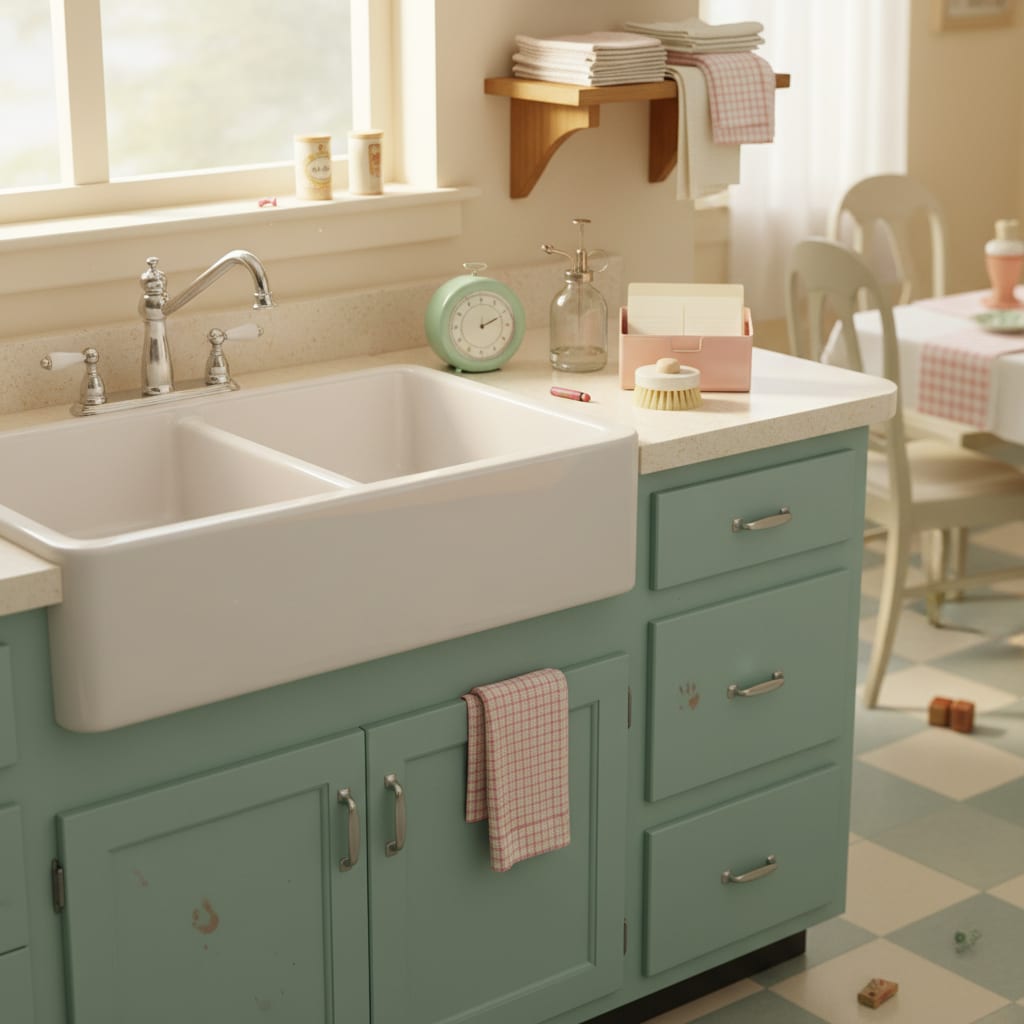
The FlyLady method still earns its place in the card file — if you keep the four load-bearing pieces and quietly retire the rest. Keep the shiny sink habit, the 15-minute timer, weekly zones, and baby-step onboarding; skip the email flood, the mandatory lace-up shoes, and the guilt-flavored maximalism of the full control journal. What’s left is a genuinely durable home-maintenance system: small timed efforts, attached to a rotation, started so gradually you barely notice becoming a person with routines.
What the FlyLady system actually is
FlyLady — Marla Cilley’s system, built in the early-internet era and spread through her mailing list — organizes homekeeping into daily micro-habits (start by shining your kitchen sink every night), 15-minute timed bursts, weekly rotating zones for detail cleaning, and “baby steps” that add one habit at a time instead of handing you a complete schedule on day one. It reached millions of inboxes for a reason: underneath the branding sits the same room-rotation architecture housekeepers have used for generations, dosed for people starting from zero. It’s a method review, so let’s be fair in both directions: some pieces have aged beautifully, and some are showing their dial-up era.
Keep: the four pieces that survive a Tuesday
The shiny sink. Waking up to one clean surface genuinely changes the morning’s momentum — it’s the anchor habit the whole system hangs on, and it costs five minutes at night. This is the FlyLady move I’d defend in court; it’s also the seed of our whole daily cleaning routine, which is basically “shiny sink plus two friends.”
The 15-minute timer. “You can do anything for 15 minutes” is the single best sentence in the system. The timer converts “clean the playroom” (unstartable) into “playroom until it beeps” (startable). Every rhythm on this site runs on that engine.
Zones. One area per week getting focused detail work while the rest of the house coasts — the rotation idea with hotel-housekeeping ancestry. I’ve unpacked it fully in zone cleaning; FlyLady’s version is a fine on-ramp to it.
Baby steps. Adding one habit at a time, weeks apart, is why FlyLady systems stick where downloaded mega-schedules collapse. Slow onboarding looks unambitious and works precisely because of it.
Skip or adapt: the parts showing their age
The message volume. The classic system arrived as a torrent of daily emails and reminders. Some people love the drumbeat; if you don’t, put the rotation on paper instead — a card on the fridge does the same job silently, and the free cleaning schedule printable has the layers ready to fill in.
Dressing to the shoes. FlyLady famously prescribes getting fully dressed to lace-up shoes every morning as a readiness signal. If it flips a switch for you, lovely — keep it. But it’s a psychological trick, not a load-bearing wall, and the system runs fine in whatever you actually wear at home.
The full control journal. The complete binder — routines, menus, lists for everything — is more system than most homes need, and maintaining it becomes its own chore. Extract the two pages that matter (morning routine, evening routine) and let the binder go.
The tone, sometimes. The messaging leans hard on rescuing you from chaos, and if you’re not in chaos it can read as guilt. Take the tools, leave the framing. A method should feel like equipment, not judgment.
The modernized week, assembled
Here’s the version running in this house: the shiny-sink evening routine as the nightly floor; a day-per-task spine from the weekly cleaning schedule for maintenance; the timer for every session; and a zone-style detail week borrowed whenever a room needs its deep turn. Onboard it FlyLady-style — one piece at a time, a new layer only after the last one runs without willpower. That’s the whole modernization: her engine, our chassis, nobody’s inbox.
Start tonight with just the sink. Genuinely just the sink — the system’s best idea is that the first step should be almost embarrassingly small.
FAQ: the FlyLady method
Does the FlyLady method still work?
The core of it does. Shiny sink, 15-minute timed sessions, weekly zones, and gradual habit-building are as effective as ever. The delivery — email floods, the full control journal, dressing to shoes — is optional and skippable without losing the engine.
What are FlyLady zones?
The house divides into about five areas, and each gets one week of short daily detail-cleaning sessions per month while the rest coasts on routines. It’s the same rotation logic hotels have always used, packaged for homes.
What is the FlyLady shiny sink habit?
Every night, the kitchen sink gets emptied and wiped dry before bed, so the day ends with one finished surface and the morning starts at zero. It’s the system’s first baby step and the anchor the other routines build on.
Is FlyLady better than a weekly cleaning schedule?
They solve different layers: FlyLady is strongest as an on-ramp — habits, timers, gentle starts — while a day-per-task weekly schedule is a steadier maintenance spine. The combination works better than either alone: her habits underneath, a weekly rhythm on top.
Next cards in the file
Nursery Organization: Set Up for the 2am You
July 17, 2026
Does Laundry Detergent Expire? What Actually Changes
August 15, 2026
How to Fold a Fitted Sheet (For Real This Time)
July 31, 2026