How to Clean Silver: The Foil Bath and When to Polish
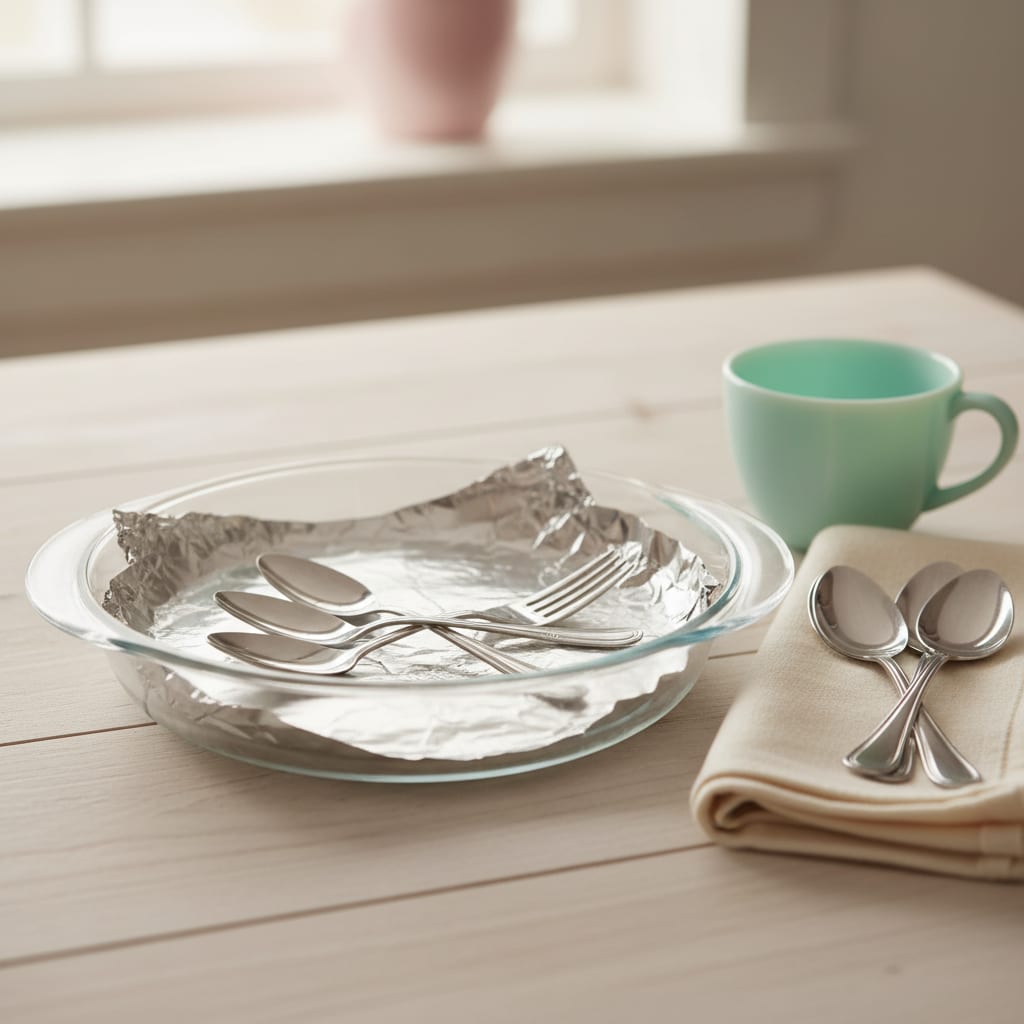
To clean tarnished silver at home, wash it in warm soapy water first, then decide between two methods. For everyday sterling flatware with plain surfaces, use the foil bath: line a heatproof dish with aluminum foil, lay the silver on it so every piece touches the foil, cover with hot water and dissolved washing soda or baking soda, and let the tarnish fade. Rinse, dry, and buff with a silver cloth. For silver plate, antiques, hollow-handled knives and anything glued, set with stones or gilded, skip the bath and use a gentle polish instead.
Wash it first, and check what it is
Tarnish is the dark film silver grows from sulfur compounds in the air. The Canadian Conservation Institute’s note on silver care and tarnish removal, written for museum collections but just as useful for a sideboard drawer, says tarnish can be removed “mechanically with a polish, chemically with a dip, or electrochemically.” The foil bath is the third kind.
Before any of them, wash the piece. Warm water and a little dish liquid takes off the grease and food that otherwise sit between you and the tarnish. CCI’s instruction afterward: “rinse the object with distilled water and dry it with a soft cloth or warm air.” Tap water is fine for a dinner fork; the point is to dry it at once so no spots form.
Then turn it over. CCI’s advice is to “look for hallmarks or other identifying marks that will tell you if the piece is solid sterling silver or another metal covered with a thin layer of silver.” Solid silver is often stamped “sterling” or “925”; plate often carries “EP”, “EPNS” or a maker’s name with no fineness mark. This matters more than which method you pick, because CCI warns: “If the object is silver plated, any method of tarnish removal may be very damaging.” Every cleaning takes a little silver with it, and plate has very little to give.
The foil bath, step by step
CCI describes the chemistry plainly: “When a silver object is placed in contact with aluminum and both are submerged in a warm solution of sodium carbonate (washing soda), any tarnish on the silver slowly disappears.” The aluminum corrodes, and the hydrogen it gives off “reacts with the tarnish, reducing it back to silver metal.” Most kitchen versions swap in baking soda, which the house already has; CCI’s own version uses washing soda.
- Line a heatproof dish (a glass baking dish or an enamel basin) with a sheet of aluminum foil, shiny side up.
- Lay the silver on the foil. Every piece must touch it. The method only works “as long as contact is maintained between the two metals.” Don’t stack pieces.
- Add the soda and hot water. A few tablespoons of washing soda or baking soda, dissolved in enough hot water to cover everything. CCI gives no exact quantity, and the strength is not critical.
- Wait. Light tarnish goes in minutes. Heavy tarnish may need a second bath with fresh foil and fresh water, because spent foil stops working.
- Lift out with tongs, rinse well and dry at once. CCI says the object “must be rinsed well with distilled water to remove any traces of electrolyte.”
- Buff. The bath leaves silver from the tarnish “in the form of rough particles that leave a dull, matte finish.” A silver polishing cloth brings the shine back.
Two cautions from CCI worth knowing before you do a whole drawer. “Pitting of the object can occur if the aluminum plate has become inert”, so change the foil when it darkens and stops working. And “objects cleaned by this method may tarnish more quickly than silver that has been polished.” The foil bath is fast, not forever.
Pieces that never go in the bath
CCI rules out any water at all for “objects with sealed hollow components”, and gives “candlesticks and trophies with hollow feet or teapots with hollow handles” as examples. Water that gets inside doesn’t come back out. Keep these out of the bath:
- Silver plate, especially worn plate where the base metal shows through.
- Hollow-handled knives. A sealed hollow handle is exactly what CCI’s warning describes.
- Composite pieces. CCI lists “teapots with ivory handles, candlesticks with rosin or plaster in the base, or silver boxes lined with wood.”
- Anything set with stones or pearls, or glued.
- Gilded silver. CCI notes that “polishes will damage gilding” too, so leave gilt pieces to a professional.
- Pieces with deliberately dark decoration, such as niello, which CCI flags as easily damaged. Antiques and anything valuable belong with a conservator or a silversmith.
When to polish instead
For plate, antiques, and the pieces above, a gentle polish is the method. CCI names “some gentle liquids, pastes, and foams”, including Hagerty’s and Goddard’s products. Hagerty Silversmiths’ Polish is the familiar bottle.
Use a soft cotton cloth, a small amount of polish, and light pressure, turning to a clean part of the cloth as it blackens. Rinse and dry afterward so no polish dries in the crevices. For pieces that are only lightly dulled, CCI notes silver polishing cloths are “gentle because, by their very nature, they do not contain the concentration of abrasive particles that would be found in a liquid, paste, or foam polish.”
Dips are the third option, and the one to use least. CCI warns that the acids in them “will damage niello, bronze, stainless steel knife blades, and organic materials such as wood”, and that a dip used carelessly will over-clean chased, engraved or embossed decoration.
The card for "the good silver" says to polish it once before Thanksgiving, use it, wash it by hand, dry it at once, and put it back in the flannel roll. The roll is the part that saved her the most work.
The foil bath for the everyday sterling forks, a gentle polish for the plated gravy boat and anything old, a check for hallmarks before either, and a tarnish-resistant bag instead of the flannel roll.
Keeping it from tarnishing again
Every cleaning takes a little silver off, so the easiest cleaning is the one you don’t need. CCI makes prevention the priority for that reason.
- Handle it with clean hands or cotton gloves. CCI says “the salts and oils that are on skin can mark the silver and leave fingerprints.”
- Store it sealed. CCI suggests “polyethylene bags”, sealed, with each piece wrapped in acid-free, unbuffered tissue, or “wrapped in a tarnish-inhibiting cloth before being placed in the polyethylene bag.” A Hagerty Silver Keeper bag is a ready-made tarnish-resistant version for flatware.
- Wash it soon after use, by hand, and dry it at once.
- Use it. Silver that comes out every Sunday gets washed and dried often enough that it rarely needs a full clean.
If silver is coming out for a holiday table, add it to the week-before list in the holiday hosting house prep checklist, not the morning of. The foil bath is one of the jobs in old-fashioned cleaning tips worth doing properly; the baking soda in it is the same box that does fifteen other jobs in baking soda cleaning.
FAQ: cleaning silver at home
Does the aluminum foil and baking soda method damage silver?
Not usually, on plain sterling flatware. The risks are pitting if the foil has stopped working, a matte finish that needs buffing, and faster re-tarnishing. Keep plate, antiques, hollow pieces and decorated work out of it.
Can you clean silver-plated pieces with the foil method?
CCI warns that “any method of tarnish removal may be very damaging” to silver plate. Use a gentle polish sparingly, and stop when it shines.
Why does silver turn black?
Sulfur compounds in the air, such as hydrogen sulfide, react with the surface to form silver sulfide, the dark film we call tarnish.
How do you store silver so it doesn’t tarnish?
In sealed polyethylene bags, each piece wrapped in acid-free tissue or a tarnish-inhibiting cloth, according to CCI. Handle it with clean hands or cotton gloves.
Is a silver dip safe to use?
Use one sparingly. CCI warns that dips damage niello, stainless steel knife blades and wood, and can over-clean engraved decoration.
Next cards in the file
Nursery Organization: Set Up for the 2am You
July 17, 2026
Does Laundry Detergent Expire? What Actually Changes
August 15, 2026

Getting the House Guest-Ready: The 3-Day Plan
August 3, 2026