Baking Soda Cleaning: 15 Jobs It Still Does Best
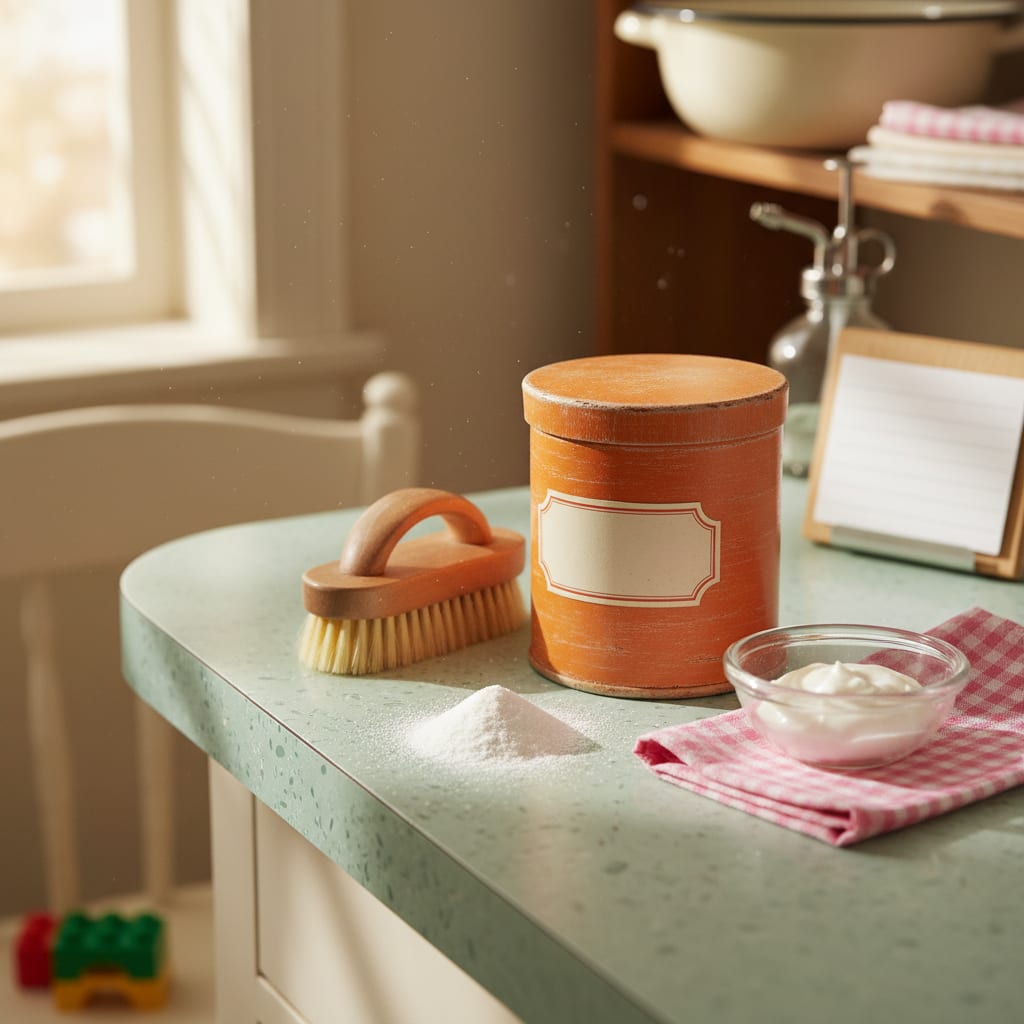
How to clean with baking soda, in one sentence: use it wherever the job needs a gentle scrub or an odor absorbed — sinks, tubs, pots, mattresses, fridges, carpets, sneakers — as a paste for scrubbing and a dry sprinkle for deodorizing, and skip it on aluminum, glass cooktops, and anything with a delicate finish. It’s a mild alkaline abrasive, not a miracle: it cuts grease-film and grime by physically lifting it, and it neutralizes acidic odors rather than perfuming over them. Below are the fifteen jobs where the orange box (Arm & Hammer) still beats anything in a spray bottle, plus the short list of places it doesn’t belong.
Why this card stays in the file
Baking soda has held its place in my grandmother’s tin card file for one reason: it’s abrasive enough to scrub, gentle enough not to scratch most surfaces, and boring enough to be safe around kids. In an era of specialized cleaners, one humble powder covering the scrub-and-deodorize beat is exactly the kind of method this house keeps — tested, timed, and cheap.
The card says, roughly: sprinkle it on the sink, scrub with a damp rag, shake some in the icebox, and put a spoonful in the wash. No measurements, no exceptions — the box did everything short of raising the children.
Same box, edited job list. It keeps the scrubbing and deodorizing work, loses the "mix it with vinegar for a power cleaner" myth (the fizz neutralizes both), and stays away from aluminum and delicate cooktops. Fifteen jobs, tested below.
The 15 jobs it still does best
- Kitchen sink scrub. Sprinkle, scrub with a damp cloth, rinse. Stainless and porcelain both come up bright without scratching.
- Burnt-on pots and pans. Simmer an inch of water with a few spoonfuls of baking soda, cool, then scrape — the burnt layer lifts instead of fighting you. (Not aluminum — it darkens it.)
- Bathtub and shower-tray grime. A paste of baking soda and a little water scrubs soap scum and body-oil film off without harsh fumes near bath toys.
- Mattress refresh. A dry sprinkle, an hour of sitting, and a slow vacuum pass — the whole method gets its own card in how to clean a mattress.
- Fridge deodorizing. The classic open-box trick works because baking soda absorbs acidic food odors; swap the box every couple of months.
- Carpet and rug refresh. Sprinkle lightly, let it sit briefly, vacuum slowly. It lifts musty smells rather than masking them.
- Trash can bottoms. A scoop under the liner absorbs the mystery drips between wash-outs.
- Sneaker and diaper-pail odors. A light dusting inside overnight, tapped or vacuumed out in the morning.
- Crayon, scuff, and pencil marks. A damp cloth dipped in dry baking soda erases most kid-artwork from painted walls — full ranking in how to get crayon off walls.
- Laundry booster. Around half a cup in the drum helps detergent work in hard water and softens musty towels.
- Stovetop grease film. Paste, ten minutes, scrub, wipe. The film that shrugs off spray cleaner rolls up under mild abrasion.
- Grout lines. A paste and an old toothbrush brighten cement grout without the acid risk vinegar carries there.
- Plastic food containers. A paste scrub takes out tomato stains and clinging smells that survive the dishwasher.
- Oven interior (the patient method). Paste the walls, leave it overnight, wipe out. Slower than fume-heavy oven spray, and you can breathe while it works.
- Kids’ bath toys and high-chair trays. A sprinkle-and-scrub cleans grime without leaving anything you’d worry about near a mouth.
Where the box loses
- Aluminum pans and fixtures — alkalinity darkens and dulls them.
- Glass and ceramic cooktops — even mild abrasion can haze the surface; use the manufacturer’s method.
- Marble and other natural stone — safer than vinegar, but abrasion plus alkalinity can dull polished stone. Don’t.
- Anything that needs disinfecting. Baking soda cleans; it is not a disinfectant. Raw-chicken counters and stomach-bug bathrooms get a registered disinfectant, used per its label.
- As a vinegar cocktail. Mixing them makes salty fizz-water — use them in sequence (soda scrub, then a vinegar rinse for scale), never as one bottle.
Technique: paste, sprinkle, or soak
Three forms cover everything. A paste (roughly three parts soda to one part water) is for scrubbing vertical or greasy surfaces. A dry sprinkle is for deodorizing — it needs contact time, not moisture, so let it sit before vacuuming. A soak or simmer is for burnt pots and drains. If a job needs more cutting power than paste provides, step up to a soap-based cleaner — that’s castile soap’s territory — rather than scrubbing harder.
FAQ: cleaning with baking soda
What surfaces should you not clean with baking soda?
Aluminum (it darkens), glass or ceramic cooktops and other easily-hazed surfaces, and polished natural stone like marble. When in doubt, test a hidden spot — it’s mildly abrasive, and “mild” still matters on delicate finishes.
Does baking soda disinfect?
No. It cleans grime and absorbs odors, but it doesn’t reliably kill germs. For surfaces that need real disinfecting, use an EPA-registered disinfectant and follow the label; use baking soda for the everyday scrub jobs.
Is mixing baking soda and vinegar a good cleaner?
Not really — the acid and base neutralize each other into mostly salty water. The fizz can help nudge a slow drain, but for surfaces, use them in sequence: baking soda to scrub, vinegar afterward for mineral film.
How long should baking soda sit before vacuuming?
For carpets and mattresses, give it at least a brief sit — an hour is a comfortable target if the room’s schedule allows. Odor absorption improves with contact time, so longer doesn’t hurt; vacuum slowly so the machine actually lifts the powder.
Next cards in the file
Nursery Organization: Set Up for the 2am You
July 17, 2026
How to Clean Fireplace Glass: Wood Stove Ash or Gas Cleaner
October 11, 2026
How to Get Candle Wax Out of Fabric and Tablecloths
October 11, 2026