Full Moon and Kids' Sleep: What the Research Actually Says
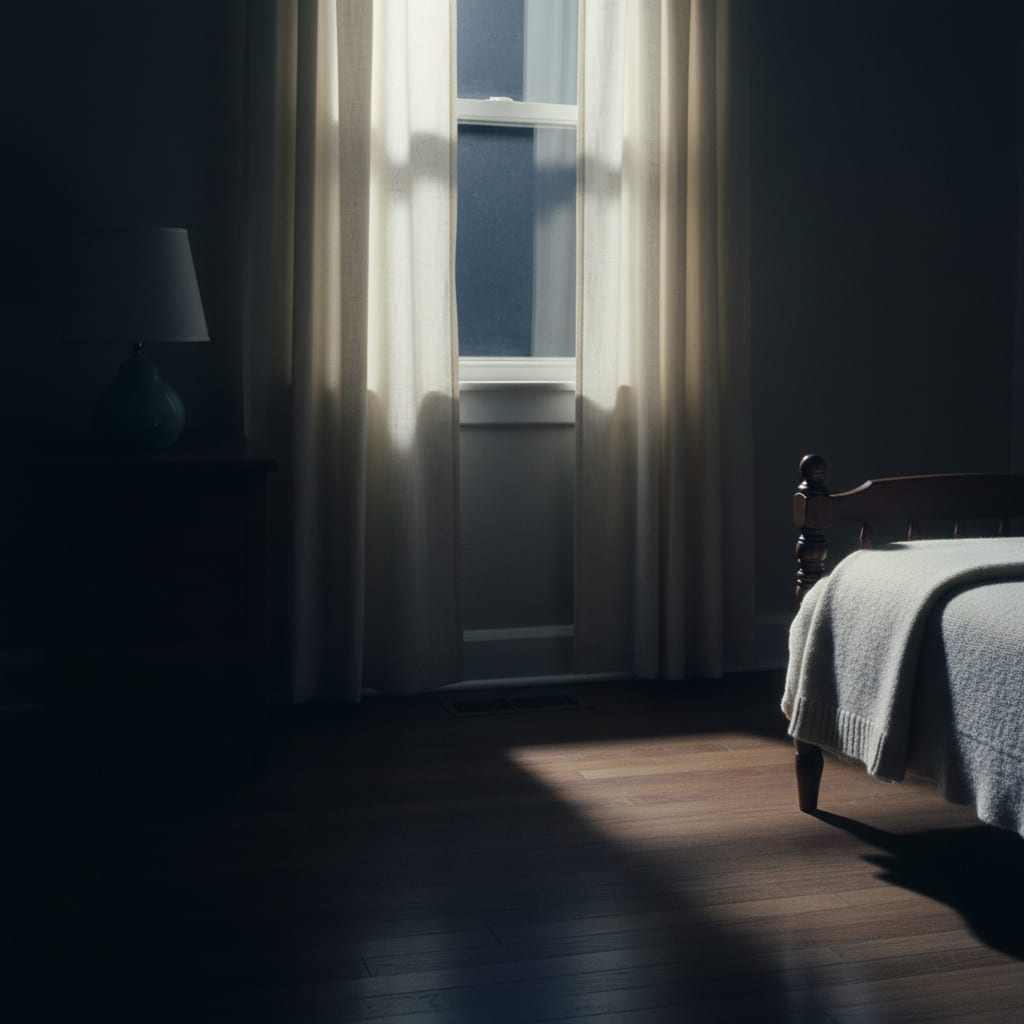
The idea that children sleep badly at the full moon is old, and the evidence for it is small and mixed. The largest study, of 5,812 children aged 9 to 11 in 12 countries, found sleep about 5 minutes shorter around the full moon than around the new moon, which is about 1% of a night. Its authors doubted that this matters. An earlier Danish study of 795 children found the opposite: slightly longer sleep at the full moon. A small study of preschoolers found lower evening melatonin near the full moon, but it didn’t measure sleep. So keep the usual bedtime, and look for a commoner cause first.
The old wives’ tale
Every household had a version of it: the full moon made the children wild and the night long. The moon is easy to blame, because it is up there, visible, on the very night that went wrong.
The trouble with that is how people remember. A bad night at the full moon gets noticed and remembered, and a bad night in the middle of the month is just a bad night. The researchers behind the best-known adult study made the same point. They analysed their data only after the fact, partly “to exclude confounders such as increased light at night or the potential bias in perception regarding a lunar influence on sleep.” The real question is whether children actually sleep differently, measured by something other than a tired parent’s memory.
What the studies of children found
The 12-country study (2016). Researchers led by Jean-Philippe Chaput used data from the ISCOLE study, published in Frontiers in Pediatrics. Children wore a waist activity monitor day and night for a week, giving 33,710 recordings from 5,812 children aged 9 to 11 on every inhabited continent. Sleep was 4.9 minutes a night shorter at the full moon than at the new moon. Physical activity didn’t differ in any meaningful way. The authors’ verdict: “Whether this seemingly minimal difference is clinically meaningful is questionable.” They also list the weak spots: the study was cross-sectional, a waist monitor can’t fully tell sleep from lying still, and each child was measured for one week, not a whole lunar cycle.
The Danish study (2015). Anders Sjödin and colleagues looked back at data from 795 Danish children aged 8 to 11, published in Clinical Obesity. Around the full moon, these children slept 2.4 to 4.1 minutes a night longer and were 3.2 to 5.0 minutes a day less active. The authors wrote that they had “no understanding of potential mechanisms” behind the link, or of the “confounders that may explain this.”
So the two biggest studies of children point in opposite directions, and both differences are a few minutes. A later paper sums up the two plainly: “the direction was inconsistent and the magnitude of the difference observed in each study was small (4–5 min).”
The preschool melatonin study (2023). A University of Colorado Boulder team re-analysed data on 46 healthy children aged 3 to 5, published in the Journal of Sleep Research. Melatonin is the hormone that rises in the evening as the body gets ready for sleep. The windows in each child’s bedroom were covered with black tarps for the 5 to 7 days before testing, and samples were taken in dim light. Melatonin around bedtime was lower in children tested near the full moon than near the new moon. That is the most intriguing result here, and the smallest study. Each child was tested once, so it compares different children rather than one child across the month. It was 46 children in one town, in summer only. The authors also note that they “were unable to examine the association between lunar phase and sleep duration”. It shows a difference in a hormone, not in how long anyone slept.
What the adult studies add
Most moon research is on adults, and it is mixed too.
- A Swiss sleep-laboratory study (2013). Christian Cajochen and colleagues re-examined lab records from 33 adults, published in Current Biology. Around the full moon, deep-sleep activity fell by 30%, falling asleep took 5 minutes longer, and total sleep was 20 minutes shorter.
- Other adult studies are split. As the 12-country paper summarises them, one later lab study of 47 adults found about 25 minutes less sleep at the full moon. A population study of 2,125 Swiss adults found no significant effect.
- A field study (2021). Leandro Casiraghi and colleagues tracked sleep with wrist monitors in Toba/Qom communities in Argentina, with and without electricity, and in 464 university students in Seattle. They published it in Science Advances. Sleep started later and was shorter on the nights before the full moon, when the moon is up in the evening. These were adults and students, not children.
Why would the moon matter at all?
Nobody knows, and the papers say so. The obvious answer is moonlight, but the 12-country authors call it unlikely to matter much in homes full of electric light. The preschool study covered the windows and still found a difference. The Seattle authors suggest that electric light in the evening may now do what early-evening moonlight once did. Some researchers suspect an inner monthly rhythm, like the ones known in sea creatures, but in humans that is still a guess.
The honest summary: there may be a small effect on some measures, in some studies. Nothing here shows the full moon causing bedtime battles or a week of bad nights.
The card file treats the moon like weather: "Full moon. Expect them up late. Don't fight it." It was a way of forgiving a hard night in advance.
Same forgiveness, minus the forecast. A rough night gets the usual comfort and the usual bedtime the next day. If nights keep going wrong, we look at the room and the routine before we look at the sky.
What to do on a full-moon night
The research doesn’t call for any special moon routine. What it supports is the ordinary routine, kept steady.
- Keep the usual bedtime. A few minutes either way, in either direction, is well inside a normal night’s variation. Moving bedtime around for the moon only adds a real change.
- Check the light. If a bright moon really is shining across the bed, a dark room solves it on every night of the month, not just one. Darkness, steady sound and a cool room are covered in the baby sleep environment post. Full moonlight is only about 0.25 lux, the 12-country paper notes, and most children spend their evenings under far brighter lamps.
- Look at the routine before the calendar. A bedtime that has crept long, a late nap or an overtired child explains far more bad nights than the moon does. Trimming a bedtime routine that runs too long is a better place to start.
- Check the hours. Most school-age children need 9 to 12 hours a night and preschoolers 10 to 13, including naps. Betteroo’s chart of how many hours children need at each age sets the numbers out. A child who is short every night will feel the bad nights more.
- Watch the season as well as the moon. Autumn’s darker mornings can drift a wake-up later, and that one has a clear cause: morning light. The dark-mornings routine covers it.
To test the saying at home, log bedtimes and wake-ups for two months without checking the moon, then mark the full moons afterward. It beats a memory of the bad nights.
FAQ: the full moon and children’s sleep
Do kids sleep worse during a full moon?
Not by much, if at all. The largest study, of 5,812 children, found about 5 minutes less sleep at the full moon. A Danish study of 795 children found slightly more sleep. Neither difference is large enough to explain a bad night on its own.
Does the full moon make children hyper?
There’s little evidence for it. The 12-country study found physical activity didn’t meaningfully change with the moon. The Danish study found children slightly less active around the full moon.
Does the full moon affect babies’ sleep?
None of the studies found for this post looked at babies. The youngest children studied were 3 to 5 years old. That study found lower evening melatonin near the full moon, but it didn’t measure how they slept.
Next cards in the file
Nursery Organization: Set Up for the 2am You
July 17, 2026
How to Do Laundry: The Order That Actually Works
August 11, 2026
Line Drying Clothes: How to Hang, Dry and Save
July 31, 2026