How to Clean an Oven With Baking Soda and Vinegar
To clean an oven naturally, take everything out, mix half a cup of baking soda with two to three tablespoons of water into a spreadable paste, and coat the inside walls, floor and door, keeping it off the heating element of an electric oven and the gas inlet of a gas one. Shut the door and leave it from 30 minutes to overnight, depending on the grime. Then scrub with a non-scratch pad dipped in white vinegar, wipe out the paste with a damp cloth, and finish with a vinegar spray and a dry wipe. Soak the racks separately in warm soapy water.
Before you start: read the manual, then the oven
The owner’s manual outranks any home method, including this one. Two things to check first:
- Is it a self-cleaning oven? If so, the manual will say what can and can’t touch the interior. Samsung’s oven-cleaning support page is blunt about one thing: “Commercial oven cleaners or oven liners should NEVER be used in or around any part of the oven. Residue from oven cleaners will damage the inside of the oven during a self-cleaning operation.” The same page asks you to “avoid harsh chemicals or coarse pads/brushes that may scratch or otherwise damage the cavity finish.” So: gentle paste, soft pad.
- Electric or gas? Find the element (the coil along the top or floor) or the gas inlet before you start, so you know where the paste must not go.
Cornell Cooperative Extension calls the do-it-yourself method “by far the safest” and “appropriate for any oven type” in its guide to cleaning your oven for holiday roasting and baking. It is also the slowest, so start it in the evening.
The DIY oven cleaner: the paste, step by step
This is what most people mean by a “DIY oven cleaner”, in Cornell’s order.
- Empty it and protect the floor. Racks and thermometer out, an old towel on the floor under the door.
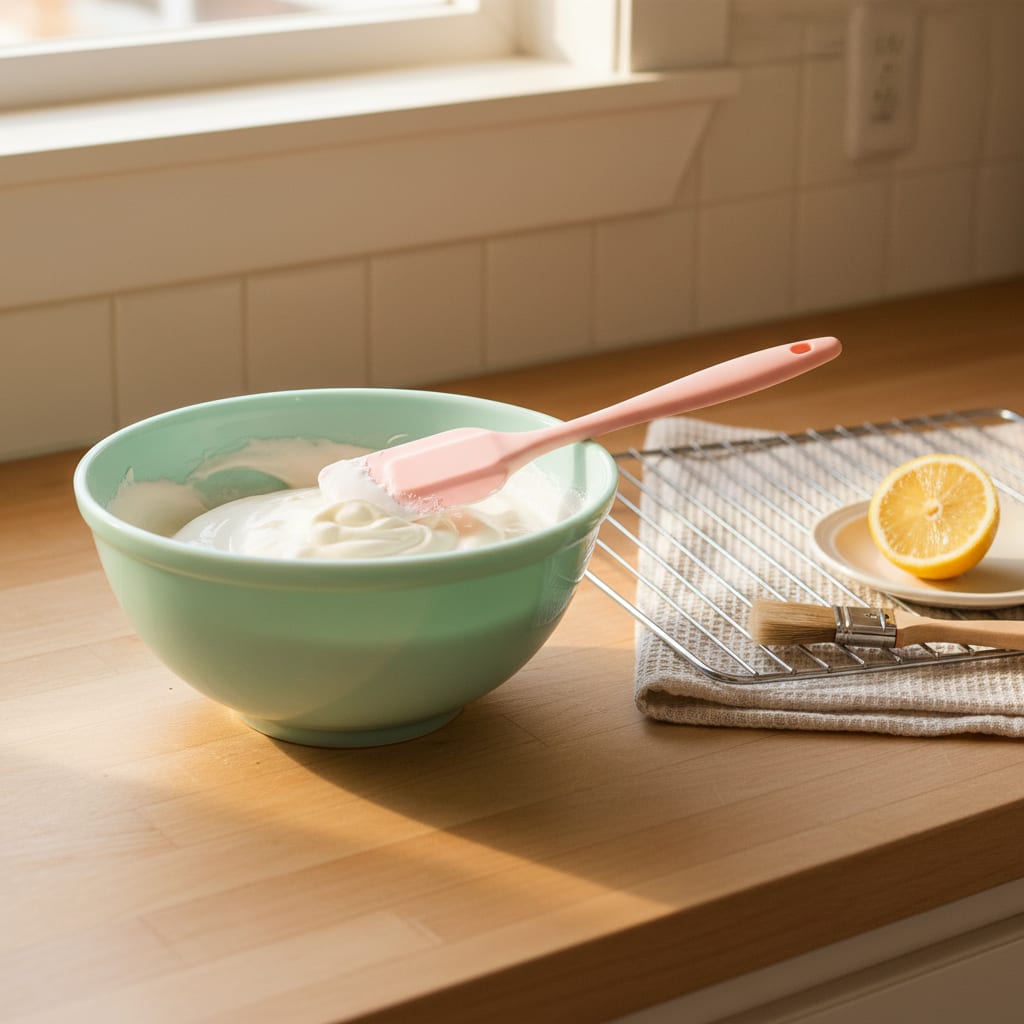
- Mix the paste. Half a cup of baking soda to two to three tablespoons of water, thick enough to stay on a wall. Double it for a big or very dirty oven.
- Spread it. Coat the walls, floor and inside of the door with gloved fingers or a silicone spatula, heavier on the brown patches, never on the element or gas inlet.
- Optional fizz. Cornell notes you can “lightly mist the paste with white vinegar in a spray bottle which will cause the paste to bubble and foam.”
- Wait. Close the door and leave it “30 minutes to 10–12 hours, or overnight depending upon the depth of cleaning needed.”
- Scrub and lift. Gloves on. Work the surfaces with a non-scratch scrub pad dipped in vinegar, or a plastic scraper on the stubborn spots. A Scotch-Brite Zero Scratch scrub sponge is the common example of the soft kind.
- Wipe it all out. A damp cloth, rinsed often. If the paste has dried hard, spray it with vinegar to soften it.
- Finish. A last spray of vinegar and a dry wipe, so no white film bakes on next time you roast.
The paste is the same one that cleans sinks and tubs; the other fourteen jobs for the box are in baking soda cleaning, and the vinegar ratios for the rest of the house are in cleaning with vinegar.
The racks: a soak in the tub
Racks are easier out of the oven than in it. Samsung’s advice is to make sure “the racks are cool before you remove them”, then “soak the racks in lukewarm, soapy water, and then scrub impurities from the racks using a non-abrasive scouring pad.”
A bathtub lined with an old towel, so the metal doesn’t scratch the enamel, is the only basin long enough in most houses. Leave them soaking while the oven paste works, then scrub, rinse and dry fully.
If the racks stick when you slide them in, Samsung suggests a few drops of cooking oil on a cloth, rubbed along “the side rail guides to help the racks glide with ease.”
The door glass, inside, outside and between
The inside face of the door gets the same paste as the walls. The outside is a different surface: Samsung says not to use stainless steel cleaner on the outer glass, “because it could make the glass appear smeared.” Use glass cleaner or soapy water, then rinse and dry.
Grease between the panes is the hard part. Samsung describes taking the door off per your model’s manual and reaching through the gaps at the bottom with a cloth-wrapped yardstick or wire hanger, using a baking soda paste that you wipe off with vinegar. Read its warning first, though: “if you take the door apart yourself (or any method involving a screwdriver) any resulting damage may not be covered by any remaining warranty.” If that matters, leave the inner panes to a service visit.
The card says "soda on the oven Saturday night, scrub it Sunday before church", and a coffee tin of rags kept just for the job. The racks went in the washtub out back.
Same overnight paste, a non-scratch pad instead of steel wool, the racks soaking in the bathtub on an old towel, and the manual read first, because the oven is newer than the card.
Should you just use self-clean instead?
Self-clean is the manufacturer’s own method, and on a self-cleaning oven it is a perfectly good choice for heavy, baked-on residue. Samsung calls it “the best way to clean the oven’s interior, if you don’t want to use the regular soap and water method.” It is just a different kind of job:
| Baking soda paste | Self-clean cycle | |
|---|---|---|
| Time | 30 minutes to overnight, plus the wipe-out | About two hours, per Cornell, plus cool-down |
| Heat | None | Cornell says “800–1000 degrees F” |
| Effort | Elbow grease | Wipe out the ash afterward |
| Racks | Soak separately | Remove them unless your manual says otherwise |
| Best for | Any oven, any time | A self-cleaning oven with a free evening |
If you use the cycle, follow the manual, and:
- Wipe up spills first. Cornell warns that leftover grease causes “excessive smoking during the cycle”, which can set off the smoke alarm.
- Take everything out. Samsung lists racks, cookware, probes and “any aluminum foil”. It adds that porcelain-coated racks can stay on some models and nickel ones must come out, which is exactly why the manual decides.
- Stay home, and air the room. Cornell’s advice is to stay in the house during the cycle “just in case anything goes awry”, but keep people and pets out of the kitchen and ventilate. Samsung adds that “some birds are extremely sensitive to fumes from a self-cleaning oven” and should be moved to another room.
- Keep children away from the range. The outside of the oven gets hot enough to burn during the cycle, and the door stays locked until it has cooled.
Many houses do both: the paste most of the time, self-clean for a crust the paste won’t shift.
Keeping it clean longer
Wipe drips once the oven is cool. Don’t line the floor with foil to catch them: Samsung says foil “will melt onto and adhere to the interior oven surfaces.” Put a baking sheet on the rack below a juicy dish instead.
If a big meal is coming, a clean oven belongs with the rest of the house prep in the holiday hosting checklist, done the weekend before, not the night before.
FAQ: cleaning an oven with baking soda
How long do you leave baking soda in the oven?
From 30 minutes for light grime up to 10 to 12 hours, or overnight, for a heavily baked-on oven. Cornell Cooperative Extension gives that range.
Does vinegar react with the baking soda paste?
Yes, it fizzes. Cornell suggests a light mist of vinegar on the paste, and vinegar is also useful afterward for softening dried paste and wiping away the white film.
Can you use baking soda in a self-cleaning oven?
Check your manual. Samsung’s self-clean warnings are about commercial oven cleaners, liners, foil and coarse pads. A gentle paste wiped out completely is the DIY route Cornell calls appropriate for any oven type.
How do you clean oven racks without chemicals?
Soak them in warm, soapy water in a bathtub lined with an old towel, then scrub with a non-abrasive pad, rinse and dry.