Getting the House Guest-Ready: The 3-Day Plan
Getting a house guest-ready takes three days of ordinary effort, not one frantic one, and the order is what makes it feel unhurried. Day three out: laundry and linens started, clutter removed. Day two: clean the four rooms guests actually use, top-down. Day one: surfaces, bathroom, floors and the entry — the jobs that undo themselves if done any earlier. Roughly ninety minutes a day. The plan works because it puts the slow, invisible work first and saves the visible, fast work for last, which is the exact opposite of how panic sequences it.
Clean for where guests go, not for the whole house
Guests use four spaces: the entry, the room they sit in, the bathroom they’re pointed to, and — if they stay — a bed. That is the whole scope. The office, the primary closet and the basement are not on this list, and pretending otherwise is how a three-day plan becomes a two-week ordeal that ends with you resenting people you invited.
Shut the doors on the rooms nobody enters, and put the effort you saved into the four that matter. Nobody has ever noticed a tidy linen cupboard; everybody notices the bathroom.
If it turns out the guest-facing rooms genuinely need more than surface work — grimy grout, a fan thick with dust — that’s a signal to schedule the real thing later rather than attempt it now. Book it onto the deep cleaning checklist for a weekend when there’s no deadline attached.
Day 3: laundry, linens and clutter
This is the day that decides whether the other two are calm. Everything here is slow, so it goes first.
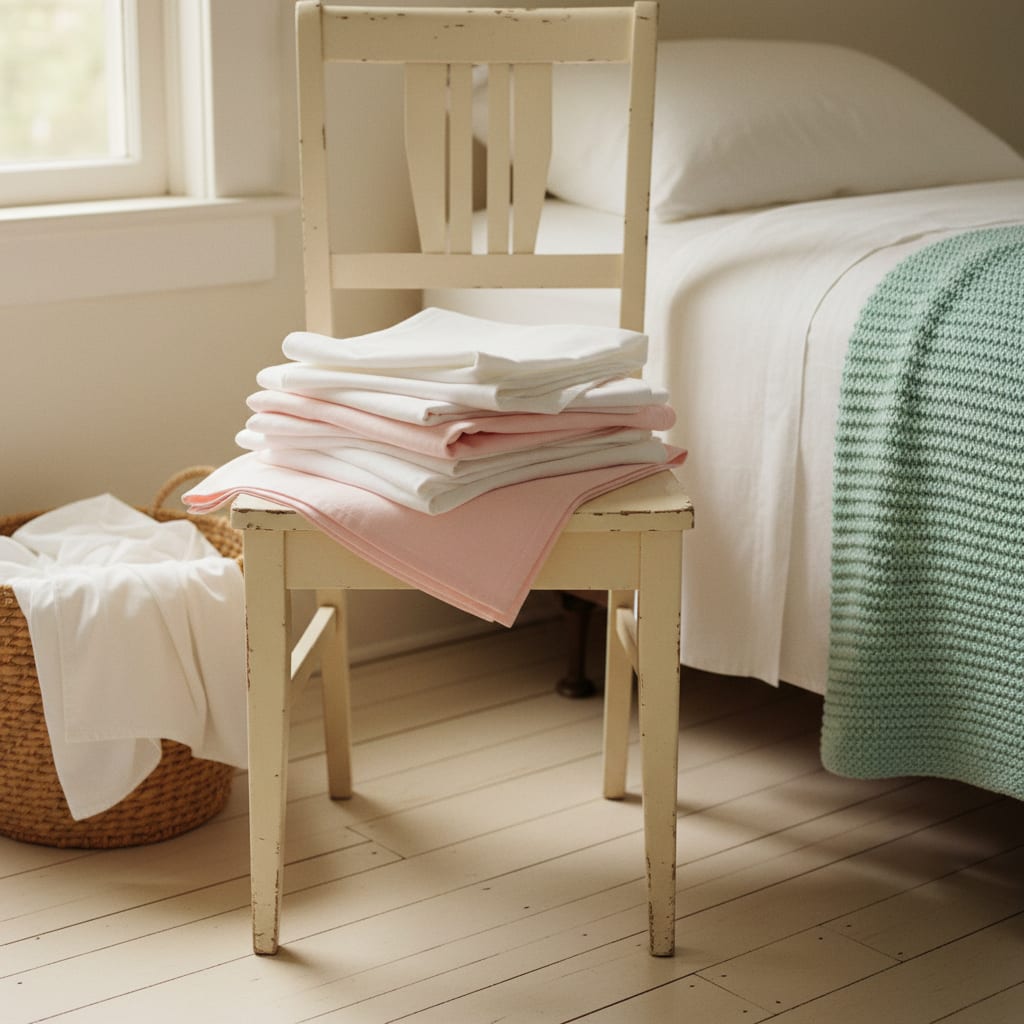
Strip and wash the guest bed, the towels and anything else fabric that guests will touch. Beds get made today, not the morning of — a bed made three days early is a bed you never think about again. Pull towels from the same folded set so the bathroom stack matches, which is the small trick that makes a guest bathroom read as prepared; the folding-in-sets method is in linen closet organization.
Then do the clutter walk with a basket and a box: the basket for things that live elsewhere in this house, the box for things that need a decision. The box gets a lid and goes in a closed room, and — this is the part people get wrong — it gets a date to be dealt with after the visit. An undated box is just relocated clutter, and it will still be there at Easter.
Day 2: the rooms themselves
Top-down, dry-then-wet, one room finished before the next opens. Same rules as any thorough clean, applied to four rooms only.
The guest room or sofa bed. Dust the surfaces, wipe the sills, vacuum including under the bed, and clear one drawer and two feet of hanging rail so a guest has somewhere to unpack. Leave a clear surface for a suitcase — an empty luggage rack, a bench, or a chair with nothing on it.
The bathroom. The full clean today: shower, tub, toilet, floor, mirror, and the inside of the cabinet if guests will open it. Restock what runs out — paper, soap, a hand towel that is unmistakably for guests rather than one you’re hoping they’ll interpret correctly.
The sitting room. Vacuum properly, including the edges and under the cushions. Dust the surfaces people set drinks on. Straighten the shelves. Deal with the lamp shades, which are visible only in the exact evening lighting your guests will be sitting in.
The kitchen. Guests end up in the kitchen no matter what the plan was. Clear the counters completely, empty the dishwasher, and make one specific space available — a stretch of counter, a shelf in the fridge — so arriving food and drink have somewhere to go. Load the caddy for tomorrow while you’re in there; the twelve-item version is in the cleaning caddy.
Day 1: the fast, visible pass
Ninety minutes, most of it in the last two hours before anyone arrives, because these are the jobs that come undone.
Kitchen counters cleared and wiped, sink empty and dry, dishwasher empty and ready. Bathroom surfaces and mirror refreshed, floor spot-checked, fresh hand towel out. A pickup lap of the main floor with a basket. Floors: vacuum the traffic path and mop the entry only. Then the entry itself — shoes out of the way, hooks cleared for coats, the doormat shaken, and the outside of the front door wiped, which takes ninety seconds and is the first thing anyone touches.
Last, the two-minute sensory pass. Open windows for ten minutes even in cold weather, empty the trash, take a lap with the lights set to evening levels, and check the whole thing from the doorway rather than from inside the room. Standing where your guests will stand shows you exactly three things you’ve stopped seeing.
Company meant the good linens, the front room opened and aired, the porch swept, and a house turned out from top to bottom the week before — a standard maintained at some cost, and never once discussed in front of the guests.
Good linens, yes; front room aired, yes. The whole house turned out, no — we clean the four rooms guests actually use and shut the doors on the rest, because the point of company is the company. Nobody came to inspect the baseboards.
Overnight guests need three things, not a hotel
Somewhere to sleep, somewhere to put their belongings, and somewhere to be alone for ten minutes. That’s the honest list.
Beyond the made bed and the cleared drawer, what actually helps: an extra blanket at the foot of the bed so nobody has to ask, a bedside surface with a lamp they can reach in the dark, a spot to charge a phone, and a quick word about how the house works — which bathroom is theirs, when the coffee happens, that the third stair complains. Guests relax when the rules are visible. They do not relax faster because the mirror is streakless.
Skip the extras that cost you time and buy nothing: the fancy folded towel arrangement, the basket of things nobody will use, the deep-cleaned oven no visitor will open.
When the plan collapses
Sometimes you get three hours, not three days. Cut in this order: linens and bathroom first, cleared kitchen counters second, entry third, floors last. That sequence produces the most guest-ready house per minute spent, and it holds up under real pressure.
The reason the three-day plan works at all is that the house doesn’t start from chaos. If the weekly rhythm and the Sunday reset are running, guest prep is genuinely three ninety-minute sessions. If they’re not, day three grows a fourth day and it’s called catching up — worth knowing in advance so you can plan the extra day rather than discover it at 11pm.
FAQ: cleaning the house for guests
How far in advance should I clean before guests arrive?
Start three days out with laundry, linens and clutter, clean the guest-facing rooms two days out, and leave surfaces, floors and the entry for the day itself. Anything done earlier than that in the visible categories simply undoes itself.
What rooms actually need cleaning before guests come?
The entry, the room they’ll sit in, the bathroom they’ll use, and the bed they’ll sleep in — plus the kitchen, because guests end up there regardless. Close the doors on everything else and spend the time saved on those five.
What should a guest room have?
A bed made in advance, an extra blanket, a bedside surface with a reachable lamp, somewhere to charge a phone, a cleared drawer or two feet of hanging rail, and a clear surface for a suitcase. Matching towels set out beat any decorative touch.
How do I make the house smell fresh for guests?
Open the windows for ten minutes, take out the trash and run the garbage disposal, wash whatever’s in the sink, and check the spots that hold odour — the trash can itself, the dishcloth, pet bedding. Fresh air first; scent afterwards, and lightly, since plenty of guests react badly to strong fragrance.