How to Get Red Wine Out of Carpet (Fresh or Dried)
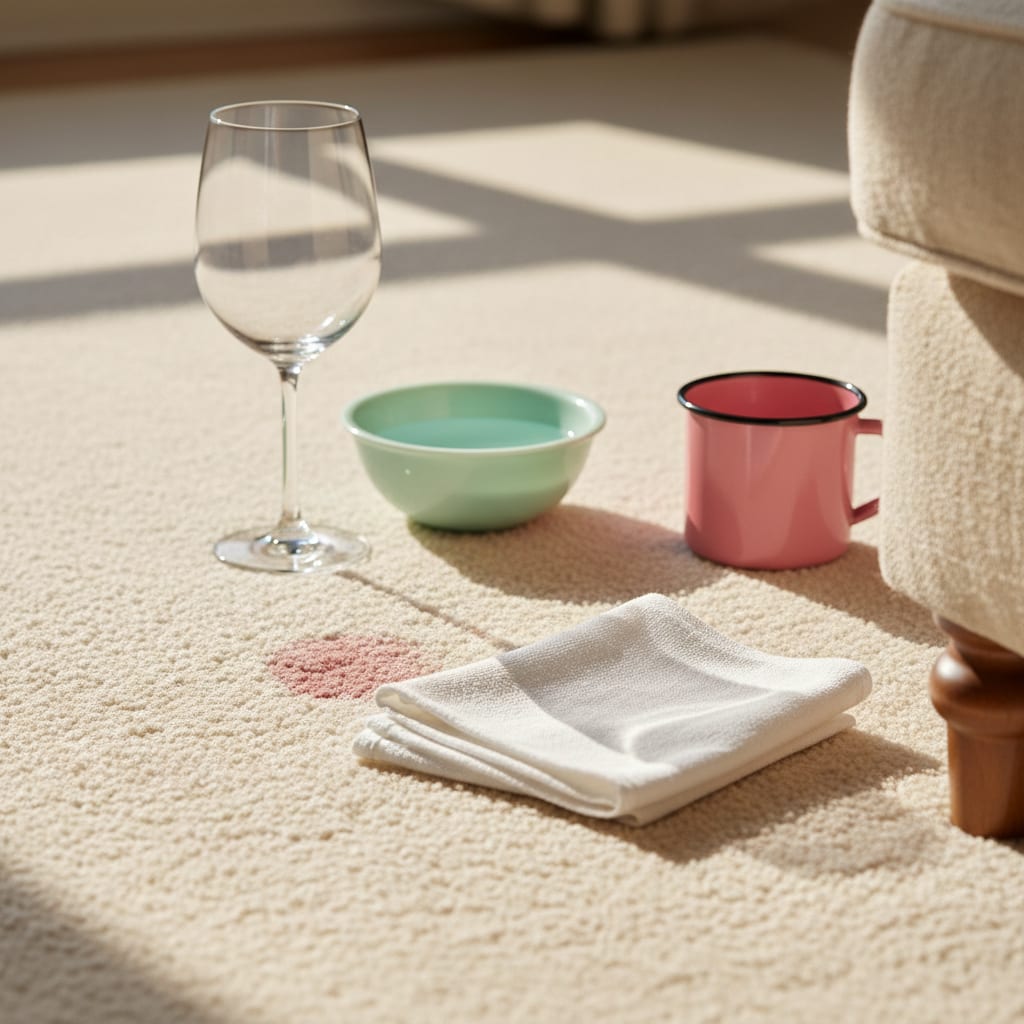
To get red wine out of carpet, blot up as much as you can at once with a dry white cloth, pressing and lifting, never rubbing. Patch-test, then work a weak solution of a quarter teaspoon of clear dish liquid in a cup of lukewarm water into the stain from the edges inward, a little at a time, blotting between rounds while color still comes up. Follow with a vinegar solution, one cup of white vinegar to two of water, then rinse with cold water and blot dry under a weighted towel. A stubborn stain may need the Carpet and Rug Institute’s ammonia step, tested first, or a professional.
Why wine on carpet is its own job
Red wine on a tablecloth is a laundry problem: it’s a tannin-and-dye stain, so it goes into an oxygen soak and then the wash, as in old-fashioned stain removal. A carpet can’t go in the wash. Everything you put in has to come back out through the same surface, and anything that soaks through the pile reaches the backing and pad, where you can’t get it out.
So the carpet method is the same shape as the one for coffee: blot, treat lightly, rinse, extract, using as little liquid as possible. The coffee version is in how to get coffee out of carpet. Wine follows the same discipline with one difference, covered below.
The method, from the carpet industry’s wine guide
The steps below follow the Carpet and Rug Institute’s spot solver entry for wine. CRI is the U.S. carpet industry’s trade body. Its solutions are listed in order, and its rule is to stay on each one “as long as there is a transfer of the spill to the cloth” before moving to the next.
- Act quickly, and blot. CRI’s first line: “Delaying may cause the spill to become a permanent stain.” Use a dry, white absorbent cloth or white paper towels. Press down, lift, move to a clean part of the cloth, and repeat until almost nothing comes up. White matters; a colored towel can leave its own dye behind.
- Patch-test. Try each solution first on a hidden spot, such as inside a closet, checking “for color transfer to the cloth or damage to the carpet. If a change occurs, select another solution.”
- Detergent solution. CRI’s measure is exact: “one fourth (1/4) teaspoon of a liquid dish washing detergent per one (1) cup of lukewarm water. NEVER USE A STRONGER CONCENTRATION!” Put a little on a white cloth, not straight onto the carpet, and “work in gently – do not rub — working from the edges of the spill to the center to prevent spreading.” Leave it a few minutes, then blot.
- Keep going while it’s working. Pink on the cloth means the stain is still lifting. “Complete removal may require repeating the same step several times.”
- Vinegar solution. “One (1) cup of WHITE vinegar per two (2) cups of water.” CRI uses it “to lower the alkalinity caused by detergent solutions”, so it comes after the detergent step, not instead of it.
- Rinse with cold water. CRI’s wine instructions say that when the spill is gone, “rinse the area with cold water; blot with a dry cloth until all moisture is removed.” It recommends a mist-type sprayer, “to prevent overwetting,” and warns that solution left in the pile “may cause accelerated soiling.”
- Dry it. Blot until nothing more comes up, then fold a thick towel over the spot and weight it with a heavy book overnight.
The extra step wine gets: ammonia, tested first
The difference between CRI’s coffee and wine entries is one extra solution. The wine entry includes an ammonia solution: “one (1) tablespoon of household ammonia per cup of water.” It comes with a warning: “Be aware that ammonia, if used improperly, can cause a color change. Be sure to test a hidden area.”
Treat it as the last home step, not the first. Use it only if the detergent and vinegar rounds have stopped lifting color, patch-test it on its own spot, rinse the area well with water before and after, and never use it alongside any other product. On a wool rug or anything valuable, ask a professional cleaner before going further.
CRI also lists a carpet-store spot removal kit, with a caution worth reading on any kit. Some contain a second, stain-resist solution, and “use of the (B) solution prior to the complete removal of the spill may cause a permanent stain.” Clean first, protect after.
The card says "salt it thick, let it drink, vacuum, then cold water and a rag." The salt was there to pull up the wine while she fetched the rags, and it is still the first thing most people reach for.
Blotting first, because CRI's whole method starts with getting the liquid up fast, then its measured solutions in order. If salt is the only thing within reach, it goes on dry and gets vacuumed off before any solution touches the spot.
What not to put on it
Leave these off, or think hard first:
- Laundry detergent. CRI is direct: “Never use a laundry detergent of any type, because laundry detergents may contain optical brighteners (fluorescent dyes) that dye the fiber.”
- Dishwasher detergent. “Many contain bleaching agents that destroy dyes and some fibers.”
- Chlorine bleach, which removes the carpet’s color along with the wine. Never let vinegar and bleach meet, and don’t combine any two products on one spot.
- Hydrogen peroxide. It’s often recommended for wine, but it isn’t one of CRI’s wine solutions, and it bleaches. Patch-test with real care on colored carpet, or skip it.
- Scrubbing. It spreads the stain outward and roughs up the pile.
- More solution than the recipe. CRI’s recipes are weak on purpose. A stronger mix only leaves more residue to attract dirt.
White wine, club soda and salt aren’t on CRI’s list either.
When the wine has already dried
A spill found the next morning has dried into the fibers. The method is the same, run more slowly.
- Re-wet it with a little cold water and blot. Some dried color will come up before you’ve added anything.
- More rounds of the detergent step, with a few minutes of contact each time.
- Rinse more than you think you need to. Old stains are the ones that get over-treated, and the leftover solution attracts dirt.
- Watch it as it dries. A faint ring can reappear as color deeper in the pile wicks up. Rinse, blot and weight it again.
If it’s still there after two or three sessions, stop. CRI notes that “professional cleaners have the ability and the equipment to use more aggressive cleaning solutions.” A stain you’ve only lightened can still come out; a patch you’ve bleached can’t go back.
A machine for the house that hosts
Blotting by hand only lifts so much. A small spot extractor sprays clean water and sucks it back out, which does the rinse step properly and leaves the pile drier. The BISSELL Little Green is the common example. Use plain water in its tank for the rinse and CRI’s weak solution for the cleaning step.
If a holiday dinner is coming, a white cloth, dish liquid and white vinegar belong in the hall closet with the rest of the holiday hosting house prep.
FAQ: red wine on carpet
Does salt get red wine out of carpet?
Salt isn’t one of the Carpet and Rug Institute’s wine solutions. CRI’s method starts with blotting with a dry white cloth. If you use salt while you fetch one, vacuum it off before cleaning.
Does vinegar remove red wine from carpet?
As the second step, yes. CRI’s vinegar solution, one cup of white vinegar to two of water, follows the dish-liquid solution. Vinegar alone is not the whole method.
Can you get dried red wine out of carpet?
Often. Re-wet it with cold water, then repeat the dish-liquid step until no more color transfers, rinse well and dry. If several sessions don’t shift it, call a professional cleaner.
Will hydrogen peroxide bleach carpet?
It can. Hydrogen peroxide is a bleaching agent and isn’t one of CRI’s wine solutions, so patch-test it in a hidden spot or leave it out.
Next cards in the file

Nursery Organization: Set Up for the 2am You
July 17, 2026
How to Clean an Oven With Baking Soda and Vinegar
October 7, 2026

The Sunday Reset: A 90-Minute Family Version
July 17, 2026