How to Use Borax in Laundry (and Whether You Should)
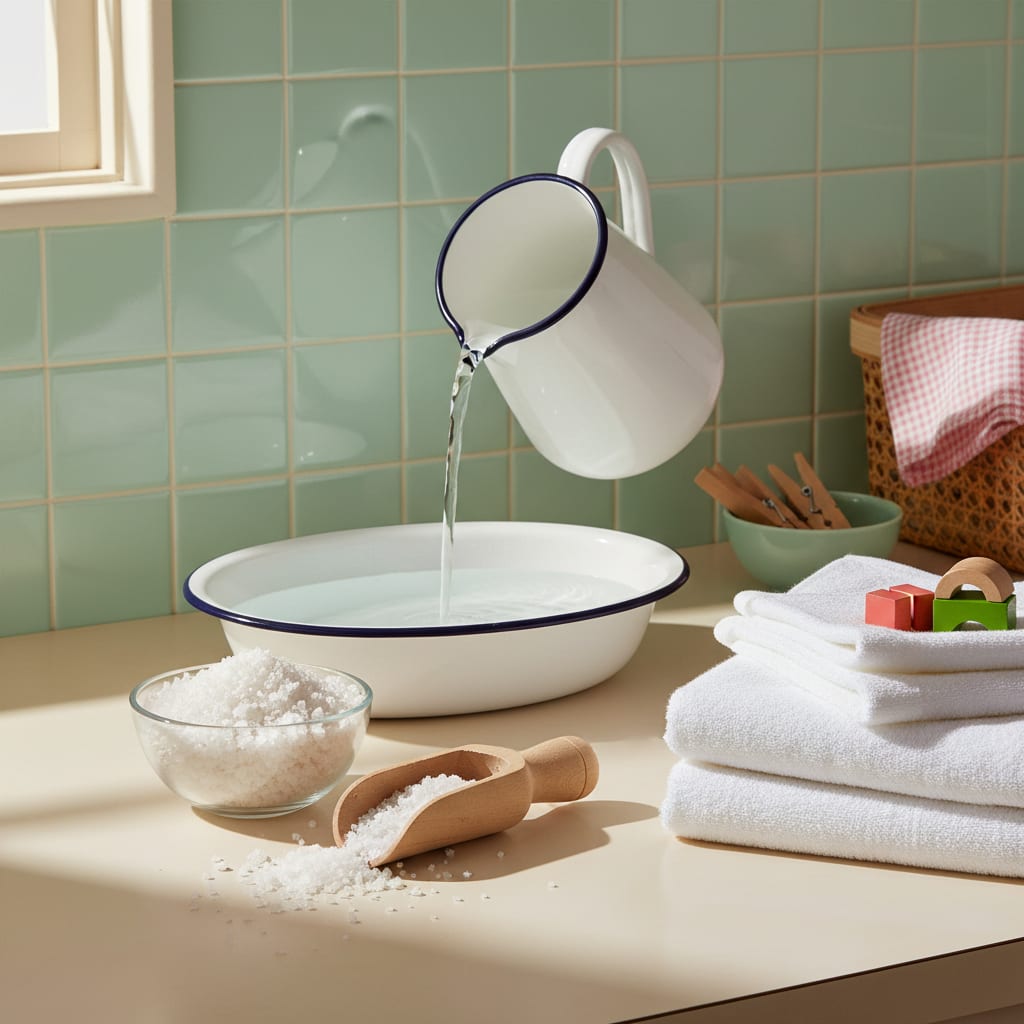
Half a cup of borax goes into the drum with your normal detergent dose at the start of the wash — the label on the standard box says half a cup for a regular or front-loading machine and three-quarters for a large-capacity one. It is a booster, not a detergent: it softens hard water, nudges the wash more alkaline so the detergent works better, and helps with musty smells. For a pre-soak, use a tablespoon per gallon of water, or half a cup in the machine, and give it at least thirty minutes. In soft water with a modern detergent, it does very little.
What borax is actually doing
Borax is sodium tetraborate, a mineral salt mined from dry lake beds, and its usefulness in a wash comes down to two effects.
It softens the water. Hard water carries dissolved calcium and magnesium, and those minerals bind up part of every detergent dose before it reaches the laundry. Borax takes them out of play, so the detergent spends itself on dirt instead of limescale.
It raises the pH. Dissolved borax gives a mildly alkaline solution — around pH 9, well below washing soda’s — and most soils, especially fats and body oils, release more readily in alkaline water. It’s the principle behind every old soda-based wash day, applied gently.
Two things it does not do. It isn’t a surfactant, so it lifts no soil on its own and a load washed in borax alone comes out much as it went in. And it isn’t a disinfectant or a sanitizer — no household use of it should be treated as sanitizing.
The doses, by job
| Job | Borax | How |
|---|---|---|
| Regular or front-loading machine | ½ cup | Into the drum with the detergent |
| Large-capacity top-loader | ¾ cup | Into the drum with the detergent |
| Pre-soak in the machine | ½ cup | Soak at least 30 minutes before washing |
| Pre-soak in a bucket or sink | 1 tbsp per gallon | Dissolve first, then add fabric |
| Stripping soak | ¼ cup, with washing soda and detergent | Part of the classic trio |
| Whites that have gone dull | ½ cup, with detergent, warm cycle | Repeat over several washes |
Dissolve it in warm water first if you wash cold. Borax dissolves readily in hot water and sluggishly in cold, and undissolved granules do nothing except occasionally leave a gritty patch.
A scoop in the wash water every Monday, no thinking involved. In an era of weak soap and untreated well water, it earned that automatic place — half the reason the whites came out white was the water being softened before the soap ever got to work.
Not automatic. It goes in the towel load, the sports-kit load and anything that has been in a damp gym bag — and it stays in the cupboard for ordinary clothes, because our water is treated and modern detergent already contains its own builders.
When it earns its place
Hard water. The strongest case, and the reason borax survived. If your kettle scales, your glasses come out cloudy and soap never quite lathers, half a cup per load will visibly improve your results at a fraction of the cost of dosing up on detergent.
Musty towels and sports kit. With a hot wash, borax helps clear the smell that lives in residue-laden fabric. It’s no substitute for washing towels more often, but it breaks the cycle.
Dingy whites. Whites go grey by redeposition — soil off one item settling onto another — and softer water reduces it. Expect gradual improvement, not a single dramatic result.
A stripping soak. Borax is one third of the classic trio, alongside washing soda and powdered detergent, in the tub method set out in laundry stripping. That’s an occasional correction, not a routine.
A homemade mix. Nearly every from-scratch recipe leans on borax for exactly the water-softening reason above — and the recipe, with its real limits, is in the homemade laundry detergent post.
When it does nothing worth having
If your water is soft and you use a mainstream detergent, borax is close to a placebo. Modern detergents contain builders that already handle mineral content, and a second builder in soft water has no target.
It’s also the wrong answer to two problems it gets recommended for. Stiff, non-absorbent towels are a residue problem, and the fix is less detergent and an acid rinse, not another powder — which is the whole argument of how much laundry detergent to use. And greasy or oily marks need a surfactant to lift them; borax will soften the water they’re floating in and leave the grease exactly where it was.
Nor is it a detergent substitute in an emergency, though it appears on every list of them. Paired with a tablespoon of shampoo it does useful work — alone it does not, which is the ranking logic behind what to use instead of laundry detergent.
Handling it sensibly
Borax is a household chemical, and it deserves the same treatment as every other one in the laundry cupboard — no more and no less.
Keep the box closed and out of reach of children and pets; it is not something to swallow, and the label says so plainly. It can irritate skin on prolonged contact, so wear gloves if your hands will be in a soak for long, and scoop rather than tip so you aren’t breathing dust.
Beyond that, follow the box. The label carries the manufacturer’s own directions, and those are the authority on a product argued about more energetically online than the evidence supports in either direction. From this house the position is narrower: it’s a mineral powder that does a specific job well, it lives on a high shelf, and I don’t use it as casually as baking soda.
Rinse well, too. Any builder left in the fabric is residue like any other, so a full rinse cycle is part of the method.
Borax, washing soda or baking soda?
They get used interchangeably and they are not interchangeable.
Baking soda (sodium bicarbonate) is the mildest of the three, around pH 8. It deodorizes and very gently softens water. It’s the one to reach for when the priority is being gentle.
Borax (sodium tetraborate) sits in the middle, around pH 9. Better water softening than baking soda, gentler than washing soda, and the best of the three at smell.
Washing soda (sodium carbonate) is the strong one, around pH 11. It’s the most effective builder and the harshest — genuinely not for wool, silk or bare hands.
For a general boost in hard water, borax. For a serious grease-and-grime load, washing soda. For freshening something delicate, baking soda. The classic 20 Mule Team box lasts most households the better part of a year at the doses above, which is what makes it worth keeping on the shelf even if you only use it for the towel load.
FAQ: borax in laundry
How much borax do you put in a load of laundry?
Half a cup with your normal detergent for a regular or front-loading machine, three-quarters of a cup for a large-capacity top-loader. Add it to the drum at the start of the wash, not to the softener compartment.
Can you use borax instead of laundry detergent?
No. Borax isn’t a surfactant, so it doesn’t lift soil. It boosts a detergent dose considerably in hard water, but on its own a load comes out barely cleaner than it went in.
Is borax safe to use on baby clothes?
Many families use it and rinse thoroughly; others prefer to keep an extra builder out of clothes worn against very young skin. If you use it, use the label dose and run an extra rinse. For anyone with sensitive or reactive skin, a plain fragrance-free detergent and a second rinse is the simpler route.
Does borax work in cold water?
Poorly. It dissolves readily in hot water and slowly in cold. If you wash cold, dissolve the half cup in a jug of warm water first and pour that into the drum.
Borax or washing soda for laundry?
Borax for hard water and smell, washing soda for heavy grease and grime. Washing soda is considerably more alkaline, which makes it more effective and harder on fibres, hands, wool and silk.
Next cards in the file
Nursery Organization: Set Up for the 2am You
July 17, 2026

Baby Waking Later on Dark Mornings? The Winter Routine
October 3, 2026
Downsized? Bedtime When Their Room Is the Smallest
September 23, 2026