How to Clean Walls Without Wrecking the Paint
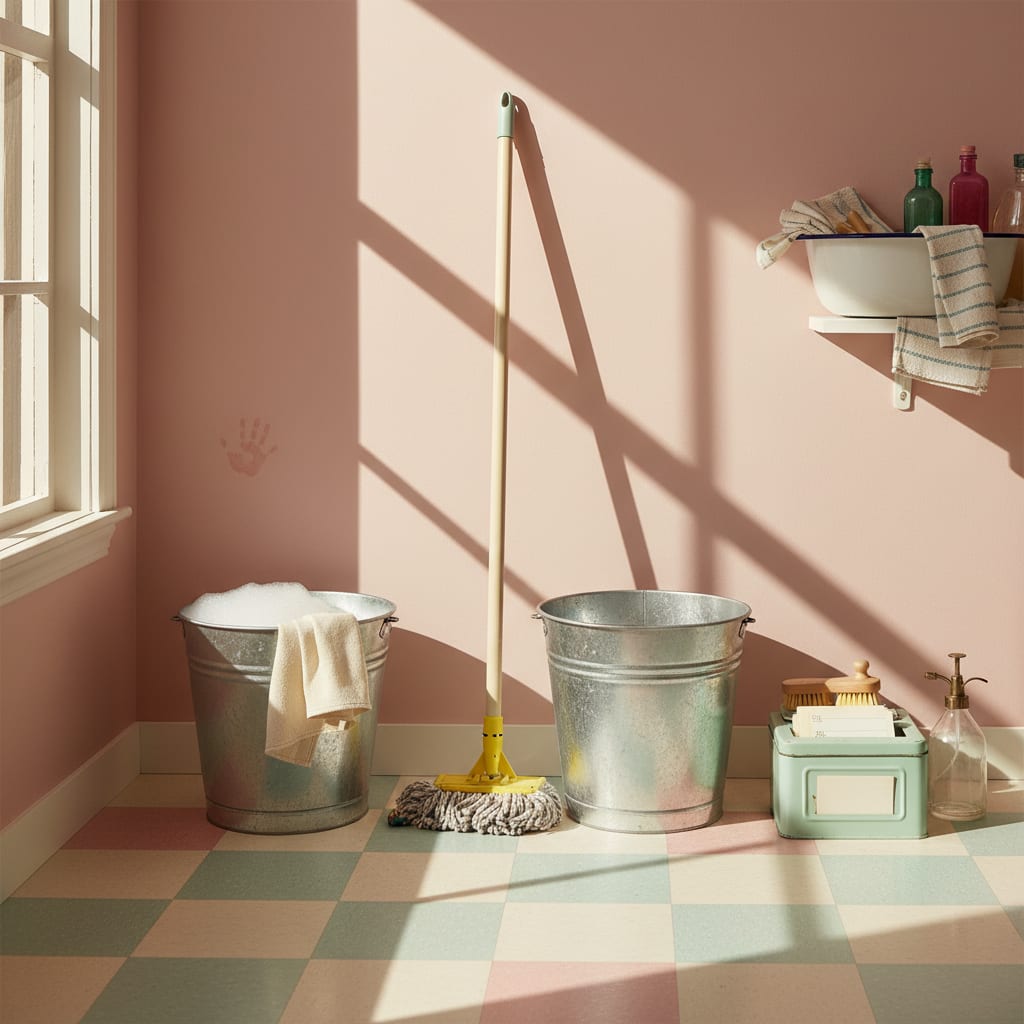
How to clean walls, the paint-safe version: dust first (a dry microfiber mop, top to bottom), then wash with a barely-damp cloth wrung out of warm water and a small squirt of dish soap, working in light strokes from the bottom of the wall up, and blot dry as you go. That method is safe on every paint finish; anything stronger — abrasives, magic erasers, strong degreasers — gets tested in a hidden spot first, because flat and matte paints will trade their stain for a shiny burnished patch that reads worse. Here’s the whole system, including the spot-cleaning rules by finish.
Dust before you wash (the step everyone skips)
Washing a dusty wall makes mud, and mud makes streaks. Run a dry flat mop or a clean cotton cloth over the wall first — ceiling line, corners, baseboard tops. Half the “dingy wall” effect is dust film, and on a wall that isn’t actually stained, this pass alone may finish the job. It’s the same physics as the damp-tea-towel trick in the old-fashioned tips file: grab the dust, don’t relocate it.
The gentle wash that works on every finish
- Mix: warm water with a small squirt of plain dish soap in one bucket; clean rinse water in a second. Two-bucket washing is a vintage habit worth keeping — the wash water stays soapy, the rinse water shows you how much grime you’re actually lifting.
- Wring hard. The cloth should be damp, not wet. Water running down a wall finds every nail hole and drywall seam, and drips leave clean streaks on a dirty wall that you’ll chase for an hour.
- Work bottom-up. Counterintuitive, but drips of cleaner running over a dirty lower wall leave permanent-looking clean tracks; on an already-washed section they wipe away. Bottom-up, then a light rinse pass, then blot dry with a towel.
- Small sections. An arm’s-width panel at a time, finished completely, is faster than laps around the room. (Zone logic works on vertical surfaces too — same principle as zone cleaning.)
Spring wall-washing was a scheduled event: two buckets, soap flakes, every wall in the house once a year, bottom to top. The card is emphatic about the bottom-up part, which suggests somebody learned it the streaky way.
Same two buckets and the same direction — but annual whole-house washing is replaced by spot-cleaning on demand plus a once-a-year pass on the high-traffic hallway and stair walls. Modern paint tolerates washing better; toddler walls need it more often.
Spot-cleaning rules by paint finish
Gloss and semi-gloss (trim, doors, most kitchens and baths): the durable finishes. They tolerate dish-soap washing, a soft sponge, and — for scuffs — a lightly used melamine eraser.
Satin and eggshell (most living areas): wash gently, and go easy on any scrubbing. These finishes can burnish — develop a shiny spot — under aggressive rubbing, so let the soap and dwell time do the work, not pressure.
Flat and matte (ceilings, older walls, builder paint): the delicate ones. Blot rather than scrub, test everything somewhere hidden, and accept that some marks on flat paint are a touch-up-paint problem, not a cleaning problem. A magic eraser on flat paint usually swaps a mark for a shiny patch.
For the specific and inevitable case of crayon, the methods are ranked separately in how to get crayon off walls — greasy marks have their own rules.
What should never touch a wall
Abrasive powders and scrub-side sponges (scratch and burnish), strong degreasers or undiluted vinegar (flat paint and some tints react badly), colored cloths that can transfer dye, and dripping-wet anything. And the standing house rule: if a mark survives the gentle wash and one careful escalation, stop — a quart of matching touch-up paint fixes what scrubbing would have made worse.
Greasy kitchen walls and sticky fingerprints
Grease film (stove-adjacent walls, light switches, the wall beside the table) needs soap, not force: warm water with dish soap, slightly stronger mix than usual, a few minutes of patience, and a rinse pass. Stubborn film takes a second application better than it takes scrubbing. This is soap’s home turf — the same grease-cutting logic as castile soap, which also works here in a floor-soap dilution.
FAQ: how to clean walls
What’s the best thing to clean walls with?
Warm water with a small amount of dish soap, applied with a well-wrung soft cloth or sponge, then rinsed and blotted dry. It’s effective on general grime and safe on every paint finish, which no stronger cleaner can claim.
How do you clean walls without removing paint?
Dust first, use a barely-damp cloth with mild soap, work in light strokes without scrubbing, and test anything stronger in a hidden spot. Flat and matte finishes are the fragile ones — blot marks rather than rubbing them.
Can you use a magic eraser on painted walls?
On gloss and semi-gloss, lightly, yes. On satin, eggshell, and especially flat paint, melamine erasers work like ultra-fine sandpaper and often leave a shiny burnished patch — test hidden first, or reach for touch-up paint instead.
How often should walls be washed?
Spot-clean marks as they happen, wash high-traffic areas (hallways, stairwells, around switches and door frames) once or twice a year, and give the rest of the house a pass when it visibly needs it. Whole-house annual wall-washing is a vintage ritual most modern paint doesn’t require.
Next cards in the file
Nursery Organization: Set Up for the 2am You
July 17, 2026
The School-Paper System: Keep, Toss, Treasure
July 27, 2026
Downsized? Bedtime When Their Room Is the Smallest
September 23, 2026