12 Old-Fashioned Cleaning Tips That Still Earn Their Keep
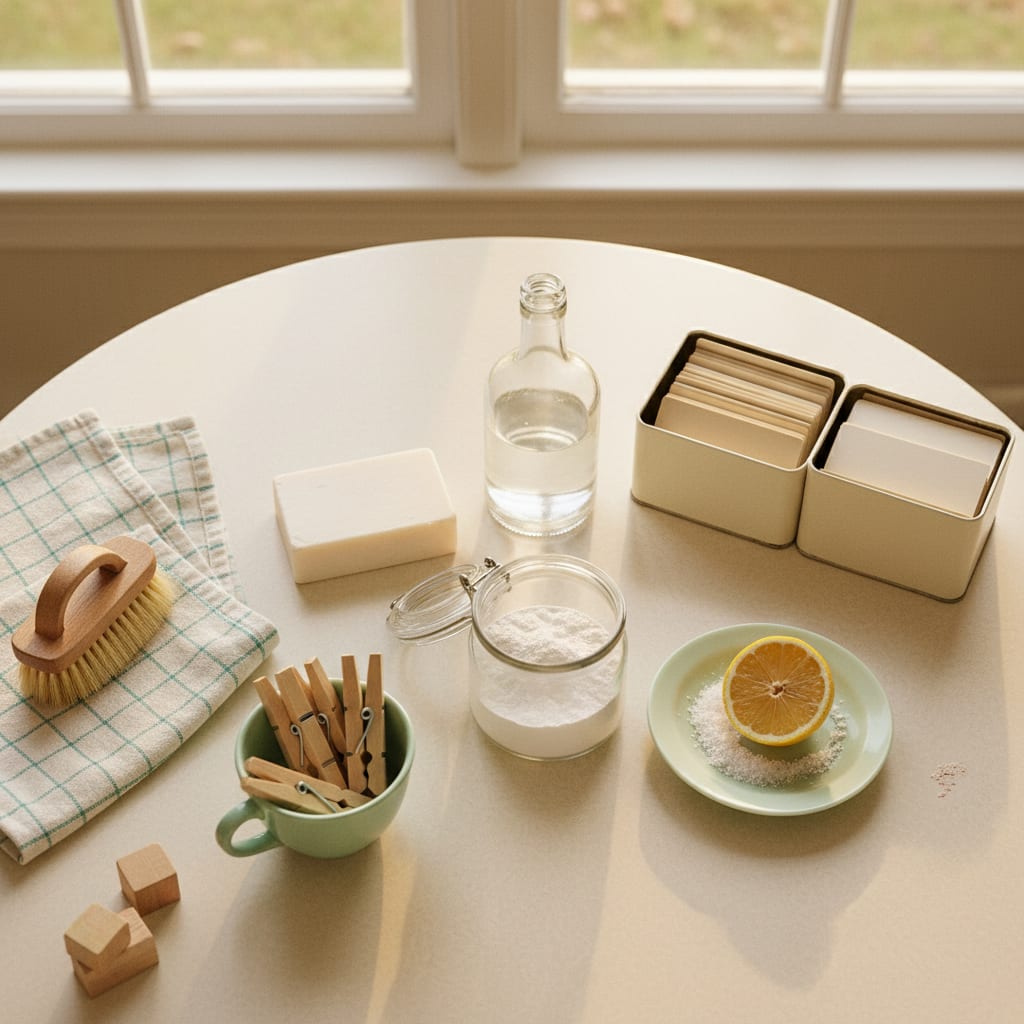
The old-fashioned cleaning tips that still earn their keep share one trait: they attack the problem’s chemistry or physics directly — acid on mineral scale, mild abrasive on grime, soap on grease, sunlight on musty fabric — instead of perfuming over it. Below are the twelve that survived testing in this house, each with the job it’s actually best at, plus the vintage advice that got retired on the way. That’s the whole editorial policy of the tin card file: methods stay because they beat the modern alternative on results, cost, or safety around kids — never because they’re charming.
How a tip earns a card
Every method below got the same audit: does it work on a real mess, in a real week, in a house containing a five-year-old and a toddler? Charm is a tiebreaker, not a qualification. Where a card cites its provenance, it’s hedged honestly — a Depression-era trick that survives because it works, not because anyone measured it in 1934.
The twelve keepers
1. Vinegar on scale and film. Mineral deposits, kettle scale, foggy shower glass — a mild acid dissolves what alkaline sprays can’t. The full job description (and the ruin list — stone, wood, seals) lives in cleaning with vinegar.
2. Baking soda as the house abrasive. Sinks, tubs, burnt pots, musty carpets. Gentle scrub, odor absorber, costs pennies. Its fifteen best jobs are ranked in baking soda cleaning.
3. Real soap for grease. Before degreasers, there was soap — and plain castile soap still cuts kitchen grease, cleans floors wood can tolerate, and washes almost anything with a rinse after.
4. Sunlight on linens. An afternoon on the line — or a sunny windowsill for pillows and stuffed animals — does real work on mustiness. It’s free, and it smells like the reason clothesline candles exist.
5. Lemon on cutting boards and brass. The acid-plus-mild-abrasive combo (half a lemon dipped in salt) brightens wooden boards and tarnished brass. Rinse well; wood dislikes staying wet.
6. Newspaper-style flat-weave cloths for glass. The real vintage insight wasn’t newspaper, it was lint-free and slightly stiff. A flat-weave cloth (a flour-sack towel is the classic) with diluted vinegar out-streaks any paper towel.
7. The damp-tea-towel dusting pass. Barely damp cotton grabs dust; dry feather dusters relocate it. Oldest trick in the file, still undefeated on painted trim and windowsills.
8. Salt on fresh spills. A heap of table salt on a fresh rug spill absorbs liquid while you fetch the real tools. It buys time, which is often the whole battle with kids at the table.
9. Airing the house. Ten minutes of cross-breeze does more for a stale room than an hour of scented spray. The 1950s housewife opened windows daily; the method costs nothing and has no ingredient list.
10. Boiling water down slow drains. For grease-slowed kitchen drains, a kettle of boiling water weekly keeps things moving — maintenance, not rescue. (Skip it if you have older plastic pipes; hot tap water is the gentler version.)
11. Wax paper on chrome and faucets. A quick rub after cleaning leaves a film that sheds water spots for days. Pure 1950s showmanship that happens to work.
12. The mending-hour mindset. The least glamorous card: small maintenance on a schedule — a weekly fifteen-minute “notice and fix” pass — beats heroic recovery cleaning every time. It’s the ancestor of the modern daily routine, and the reason the rest of the file works at all.
The file assumes daily windows-open airing, weekly wash day, a mending hour, and vinegar or soap for nearly everything. It also recommends a few things we now know better than: ammonia mixes, borax by the scoop, and "a little kerosene brightens floors." Every era has errata.
Keep the chemistry that works — acid, abrasive, soap, sun, air — on a modern schedule, and retire the hazards. Nothing gets mixed with bleach, nothing flammable touches a floor, and anything germ-critical goes to a registered disinfectant, not folklore.
The retired list (read this part too)
Old doesn’t mean safe. The cards that came out of the file: ammonia-and-bleach mixing (toxic chloramine gas — never combine bleach with ammonia or with vinegar), kerosene or gasoline as cleaners (genuinely dangerous, full stop), and treating vinegar or baking soda as disinfectants — they clean, but germ jobs need a registered disinfectant used per its label. Vintage methods earn their keep on grime; safety calls stay modern.
Slotting the old tips into a modern week
None of these work as a pile of trivia — they work as assignments. Vinegar belongs to bathroom day, baking soda to kitchen-scrub jobs, sunlight to wash day, the damp tea towel to the weekly dusting pass. If your week doesn’t have those slots yet, the weekly cleaning schedule is the rhythm this whole site hangs on; the old methods are just the tools each day picks up.
FAQ: old-fashioned cleaning tips
Do old-fashioned cleaning methods actually work better than modern products?
For specific jobs, yes: acid on scale, abrasives on grime, soap on grease, and sun on mustiness solve the underlying problem cheaply. Modern products win on convenience and on disinfection — vintage methods clean, but they don’t reliably kill germs.
What old cleaning tips should you avoid?
Anything that mixes chemicals (bleach plus ammonia or vinegar releases toxic gas), anything flammable used as a cleaner (kerosene-era advice), and any tip that treats pantry staples as disinfectants. When a surface needs germ-kill, use a registered disinfectant.
What did people clean with before modern cleaners?
Mostly a short list: soap, vinegar, baking soda, salt, lemon, sunlight, and elbow grease on a fixed weekly rhythm. The rhythm was half the method — smaller wardrobes and daily habits meant messes never compounded.
What’s the best all-purpose old-fashioned cleaner?
Plain soap and warm water covers more of the house than anything else, with baking soda as the scrub and vinegar as the scale-cutter. Used in sequence — not mixed — those three handle most of what a spray-bottle aisle sells.
Next cards in the file
Nursery Organization: Set Up for the 2am You
July 17, 2026
DIY All-Purpose Cleaner (Homemade, 3 Ingredients)
July 17, 2026
Yearly Home Maintenance Checklist, Month by Month
September 27, 2026