How to Strip Laundry: The Method and When to Skip It
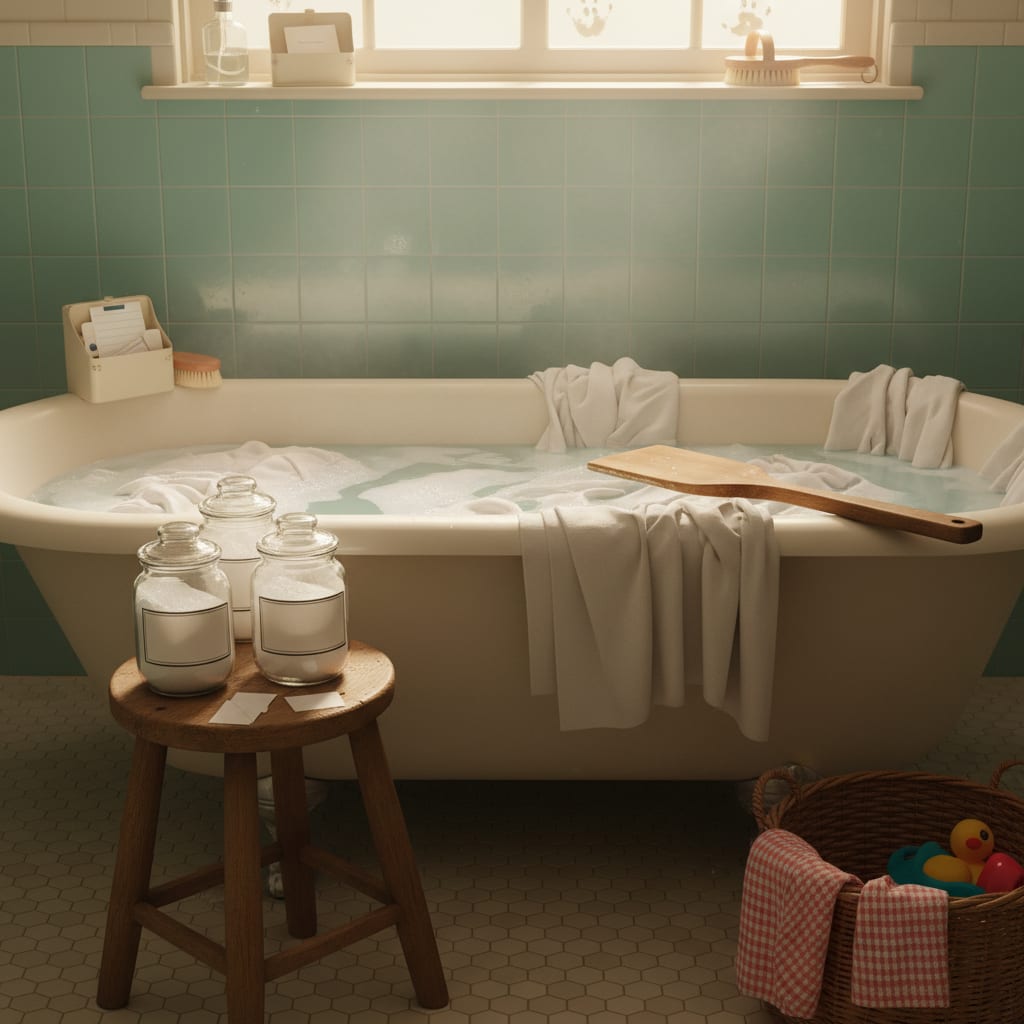
To strip laundry is to give it a long hot soak — typically borax, washing soda and detergent dissolved in a tub — that pulls built-up detergent residue, fabric softener, body oils and minerals out of “clean” laundry. It works, the gray water is real (though less damning than the internet implies), and most households only genuinely need it a few times a year on a few categories: towels, sheets and workout fabrics. If your towels smell musty the moment they’re damp, or feel waxy and won’t absorb, stripping is the fix. As routine maintenance for all laundry, it’s overkill — and hard on fabrics. Here’s the method, the science, and the honest schedule.
What stripping actually removes
Modern laundry problems are mostly accumulation problems: detergent dosed too generously (everyone), fabric softener coating fibers by design, hard-water minerals binding with both, and body oils that short warm cycles never fully lift. Layer by layer, towels stop absorbing, sheets feel filmy, and fabrics grow that instant-musty smell — the residue traps bacteria that reactivate with moisture. Stripping is the demolition option: hours of hot alkaline soak dissolving the whole stack of buildup at once.
Wash-day cards in the tin file call it "boiling the whites" — the periodic hot-water-and-soda pot that kept towels and linens fresh long before anyone filmed their tub water. Routine washing was gentler; the big pot came out occasionally, on purpose.
Same chemistry, bathtub edition: hot water, washing soda, borax, a scoop of detergent, a four-hour soak. And the same wisdom about frequency — it's a seasonal correction, not a weekly flex. The viral version just added better lighting.
The tub method, step by step
- Start with clean, machine-washed laundry — stripping is for residue, not dirt.
- Fill the bathtub (or a big bin, or a top-loader on its hottest soak setting) with the hottest water your fabrics allow.
- Dissolve the classic trio (20 Mule Team borax and Arm & Hammer washing soda are the same boxes grandma bought) — commonly used at roughly one part borax, one part washing soda, two parts powdered detergent; about a quarter cup each of borax and washing soda and a half cup of detergent for a standard tub. Ratios are folk-standard, not laboratory-precise; dissolve fully before adding fabric.
- Submerge the laundry, stir it under, and soak 4–5 hours, stirring whenever you walk past.
- Drain, wring, then run everything through a rinse-only or detergent-free cycle in the machine.
- Dry as usual. Towels come out noticeably more absorbent; sheets lose the film.
Expect gray-brown water. Some of that is genuine buildup; some is dye loss and minerals from the water itself — which is why murky water alone doesn’t prove your washer was failing you.
What not to strip
Hot alkaline soaking is aggressive. Skip: wool, silk and anything delicate; spandex-heavy items you love (occasional is fine, frequent kills elastic); dark saturated colors you don’t want lightened; and anything labeled cold-wash-only. Never strip whites with darks unless you enjoy tinted whites. Stick to the buildup magnets — towels, sheets, pillowcases, cotton workout wear — and strip in like-color batches.
When stripping is pointless
This is the part the rest of the internet leaves out, because gray water photographs well. Four situations where a five-hour soak buys you nothing at all:
When there’s no buildup to remove. Newer towels, anything washed in soft water with a sensible detergent dose, and anything you’ve only owned a few months have nothing stored in them. You’ll still get discolored water — that’s dye and tap minerals — and identical towels at the end.
When the smell is coming from the machine. If laundry goes in fine and comes out musty, the residue is in the door gasket, the drawer and the filter, not in the fabric. Stripping cleans the towels and the machine re-coats them on the next cycle.
When the laundry is dirty rather than residued. Stripping is a soak, not a wash — it has no mechanical action and it isn’t dosed to lift soil. Anything actually grubby needs a proper hot wash first.
When you’re doing it monthly. At that frequency you’re treating a symptom. The cause is nearly always dosing, and halving the detergent permanently beats stripping four times a year — the numbers are in how much laundry detergent to use.
And for technical fabrics — waterproof shells, wicking sportswear, anything with a coating — skip it entirely. A long alkaline soak strips the finish along with the residue.
The honest schedule (and how to need it less)
Two to four times a year for towels and bedding is plenty in this house — I hang it on the seasonal card of the weekly cleaning schedule’s monthly-and-seasonal layer. If you need it more often than that, the fix is upstream, in the routine: halve your detergent dose (modern machines need far less than the cap suggests), skip fabric softener on towels entirely (a splash of vinegar in the rinse does the softening without the coating — one of the better crossovers from the vinegar post), run an occasional hot wash in your normal laundry schedule, and clean the washing machine itself now and then, since a gunked machine re-deposits residue every cycle. Stripping done rarely is a satisfying correction; stripping done monthly is a symptom.
FAQ: laundry stripping
How often should you strip laundry?
A few times a year for towels, sheets and workout fabrics — seasonal, not weekly. Needing it more often usually means too much detergent or softener in the regular routine.
Why does the water turn gray if my laundry is clean?
Part residue — detergent, softener, oils, minerals — and part dye bleed plus minerals from the tap water itself. The gray is real but partly theatrical; don’t let it talk you into stripping constantly.
Can I strip laundry in a washing machine instead of a tub?
Yes — a top-loader with a hot soak setting does it well; pause it for a few hours mid-soak. Front-loaders can approximate it with a long hot soak cycle, though the classic method wants a real soak.
Does laundry stripping shrink or damage clothes?
The hot water can shrink cottons that haven’t already shrunk and fades elastics and dark dyes over repeated soaks. Strip durable flat cottons freely; strip stretchy, dark or delicate things rarely or never.
Next cards in the file
Nursery Organization: Set Up for the 2am You
July 17, 2026
The Back-to-School Home Reset (August Week One)
August 3, 2026
How to Do Laundry: The Order That Actually Works
August 11, 2026