How to Clean a Washing Machine (Vinegar Method)
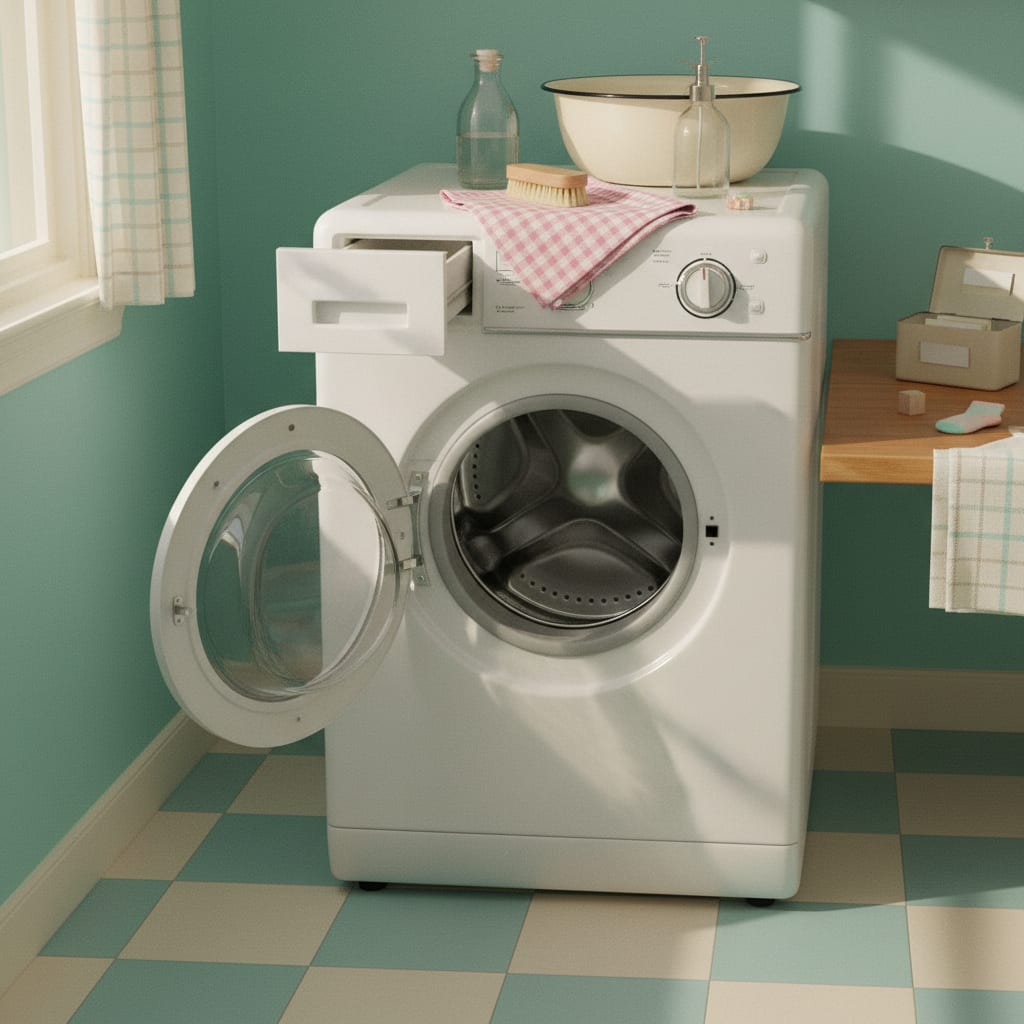
To clean a washing machine with vinegar: run an empty cycle on the hottest, longest setting with roughly two cups of plain white vinegar poured into the drum, then wipe the door gasket, pull and rinse the detergent drawer, and — on a front-loader — open the small hatch at the bottom front and clean the drain pump filter. That filter is where most mystery smells actually live, and most people have never opened it. Finish by leaving the door and drawer ajar. Do the whole routine monthly, and the sour-towel problem generally never starts. Here’s the full method, the parts vinegar can’t reach, and the one manufacturer caveat worth knowing.
Why washing machines start to smell
Nothing about a modern machine is designed to dry out. Four things stack up:
- Cold, short cycles. Efficient and gentle on clothes, but not warm enough to clear body oils and detergent from the drum and hoses.
- Too much detergent. Almost everyone overdoses. Excess suds don’t rinse away; they film the drum and the hidden plumbing and then feed bacteria.
- Fabric softener. It works by coating fibers, and it coats the machine with equal enthusiasm.
- A door that’s always shut. A sealed damp drum is a small greenhouse. Front-loaders suffer most because the rubber gasket holds a puddle by design.
The smell is biological film, not dirt, which is why a wipe-round never fixes it and a hot cycle usually does.
The vinegar method, step by step
Set aside an hour and a half, most of it unattended.
- Empty the machine completely. No towels “to help scrub” — an empty drum lets the water reach every surface.
- Add roughly two cups of plain white vinegar straight into the drum. Not the dispenser; you want it in the water, not held back for the rinse.
- Run the hottest, longest cycle available — sanitize, tub clean, or a heavy-duty hot wash. Heat is doing most of the work; the vinegar handles mineral scale and residue.
- While it runs, do the gasket. On a front-loader, peel the rubber seal back and wipe inside the fold with a cloth wrung out in hot soapy water. Expect to be appalled the first time: hair, lint, a small sock, black speckling. Get right round the bottom, where water always sits.
- Pull the detergent drawer out. Most lift out with a press on a small tab. Soak it in hot water, brush the corners with an old toothbrush, and scrub the recess it slides into — the softener chamber is usually the worst part of the whole machine.
- Clean the drain pump filter. Front-loaders have a small hatch behind a panel at the bottom front. Lay a towel and a shallow tray down first — water will come out. Unscrew the cap, let it drain, pull the filter, rinse the trapped lint and coins, screw it back firmly.
- Wipe the door glass and the outer rim, then run a short rinse cycle to flush anything loosened.
- Leave the door and the drawer open afterward. This one habit does more than every other step combined.
Top-loaders differ in two ways: fill the tub with hot water, add the vinegar, let it agitate for a minute and then pause the cycle for an hour so the tub soaks before it drains. And wipe under the rim and around the agitator, which is where residue collects instead of a gasket.
The caveat about vinegar
Honest note, because it comes up. Some manufacturers advise against vinegar in their machines on the grounds that repeated acid exposure can be hard on rubber seals and hoses over years. Others are relaxed about it. Check your manual before you make it a permanent monthly habit; if yours warns against it, a purpose-made cleaner is the straightforward alternative and the rest of this routine is unchanged. For what vinegar does and doesn’t do well elsewhere in the house, cleaning with vinegar has the full list of surfaces it ruins.
And the rule that outranks everything: never mix vinegar with chlorine bleach, in a machine or anywhere else. If you want to run a bleach cycle instead, run it on a completely separate day with a rinse in between.
The wringer washer got emptied, wiped and stood open to dry after every single wash day, because a tub left full of grey water was obviously going to go bad. Machine care was visible and unavoidable.
Ours hides its water in a gasket, a filter and a set of hoses we never see, so the same care has to be scheduled instead of obvious. One hot empty cycle a month, a filter check each season, and the door propped open between loads.
When vinegar isn’t enough
If the machine still smells after a hot vinegar cycle, you have buildup rather than film, and you need something stronger. A tablet cleaner formulated for washers — Affresh’s time-release tablets are the common one — dissolves slowly across a full cycle so the active ingredient is working the whole time rather than rinsing away in the first ten minutes. Two consecutive cycles will usually clear a machine that has been neglected for a year.
If the clothes still smell after the machine is clean, the problem moved into the fabric while the machine was dirty, and it needs its own treatment: the deep-soak method in laundry stripping is what resets towels and bedding that have gone permanently musty.
Two other suspects worth checking before you call anyone: a drain hose pushed too far into the standpipe can siphon dirty water back, and a machine that isn’t level bangs, drains badly and leaves standing water in the drum.
Where it goes in the rhythm
This is a monthly card, not a wash-day card. Running it on a laundry day costs you an hour of machine capacity you needed — put it on a quiet day instead, alongside the other low-frequency jobs on the monthly cleaning schedule. The filter check is quarterly; the door-open habit is permanent and free.
The prevention list is short and it’s most of the battle. Use less detergent than the cap suggests, skip fabric softener or use it rarely, run one hot load a week (towels count), move loads out promptly, and leave the door open. Do that and the monthly cycle becomes maintenance rather than rescue — the sort of quiet upkeep that keeps a wash day from being sabotaged by its own machine.
FAQ: cleaning a washing machine
How much vinegar do you use to clean a washing machine?
Around two cups of plain white vinegar poured directly into the drum, run on the hottest and longest cycle with nothing else in the machine. Skip the dispenser — you want it in the wash water.
How often should you clean your washing machine?
Monthly for the hot empty cycle and the gasket, quarterly for the drain pump filter. Front-loaders and households that wash mostly cold benefit from sticking to it closely.
Why does my washer smell even after cleaning it?
Usually the drain pump filter or the softener chamber of the detergent drawer — the two places a drum cycle never reaches. If both are clean and the smell persists, run two cycles with a tablet washer cleaner, then check that the drain hose isn’t sitting too deep in the standpipe.
Can you use baking soda and vinegar together in a washing machine?
You can, but they largely neutralize each other on contact, so most of the fizz is wasted. Use vinegar in the drum for one cycle, or baking soda in a separate cycle — not both at once.
Next cards in the file

Nursery Organization: Set Up for the 2am You
July 17, 2026
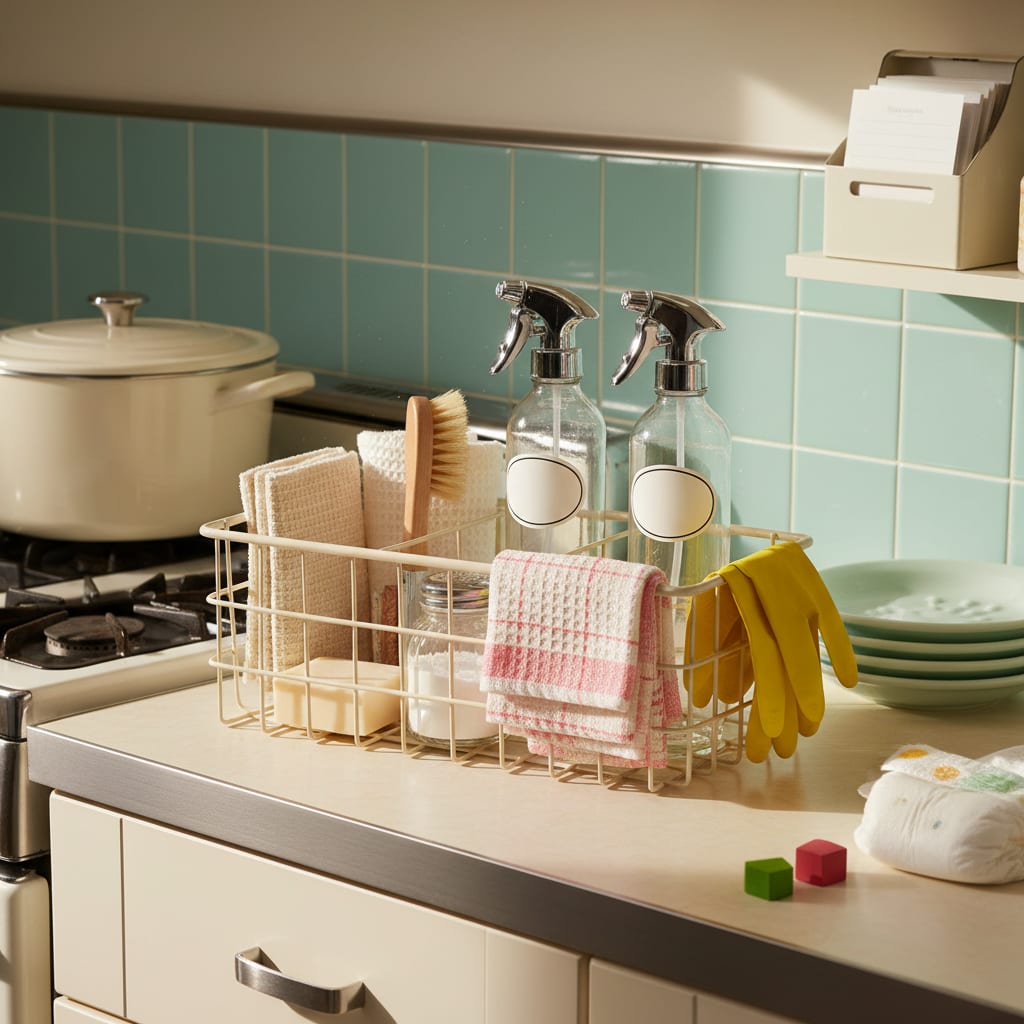
Build a Cleaning Caddy: The 12-Item Retro Kit
July 19, 2026

Coming Home Late Without Waking the Toddler
August 31, 2026