How to Clean Grout Without Wrecking It
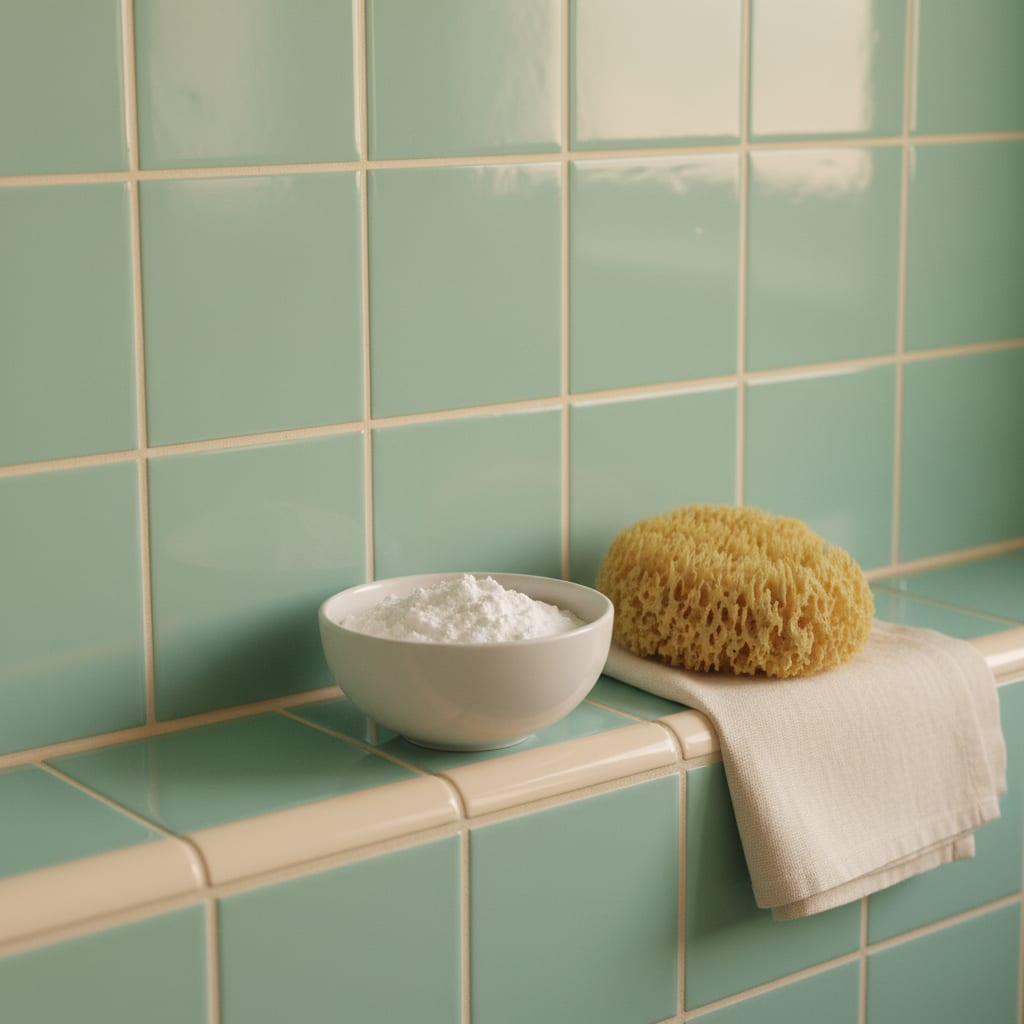
How to clean grout, the version that keeps the grout: brush it dry first, wash it with warm water and a little mild soap, then work a baking-soda paste into the dirty lines with a stiff brush and rinse. For stains that survive that, an oxygen-bleach paste does the heavy lifting. What stays off ordinary cement grout is the thing every hack reaches for first — vinegar and other acids, which dissolve the surface of the grout along with the dirt. Clean slowly and gently; grout is the softest thing in the floor.
Know which grout you have
Most household tile is set with cement-based grout, the sanded or unsanded kind that looks slightly matte and porous. It is the one this whole method is built around, because it is the one that stains and the one that is easy to damage.
Some newer bathrooms use epoxy grout, which looks glossier and feels almost plastic. It resists staining far better and usually needs nothing more than the soapy wash. If you are not sure which you have, treat it as cement — the gentle method is safe on both, and the reverse is not true.
Why vinegar stays off the grout
This site loves vinegar, and the vinegar guide is honest about where it wins. Grout is one of the places it loses.
Cement grout is alkaline, and acids attack it. Scott Carothers, writing in Stone World’s piece on acid cleaners and cement grout, puts it plainly: “Since cement-based grouts can be adversely affected by acids or acid-based cleaners, the selection of a routine cleaner is extremely critical to longevity and should be pH neutral.” The article’s lead photo shows what routine acid cleaning eventually does — grout washed down below the tile edge, leaving a low joint that catches dirt faster than the original ever did. He also notes that plain rinsing does not remove acid residue from a tile surface; it has to be neutralised.
So the vinegar-and-scrub trick does make grout look lighter. It does it partly by removing a layer of grout. Do it every week and you are regrouting sooner.
The routine clean: dry, then damp
Brush or vacuum it dry first. Grit in a grout line turns into a grinding paste the moment it gets wet. A dry stiff brush or the crevice tool of the vacuum takes it out.
Wash with warm water and a little mild dish soap, wiping along the lines rather than across them, and rinse with clean water. On a floor that is simply dingy rather than stained, this is often the whole job.
Dry it. A towel over the floor or a squeegee on shower walls. Grout that stays damp is where mildew starts.
The deeper clean: baking-soda paste and a brush
When the lines are grey rather than stained, mix baking soda with just enough water to make a thick paste, press it into the lines with a fingertip or an old toothbrush, and scrub along each line with a stiff brush. The paste is mildly abrasive and gentle enough for cement grout; it is the same household workhorse covered in baking soda cleaning. Rinse well — a soda film dries white and looks like the dirt came back.
Use a stiff nylon or natural-bristle brush, like the OXO grout brush, never a wire one: metal bristles score the grout and can scratch glazed tile edges.
Grout day meant a toothbrush, a tin of scouring powder and an afternoon on her knees, working one line at a time from the corner out. She also wiped the shower walls down after every bath, which is the part of her method that did the most work and gets remembered least.
Same toothbrush, same corner-out order — a soft paste in place of the harsh powder, and oxygen bleach for the stains the paste can't lift. We kept the wipe-down. It is still the cheapest grout cleaner there is.
Stained grout: oxygen bleach
For grout that is stained rather than dirty — coffee under the kitchen table, orange rings around the shower drain — move up to an oxygen-bleach powder. OxiClean’s own grout instructions for its Versatile Stain Remover are a useful baseline: mix it per the package, noting that “for some surfaces, like grout, a more concentrated solution or paste may be used”; apply with a cloth, sponge or brush; wait 5 to 30 minutes; scrub as needed; then “rinse with cool water and blot until dry.” It also says to work large surfaces in small areas so the solution does not dry on the surface. The powder itself, OxiClean’s versatile powder, is the same tub that lives in the laundry room, so there is nothing new to buy.
Two rules for the stronger jobs:
- Never mix cleaners, and never follow a bleach product with vinegar or ammonia on the same patch. Do one method, rinse thoroughly, and let the area dry before trying another.
- Open a window or run the fan. Bathrooms are small rooms, and anything stronger than soap is better done with air moving.
Mildew in shower grout
Black or pink speckling in shower grout is usually mildew rather than dirt, and it comes back if the conditions that grew it stay the same. Clean it with the oxygen-bleach paste above, or a product made for mildew used exactly as its label says, then change the conditions: run the exhaust fan through the shower and for a while after, wipe or squeegee the walls, and leave the door or curtain open so the stall dries. A monthly scrub cannot keep up with a shower that stays wet every day.
When cleaning isn’t the answer
Some grout cannot be cleaned back to looking right, and it is worth recognising it before scrubbing harder:
- Cracked or crumbling grout lets water behind the tile. That is a repair, not a cleaning job.
- Grout sitting well below the tile edge has usually been eroded, often by exactly the acid cleaning described above.
- Deep, even discolouration after the stronger clean may just be the grout’s colour now. A grout colourant or regrouting is the fix; more scrubbing only wears the surface.
Once grout is clean, fully dry, cement-based and sound, a penetrating grout sealer such as Miracle Sealants 511 Impregnator can make the next clean easier. Follow the product’s own directions on timing and reapplication.
Where grout fits in the week
Grout is not a weekly job. The daily wipe-down and the ordinary floor wash keep it from getting bad; the baking-soda scrub belongs with the rotating deep jobs, and the whole-house pass lives on the deep cleaning checklist, where the bathroom grout and kitchen backsplash already have a line.
FAQ: how to clean grout
What is the best thing to clean grout with?
For routine cleaning, warm water with a little mild dish soap and a stiff brush. For grey, dingy lines, a baking-soda paste. For real stains, an oxygen-bleach solution or paste used as its package directs.
Can you clean grout with vinegar?
Not ordinary cement grout, not as a habit. Cement grout is alkaline and acids attack it, so vinegar removes some of the grout along with the dirt. Epoxy grout tolerates more, but the gentle methods work on it anyway.
How do you get grout white again?
Brush it dry, scrub with a baking-soda paste, then use an oxygen-bleach paste on whatever is still stained, and rinse thoroughly. If it still is not white after that, the grout may be permanently discoloured, and a colourant or regrouting is the realistic fix.
How often should grout be cleaned?
Wipe shower walls after use and wash floors on your normal rhythm; that keeps grout mostly clean. A proper scrub every few months, or when the lines visibly darken, is enough for most households.
Next cards in the file

Nursery Organization: Set Up for the 2am You
July 17, 2026

Rewiring or Replumbing? Bedtime Around the Works
September 19, 2026

The Back-to-School Home Reset (August Week One)
August 3, 2026