Deep Cleaning Checklist, Room by Room (Printable)
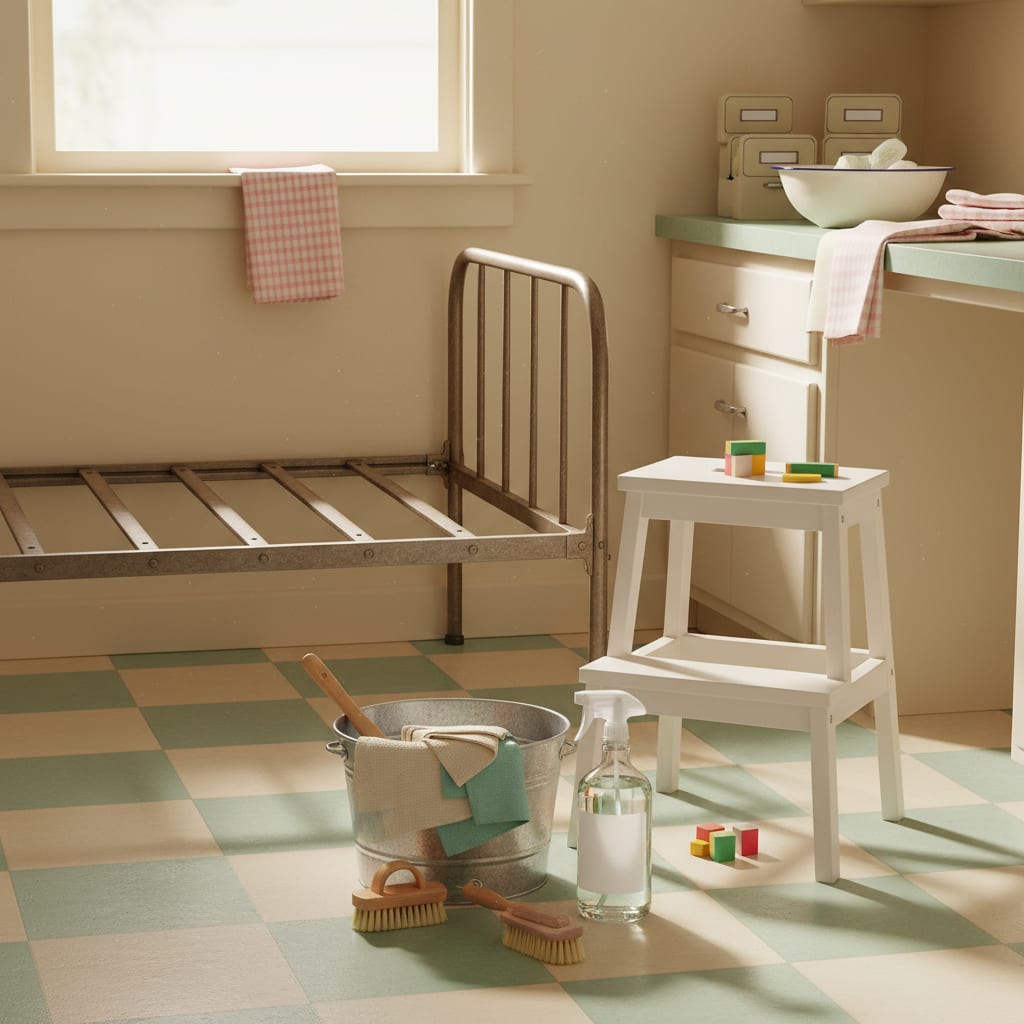
A deep cleaning checklist is not a longer weekly list. It contains only the jobs your ordinary rhythm never touches: the things above eye level, behind appliances, inside cupboards and under upholstery. Written as one card per room, it comes to roughly six to ten lines apiece — kitchen, bathrooms, bedrooms, living areas, entry, laundry — and a whole house takes two or three weekends, or five to eight weeks if you run one room at a time. Below is the list by room, what to skip, and the order that stops you cleaning the same surface twice.
What makes a job “deep”
The test is frequency, not effort. If a task appears in your week, it is not deep cleaning — wiping counters, running the vacuum, cleaning the toilet and folding laundry all belong to the weekly cleaning schedule, and copying them onto the deep list only makes it long enough to abandon.
A deep job is one that happens once or twice a year and involves moving something, opening something, or reaching above your head. Pull the sofa out. Take the shelf empty. Get on the stepstool. If a job requires none of those, it belongs on a shorter, more frequent list — most likely the rotating monthly one described in the monthly cleaning schedule, which is the tier between the weekly rhythm and this.
That distinction keeps the deep list under a hundred jobs for a whole house, which is the difference between a plan and a document.
Work top-down, dry-then-wet, room-complete
Three ordering rules, and they save more time than any product does.
Top-down means ceiling fixtures, then walls and frames, then furniture, then floors — because everything you dislodge falls, and gravity gets a vote whether you plan for it or not. Dry-then-wet means dust, sweep and vacuum before anything gets damp; wet dust becomes grey smear, and grey smear becomes a second job. Room-complete means you finish one room entirely before opening the next, so a weekend interrupted still leaves you with a finished room rather than five half-done ones.
Gather the kit before you start, in one carry-able container — the twelve-item version is in the cleaning caddy post. A stack of plain microfiber cloths does most of the work; a twelve-pack of all-purpose cloths means you can use a fresh one per room instead of pushing the same grime around the house.
Kitchen (2–3 hours)
Inside and under the refrigerator, including the coils at the back and the drip tray if yours has one. Inside the oven and under the removable drawer. Range hood filter, degreased in hot soapy water. Cabinet fronts, especially the handles and the strip beside the trash. Inside one cabinet at a time — empty, wipe, re-stock, discard the expired. Small appliances descaled. Backsplash grout. The floor edges and under the toe-kick.
The two jobs people skip are the range hood filter and the top of the cabinets, and they are the two carrying the most grease. Do them first while you still have enthusiasm.
Bathrooms (1 hour each)
Shower door tracks and the seal at the base. Grout lines, worked with a brush rather than a stronger chemical. Showerhead descaled in a bag of vinegar. Exhaust fan cover, removed and washed. Behind and around the base of the toilet, including the floor bolts. Under-sink cupboard emptied, wiped and thinned out. Mirror edges, light fixtures and the switch plates.
One caution worth repeating: never combine vinegar with bleach or bleach-based products, and never mix cleaners generally. The vinegar jobs and the bleach jobs happen on different days, with the window open — and vinegar stays off stone, seals and anything with a finish it can etch.
Bedrooms (1–1.5 hours each)
Mattress vacuumed and rotated. Under the bed emptied and vacuumed. Headboard and the wall behind it. Curtains washed or shaken out and their rods dusted. Closet floor cleared. Lamp shades and light fittings. Baseboards, door frames and the top edge of every door. Window interiors, sills and tracks — the tracks with a dry brush first, then damp.
In children’s rooms, add the toy bins themselves: emptied, wiped inside, and put back with fewer things in them than came out.
Living areas (1.5–2 hours)
Upholstery vacuumed with the crevice tool, cushions out and turned. Under and behind every large piece of furniture. Ceiling fan blades, from the top, with an old pillowcase slipped over each blade so the dust falls inside it. Bookshelves, one shelf at a time. Electronics, screens and the cable nest behind the television. Rugs rolled back so the floor beneath them gets cleaned too.
Walls come here, at the top of the room order, and they are less forgiving than they look — the method that doesn’t strip paint is in how to clean walls.
Entry, stairs and laundry (1 hour total)
Entry: coat hooks cleared, shoe storage emptied and wiped, the door itself washed on both sides, doormats beaten outside and the floor beneath them scrubbed. Stairs: vacuum the edges and the risers, wipe the handrail and the spindles. Laundry room: behind and under the machines, the dryer’s lint trap housing vacuumed out, the washer’s gasket and dispenser drawers cleaned, and the shelf above sorted down to what you actually use.
The whole house turned out twice a year — rugs over the line and beaten, mattresses aired in the yard, curtains down and washed, every cupboard emptied onto the kitchen table. It took a week and the household ate cold suppers all of it.
Same jobs, dealt out one room at a time across a season, because nobody here can surrender a week. The rule we kept from her is the honest one: a room isn't done until the things on top of and underneath it have been dealt with too.
Print it as room cards, not one long list
Copy each room onto its own card — index-card size — and keep the stack with the caddy rather than on the fridge. One card is a morning’s work you can see the end of; the full page of ninety jobs is a mood, and the mood is despair.
Date the back of the card in pencil when a room is done. That’s the whole record-keeping system, and it answers the only question you’ll actually ask next year: when did we last do the bedrooms? Cards also fail gracefully — when a room changes, you re-copy one card instead of reprinting a monument.
FAQ: deep cleaning checklists
What is included in a deep clean of a house?
Everything the weekly routine never reaches: inside the oven and fridge, behind appliances and furniture, ceiling fans and light fittings, baseboards and door tops, window tracks, grout, upholstery, mattresses, and inside cupboards and closets — worked one room at a time.
How long does it take to deep clean a whole house?
Two to three full weekends if you push through it, or about five to eight weeks at one room per weekend. The kitchen and bathrooms take the longest per square foot; bedrooms and living areas go faster than people expect once the clutter is out.
How often should you deep clean?
Twice a year for the whole house is the traditional rhythm, with heavy-use rooms — kitchen and bathrooms — getting a third pass in between. If the whole house at once is unrealistic, rotate rooms so each one gets its turn roughly every six months.
Should I declutter before deep cleaning?
Yes, and it isn’t optional. Cleaning around clutter doubles the time and produces a room that still looks untidy. Do a fast pass to clear surfaces and floors first; save the sorting-and-deciding work for its own session, on a different day.
Next cards in the file
Nursery Organization: Set Up for the 2am You
July 17, 2026
How to Get Crayon Off Walls: 5 Methods, Ranked
July 23, 2026
Nursery Humidifier: Dry Air, Stuffy Noses, Safe Setup
September 27, 2026