How to Get Coffee Out of Carpet (Fresh or Set)
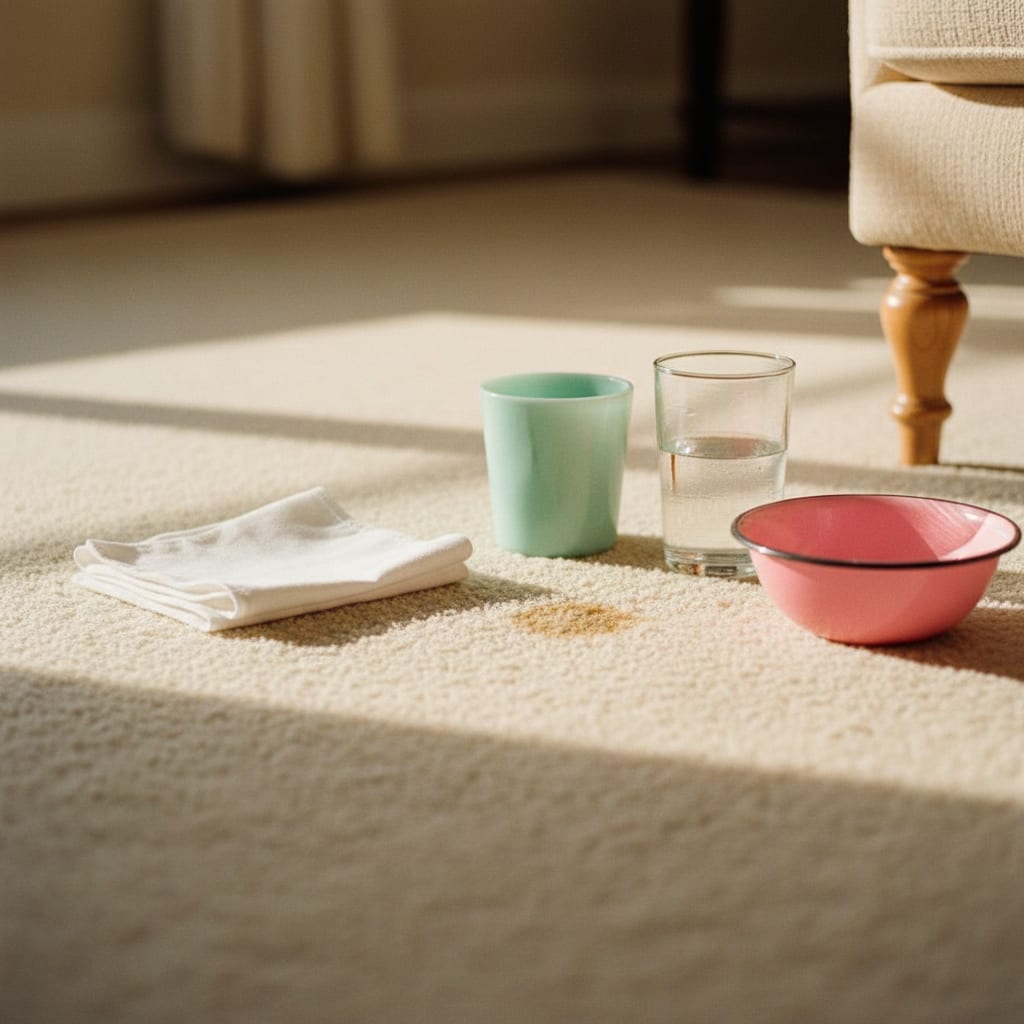
To get coffee out of carpet, blot up as much as you can with a dry white cloth, then work a weak solution of a quarter teaspoon of clear dish liquid in a cup of lukewarm water into the stain from the edges inward, blotting as you go. Follow with a vinegar solution (one cup of white vinegar to two of water), rinse with plain water, and blot the spot dry under a weighted towel. Never rub. If there was milk or cream in it, the fat may need a spot solvent too. A set stain takes the same steps, repeated with more patience.
Why carpet is a different job from a shirt
Coffee on a shirt is a laundry problem: flush it, soak it in oxygen powder, wash it, and the water carries the stain away. That method is in old-fashioned stain removal, where coffee sits with tea and juice as a tannin stain. A carpet can’t go in the wash. Whatever you put in has to come back out through the same surface, and anything that soaks through the pile reaches the backing and the pad underneath, where you can’t reach it.
So the carpet method is blot, treat lightly, rinse, extract. Every step is about using as little liquid as possible and lifting it straight back out.
The method, from the carpet industry’s own guide
The sequence below follows the Carpet and Rug Institute’s spot-removal guides for coffee and for coffee with cream and sugar. CRI is the U.S. carpet industry’s trade body, and its guide is written to protect the fiber as much as to lift the stain.
- Act quickly. CRI’s first line is that “delaying may cause the spill to become a permanent stain.” Blot with a dry, white absorbent cloth or white paper towels, pressing down and lifting, until almost nothing more transfers.
- Patch-test first. Try each solution on a hidden spot, such as inside a closet or under a sofa, and check for color on the cloth or damage to the carpet. If anything changes, use a different solution.
- Detergent solution. CRI’s recipe is exact: “one fourth (1/4) teaspoon of a liquid dish washing detergent per one (1) cup of lukewarm water. NEVER USE A STRONGER CONCENTRATION!” Put a little on a white cloth, not straight onto the carpet, and work it in gently from the edges of the stain toward the center so it doesn’t spread. Leave it a few minutes, then blot.
- Repeat while it’s working. CRI says to keep using the first solution “as long as there is a transfer of the spill to the cloth.” Brown on the cloth means keep going.
- Vinegar solution. One cup of white vinegar to two cups of water. CRI uses it mainly “to lower the alkalinity caused by detergent solutions”, so it follows the detergent step instead of replacing it.
- Rinse. Plain lukewarm water, misted on or dabbed from a cloth, then blotted. CRI warns that detergent left in the pile “may cause rapid soiling”, which is how a cleaned spot turns into a grey patch a month later.
- Dry it. Blot until no more moisture comes up, then fold a thick towel over the spot and weight it with a heavy book or pot overnight.
With cream and sugar, CRI adds a step before the detergent: a non-flammable spot remover or dry-cleaning-type solvent, applied to the cloth and never poured on, because solvent reaching the backing “can damage the latex that holds the primary and secondary backings together.” The milk fat is what the solvent is for.
What not to put on it
CRI’s detergent notes rule out two things most houses would reach for. Laundry detergent: “Never use a laundry detergent of any type, because laundry detergents may contain optical brighteners (fluorescent dyes) that dye the fiber.” Automatic dishwasher detergent: “many contain bleaching agents that destroy dyes and some fibers.” Hand dish liquid is the one on the list, and a clear one is the safe choice.
Also keep off: chlorine bleach, which will take the color out along with the coffee; anything stronger than the recipe, since more soap only means more to rinse out; and scrubbing, which spreads the stain and roughs up the pile. And never mix products on the same spot. Vinegar and bleach in particular must never meet.
Hydrogen peroxide is often suggested for set coffee. It isn’t one of the solutions CRI lists for coffee, and it is a bleaching agent, so we leave it off.
The card says "salt on it, then cold water and a clean rag, and don't you rub", which is most of the method in eleven words. The salt bought her time while she fetched the water; the rest was patience and a stack of rags.
Same order, measured: a heap of salt if the rags are in another room (it's #8 in the old-fashioned cleaning tips), then CRI's weak dish-liquid solution, the vinegar step, a rinse, and a weighted towel overnight.
When the coffee has already set
A stain found the next morning, or after a week under a rug, has had time to dry into the fibers. Go through the same steps, more slowly.
- Re-wet it with plain water first, lightly, and blot. Dried coffee often loosens into the cloth before you’ve added anything.
- Do more rounds of the detergent step, with a few minutes of contact each time, stopping when the cloth comes up clean.
- Rinse more than you think you need to. Old stains are the ones people over-treat, and the residue then collects dirt.
- Watch it as it dries. A faint brown ring sometimes comes back as the pile dries, when stain lower in the fibers is drawn up to the surface. Rinse and blot again, then weight the towel again.
If it’s still there after two or three sessions, stop. CRI’s own advice is that “professional cleaners have the ability and the equipment to use more aggressive cleaning solutions”, and a stain you’ve only lightened can still be removed. A patch you’ve bleached can’t be put back.
A machine for the house that spills a lot
Blotting by hand can only pull up so much. A small spot extractor sprays clean water and sucks it back up, which does the rinse step properly and leaves the pile much drier. The BISSELL Little Green is the common example. Put plain water in the tank for the rinse step and use CRI’s weak solution for the cleaning step; the method stays the same.
For the kitchen-cupboard side of cleaning, the vinegar ratios for other jobs are in cleaning with vinegar, and the spills that need an odor absorbed rather than a stain lifted are in baking soda cleaning.
FAQ: coffee on carpet
Does vinegar get coffee out of carpet?
It helps, as the second step. CRI’s vinegar solution is one cup of white vinegar to two cups of water, used after the dish-liquid solution to neutralize its alkalinity. Vinegar on its own is not the whole method.
Can you use baking soda on a coffee stain in carpet?
Not as the cleaner. Baking soda is an odor absorber rather than a stain lifter. Once the spot is clean and dry, a light sprinkle and a vacuum is fine for any lingering smell.
Is a coffee stain on carpet permanent?
Not usually, if you blot it quickly. CRI warns that delay is what makes a spill permanent. Set stains often lift with repeated rounds of the detergent step; if they don’t, call a professional cleaner.
How do you get coffee with milk out of carpet?
Use the same steps, with a spot solvent first for the milk fat, applied to a cloth and never poured on. Then the dish-liquid solution, the vinegar solution, a rinse and a dry.
Can I use laundry detergent on a carpet stain?
No. CRI says laundry detergents may contain optical brighteners that dye the fiber. Use a clear hand dish liquid at a quarter teaspoon per cup of lukewarm water.
Next cards in the file

Nursery Organization: Set Up for the 2am You
July 17, 2026
How to Clean a Washing Machine (Vinegar Method)
July 31, 2026
Laundry Bluing: How to Use It for Whiter Whites
October 15, 2026