How to Do Laundry: The Order That Actually Works
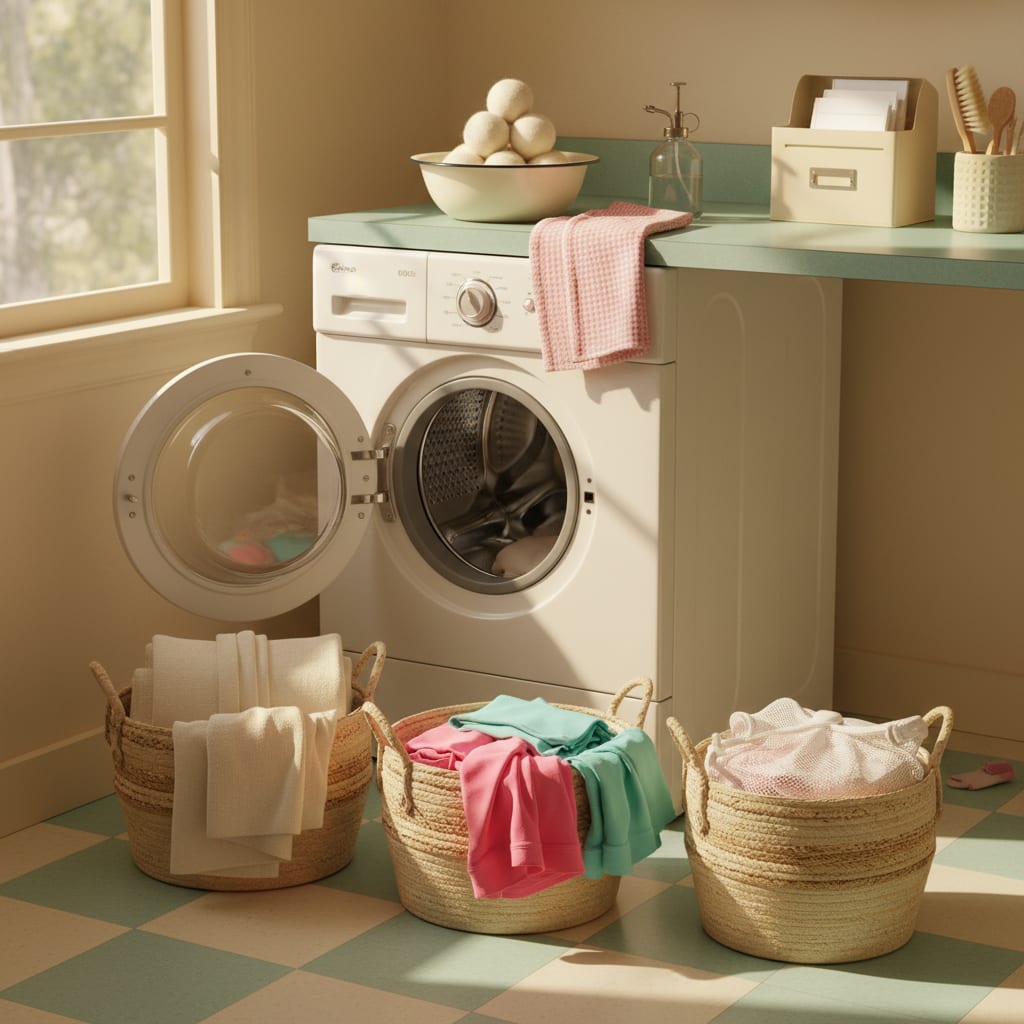
Doing laundry is six steps in a fixed order: sort into three piles, treat any stains before the load goes in, load the drum loosely, dose detergent by how dirty the clothes are rather than by the cap, wash on the coolest setting the load will tolerate, then dry and put away in the same trip. The order is the whole method. Almost every laundry disaster in this house has been an ordering failure — a stain that met the dryer, a load that sat wet, clean clothes that lived in a basket for four days and got re-washed out of confusion.
Sort into three piles, not five
The department-store sort — whites, lights, darks, brights, delicates — was built for fabrics and dyes that no longer exist in most closets. Three piles hold up:
- Whites and near-whites, which are the only load that benefits from real heat.
- Colors, which is everything else that goes through a normal cycle.
- Special handling — anything with a “wash separately” tag, anything wool or silk, anything with hooks and straps that eat other clothes, and brand-new deep reds and indigos for their first two or three washes.
Add a fourth pile only if you truly have it: heavily soiled work or outdoor clothes, which deserve their own wash rather than sharing water with school shirts. Sorting is only worth doing at the hamper, never at the machine — three labeled bins in the bedrooms mean the sort has already happened by the time anybody’s carrying anything.
Treat stains before the load, always
The single highest-value rule in laundry: a stain that has been through the dryer is a different and much harder problem, because heat sets protein and sugar into the fibre. So the treatment step comes before the machine, not after you notice the shirt is still ruined. Rinse fresh stains in cold water from the back of the fabric, work in a little detergent or a bar of laundry soap, and give it a few minutes. The full method for the ones that resist — grease, berry, grass, the mystery orange one — is in old-fashioned stain removal.
If a garment comes out of the wash still marked, it goes back to the sink, not into the dryer. Wet-checking as you unload takes twenty seconds and saves whole garments.
Water temperature, decided in one line
Cold for nearly everything. Modern detergents are formulated to work at cold temperatures, cold is easier on colors and elastic, and it’s the cheapest part of the load to change.
Two exceptions worth keeping: hot for whites, towels, bedding after illness, and anything that’s gone sour; warm for heavily soiled work clothes and cloth diapers. Running one hot load a week is also quiet maintenance for the machine, since a drum that only ever sees cold water builds film.
Dose detergent by soil, not by the cap
Nearly everyone uses too much. The cap is generously sized, and the dose printed on it assumes a large, dirty, hard-water load. For an ordinary family load in soft or medium water, somewhere between half and two-thirds of that line is plenty, and a lightly worn load needs less again.
Excess detergent doesn’t rinse away. It stays in the fabric, where it holds onto odor and stiffens towels, and it films the inside of the machine, which is the usual first cause of the smell people later blame on the machine itself. If your towels have gone scratchy and slightly sour, over-dosing plus fabric softener is the likeliest pair of culprits — and softener is the easier one to drop. A set of wool dryer balls, Smart Sheep’s six-pack being the common one, does the softening and shortens drying time without coating anything.
Load the drum loosely
A washing machine cleans by moving clothes through water, so a packed drum washes badly no matter what you put in it. The old rule still works: fill to about three-quarters, and you should be able to lay a flat hand on top of the load with room to spare in a front-loader, or fit a hand between the load and the top of the tub in a top-loader.
Zip zippers, fasten hooks, unroll balled-up socks and sleeves, and turn printed shirts and dark jeans inside out. Small items that vanish — baby socks, hair ties, bibs — go in a mesh bag, which is the only reason we still own a matched sock.
Wash day ran on one direction of travel: sort on the porch, wash, wring, line, fold, put away, done by supper. Nothing was allowed to stop halfway, because a half-done load meant a tub you couldn't use for the next one.
Same one-way street, different machine. A load that stops moving is the whole problem — so nothing gets started that can't be moved along the same day, and the folding happens where the clean clothes land instead of somewhere hopeful.
Drying, and the twenty minutes that decide everything
Shake each item as it comes out of the washer; things that go into the dryer in a wad come out creased and take half again as long. Dry on the lowest heat that finishes the job, and clean the lint filter every single load — it’s the fire-safety step and the drying-time step at once.
Then get things out promptly. Clean laundry left in the machine for hours goes musty and gets re-washed; left in the dryer, it wrinkles and gets ironed. Sheets, knits and anything with elastic do better pulled out slightly damp and finished on a rack or a line.
Fold at the machine or the bed, and put away in the same trip. The unfolded basket in the hallway is not a step — it’s where the system stops, and it’s the reason a house can do six loads a week and still feel behind. Bedding is the fiddliest part of the put-away and gets easier once you can fold a fitted sheet without a wrestling match.
Give it a day, or it gives you Sunday
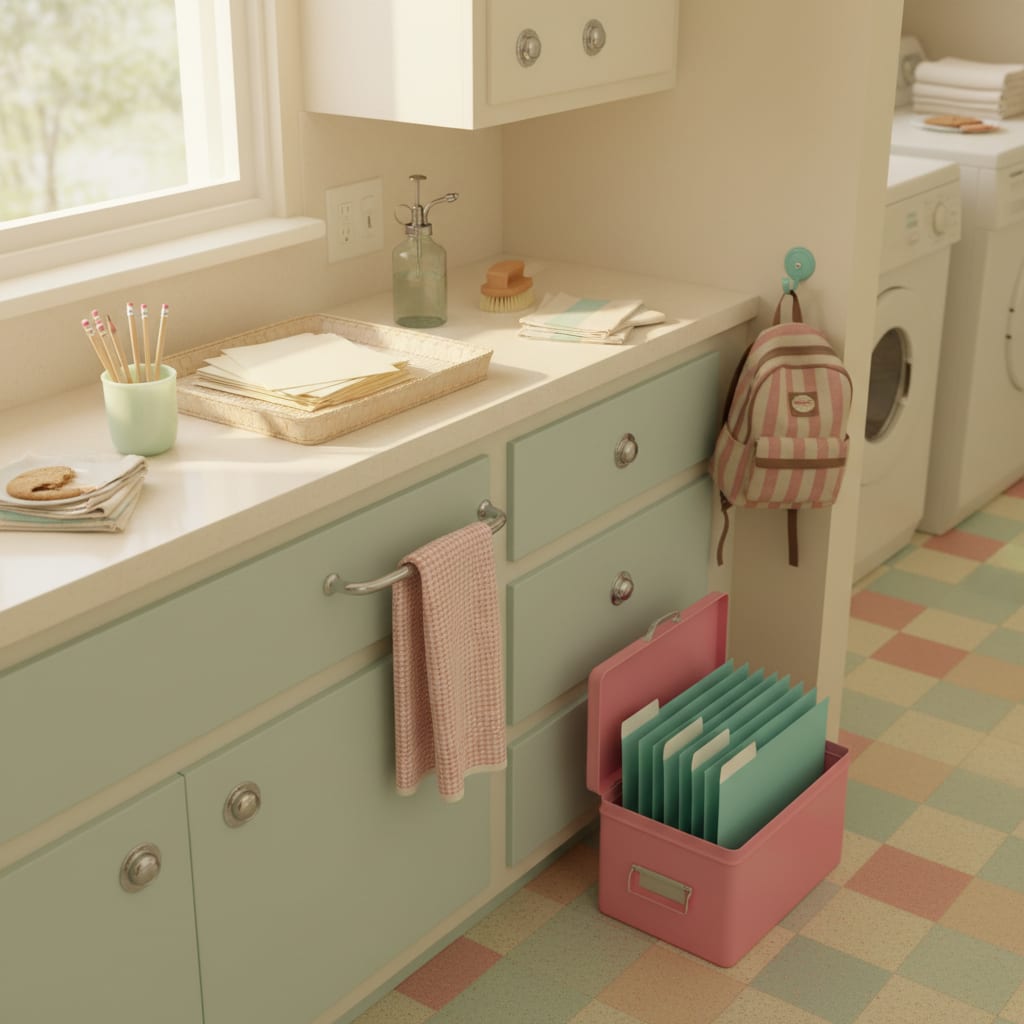
The order above works per load. What keeps it from piling up is having a fixed slot: a small load on set days beats a heroic Sunday mountain, and both patterns are laid out in the laundry schedule. The room helps too — a sort bin, a folding surface and a hanging bar shorten every load by a few minutes, which is the whole argument for organizing the laundry room.
FAQ: doing laundry
What’s the correct order to do laundry?
Sort, treat stains, load loosely, dose detergent, wash, then dry and put away in one trip. Skipping the treat step or the put-away step is what creates most laundry problems.
Do I really need to separate whites and colors?
Yes, but three piles is enough: whites, colors, and special handling. Separation matters most for new deep-dyed items and for whites, which are the only load that gains from a hot wash.
How full should a washing machine be?
Around three-quarters full. Clothes need room to move through the water. An over-packed drum leaves detergent in the fabric and clothes that come out no cleaner than they went in.
Should I wash everything in cold water?
Mostly, yes — modern detergents work cold and it’s gentler on fabric. Keep hot for whites, towels, bedding after illness and anything sour, and warm for heavily soiled work clothes.