How to Organize a Laundry Room (Small Ones Too)
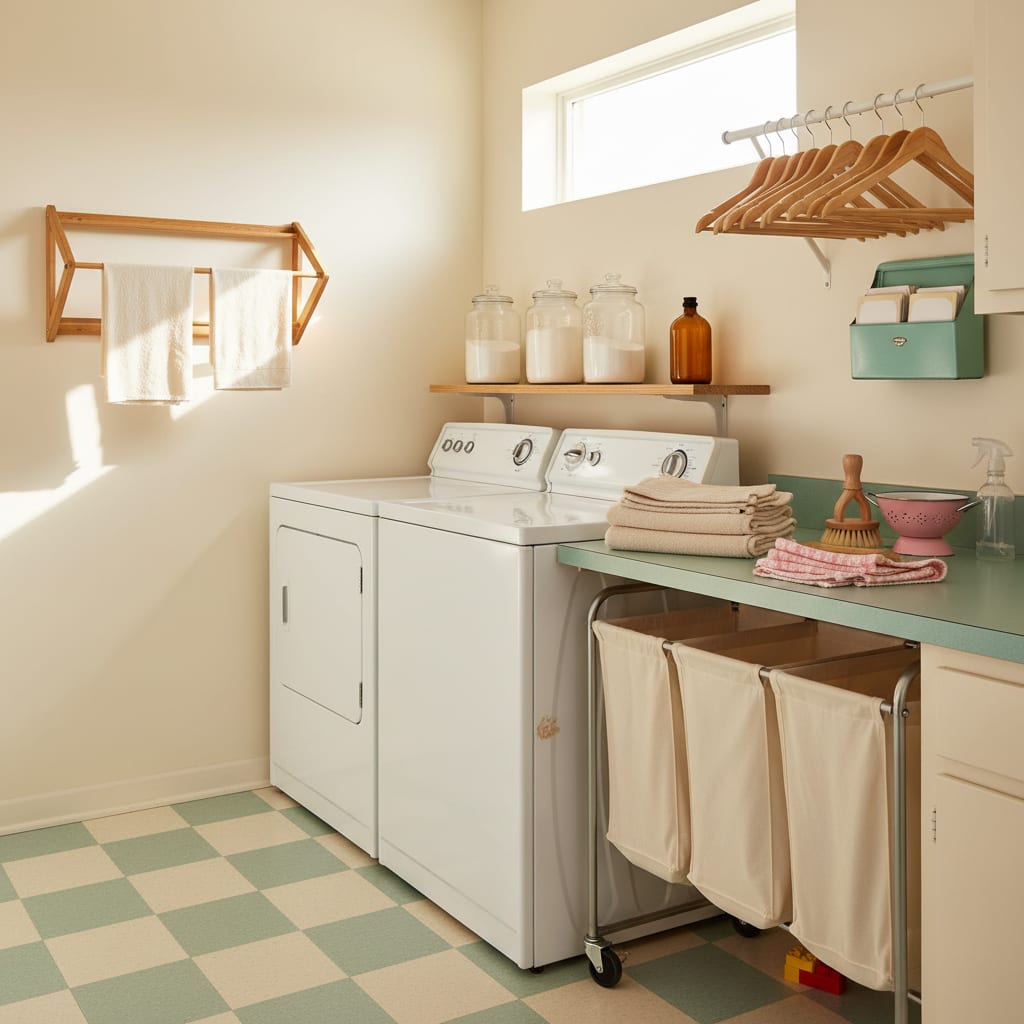
Organize a laundry room by zone, not by container: a sorting zone before the machines, a washing zone with only the products you actually use, a drying zone that includes flat and hanging space, a folding surface at counter height, and a holding spot for clean laundry waiting to leave the room. Five zones in the order the work happens. A closet-sized laundry can hold all five — it just stacks them vertically instead of spreading them along a wall. Everything below is the method for getting there, starting with an empty room.
Empty it before you organize it
Take everything out. Every laundry room accumulates things that have nothing to do with laundry — paint tins, lightbulbs, a bag of outgrown shoes, four half-empty bottles of a detergent nobody liked. You cannot zone a room you can’t see the floor of.
Sort the pile into four groups: products you genuinely use, tools that belong to laundry (brushes, mesh bags, a sewing kit for buttons), things that belong to another room, and things that are finished. Be decisive about the detergents. One detergent, one stain treatment, one booster and a bottle of white vinegar is a complete kit for most households, and the rest is just shelf space you’re paying for in clutter.
The five zones, in work order
Sort comes first because it’s the step that most often happens on the floor. A three-bin sorter takes whites, colors and special handling, which is all the separation an ordinary family needs. If the room is a walkway, a wheeled frame like the Household Essentials rolling triple sorter can live somewhere else and be pushed in on wash day.
Wash is the machines plus a small shelf or caddy at arm’s reach — nothing above shoulder height that you’d have to lift a full jug down from. A shallow tray under the products catches drips and turns a sticky shelf into a rinseable one.
Dry needs both kinds of space: a rod or bar for things that come out damp and hang, and a flat rack for knits. A wall-mounted folding rack is the single best upgrade for a small room, because it takes up two inches when it’s closed.
Fold wants a surface at counter height. Over stacked machines, a shelf. Over a front-loading pair, a slab of counter across both. In a closet laundry, a pull-out board or the top of the dryer with a folded blanket to protect it.
Hold is the zone people forget, and it’s why clean laundry lives in the room for three days. A basket per person, or one labelled shelf, so finished laundry has somewhere to be that isn’t the folding surface you need for the next load.
Small rooms, closets and basements
In a closet laundry, go vertical: a shelf above the machines for products, a tension rod or a slim hanging bar underneath it, and a drop-down folding surface on the inside of the door frame. Doors themselves are storage — over-the-door racks hold mesh bags, brushes and a small stain kit without touching floor space.
In a basement, the enemies are damp, dust and distance. Keep everything off the concrete floor on a shelf unit or a couple of risers, use lidded bins rather than open baskets, and put a real light in — most basement laundries are organized badly because nobody can see. If the machines are far from the bedrooms, the sorting bins go upstairs where the clothes come off, not downstairs where they get washed.
In a laundry that doubles as a mudroom or a pantry, draw the line physically. Laundry gets its own shelf or its own wall, and the other function gets the rest, or the two will trade territory back and forth forever.
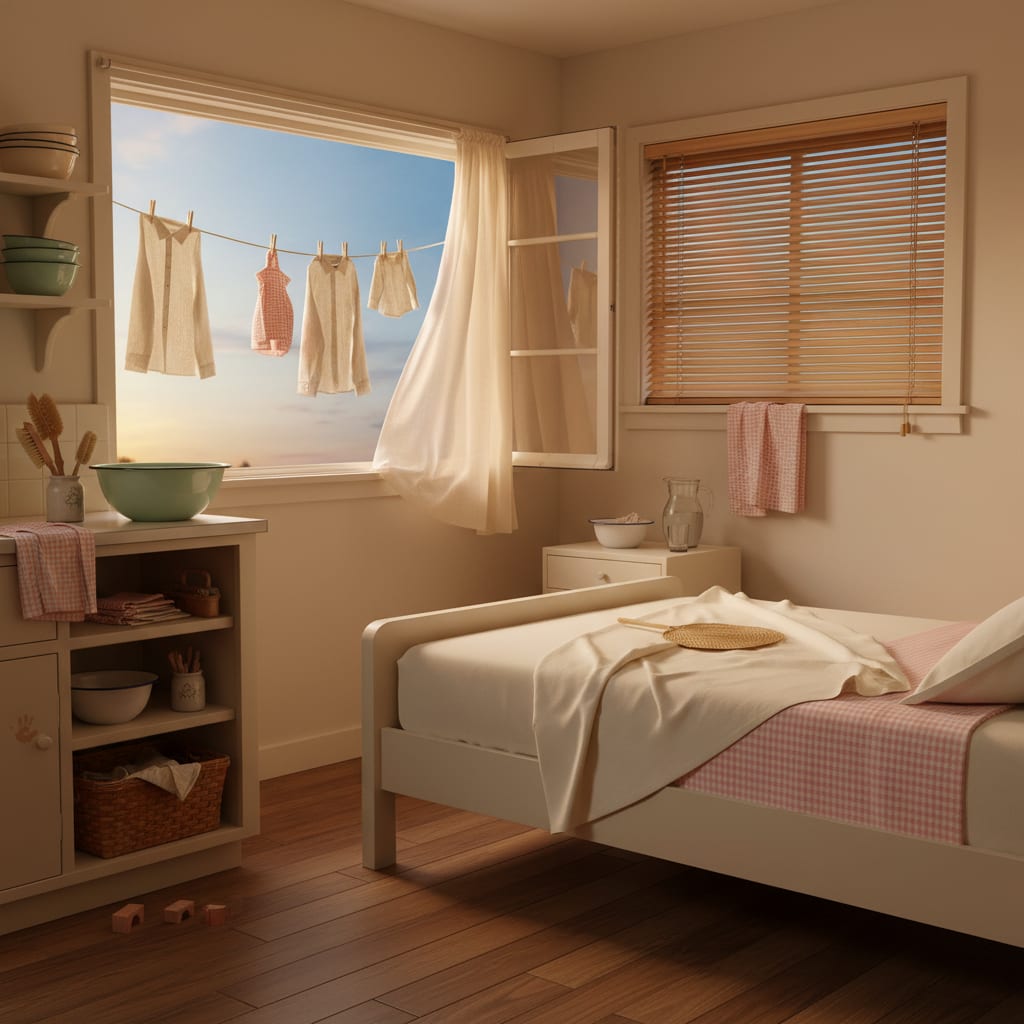
The wash house had almost nothing in it: tub, board, wringer, line, a bar of soap on a saucer, a basket. Storage wasn't a problem because there was nothing to store — the room held a process, not a supply cupboard.
Ours holds twice the equipment and ten times the bottles. So the organizing job isn't adding storage, it's subtracting until the room holds a process again — five zones, one shelf of products, and floor you can stand on.
Storage that survives a laundry room
Laundry rooms are warm, humid and dusty, which rules out a few popular choices. Cardboard boxes soften. Open baskets of clean linen collect lint. Paper labels curl off in a month, so if you label, use something adhesive-backed or write on the container itself.
What holds up: lidded plastic bins, wire shelving that lets air through, glass or thick plastic jars for powders, and a wall-mounted rail with hooks for the things that hang — mesh bags, a lint brush, the sock bag. Keep a small dish on the shelf for pocket contents. Coins, hair clips and the occasional small screwdriver otherwise end up in the drum, which is where the drain-pump filter problems start.
One more thing to keep out: linens. Sheets and towels belong in a linen closet near where they’re used, not stacked in the laundry room where the folding surface disappears under them.
Keep it working after week one
An organized laundry room decays in a predictable way — the folding surface fills up, then the sort bins get skipped, and within a month you’re back to the floor. Two habits prevent it. Clear the folding surface at the end of every wash day, without exception; it’s the room’s only working counter. And keep the products to what fits on one shelf, so new bottles have to displace old ones.
Give the room ten minutes on the same day your machine maintenance falls due, since you’ll be in there anyway — the monthly hot cycle in cleaning the washing machine is a good anchor. And if the room is organized but the laundry still piles up, the problem is the calendar, not the shelving: the fix is a fixed slot per day in a laundry schedule, running the load order in how to do laundry.
FAQ: organizing a laundry room
How do I organize a very small laundry room?
Build the five zones vertically. Products on a shelf above the machines, a slim hanging bar beneath it, a fold-down drying rack on the wall, and a folding surface over the machines. Move the sorting bins out of the room entirely.
What should you store in a laundry room?
Detergent, stain treatment, one booster, white vinegar, mesh bags, brushes, a small sewing kit, and empty baskets for finished laundry. Not linens, not cleaning supplies for other rooms, not paint or hardware.
Where should laundry sorting bins go?
Where the clothes come off — bedrooms and bathrooms — rather than in the laundry room. Sorting at the source means the piles are already separated when they arrive, which removes the step people skip.
How do I keep a laundry room organized long-term?
Clear the folding surface at the end of every wash day and cap the products at one shelf. Those two rules hold a laundry room together far better than any container system.