How to Fold a Fitted Sheet (For Real This Time)
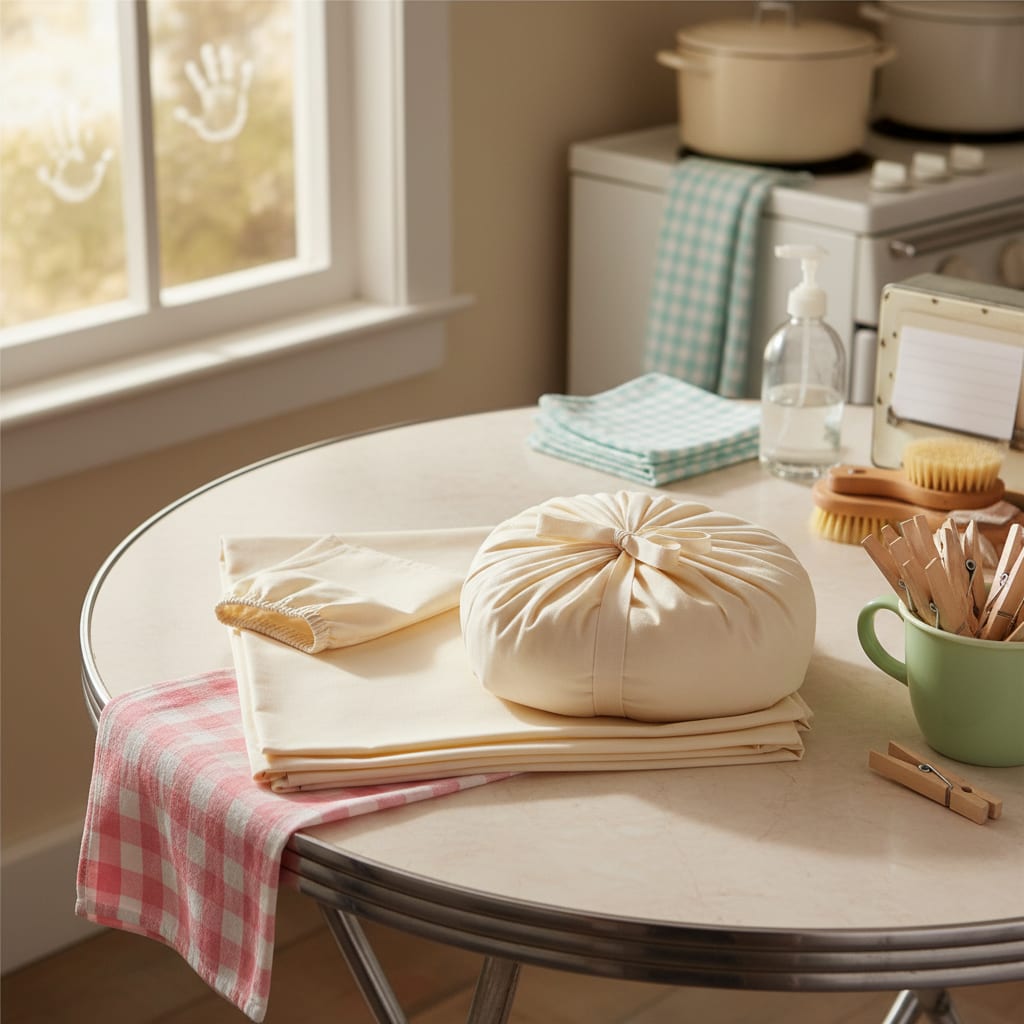
To fold a fitted sheet: turn it inside out, slide one hand into each of the two corners on a short end, then bring your hands together and fold the right corner over the left so one pocket swallows the other. Repeat with the other short end, nest that pair into the first, and you have all four elastic corners stacked in one hand. Lay the bundle down, straighten the curved elastic edge into a straight line, and fold it like a towel — in thirds, then in half. Six steps, about forty seconds once your hands know it. The whole trick is the nesting; everything after it is ordinary folding.
Why it feels impossible
A fitted sheet has no corners in the geometric sense. It has four elastic pockets, and the folding instructions everyone half-remembers assume you’ll somehow get all four to agree at once. You can’t hold four corners with two hands.
The nesting method solves it by cheating: you only ever hold two corners at a time, and you fold one pair into the other. After that the sheet is a rectangle with one bumpy edge — and everyone already knows how to fold a rectangle. If you’ve been fighting this for years, you’ve been fighting a sequencing problem, not a skill problem.
The six steps
Do it on a bed or a table. Standing in the air works once you’re fluent; it does not work while you’re learning.
- Inside out, elastic facing you. Hold the sheet by two corners along one short end, the elastic seam toward you, printed side away.
- Hands into the pockets. One hand deep into each corner, all the way to the seam, like putting on two mittens.
- Bring your hands together and swallow one corner with the other. Your right hand comes to your left; flip the right pocket over the left one so the right corner sits inside the left. Now two corners live in one hand.
- Repeat at the other short end. Same move, same direction, so you end up with a second nested pair.
- Nest pair into pair. Fold the second pair over the first — all four corners now stacked, elastic seam running down one continuous edge.
- Lay it flat and square it. Straighten the curved elastic edge with a hand-sweep until it reads as a straight line, then fold in thirds lengthways and in half (or thirds again) to match your shelf depth. Smooth as you go; a sheet folded loosely unfolds itself in the closet.
Two things people get wrong. Direction consistency: if you fold right-over-left the first time, do it right-over-left the second time — mixed directions leave you with a lump you can’t square. And square before you fold flat, not after. The curved edge is the entire difference between a tidy stack and the shelf of soft chaos.
The king-size fix
Large sheets defeat step six because there’s more fabric than table. Two adjustments. First, do steps one through five with the sheet mostly on the bed rather than held in the air — let the mattress take the weight. Second, after nesting, fold the whole thing in half before you square the elastic edge; you’ll be smoothing half the fabric, twice, instead of wrestling all of it at once. Deep-pocket sheets for thick mattresses behave the same way — more pocket, same sequence.
There was no fitted sheet. Beds were made with two flat sheets and hospital corners, and everything in the linen press folded into identical rectangles — which is exactly why the old linen closets look so orderly in photographs.
We're not going back to hospital corners at 6am with a toddler underfoot. The nesting fold is the modern equivalent: it turns the awkward shape back into a rectangle, and the rectangle is what makes a closet stay tidy.
Where the folded sheet actually goes
Folding a fitted sheet beautifully and then putting it on a shelf as a loose item is half a system. The other half is the bundle: fold the fitted sheet, the flat sheet and one pillowcase, then slide all three inside the second pillowcase from that set. One bed change equals one grab, and no orphaned fitted sheet ever hides behind the towels again. That’s the folded-sets trick and it’s the reason this fold is worth learning at all.
Store bundles with the fold facing out, stacked by bed size, and keep the sets you use weekly at eye level. A closet organized that way survives a household where other people also take sheets out, which is the only real test.
When to roll instead
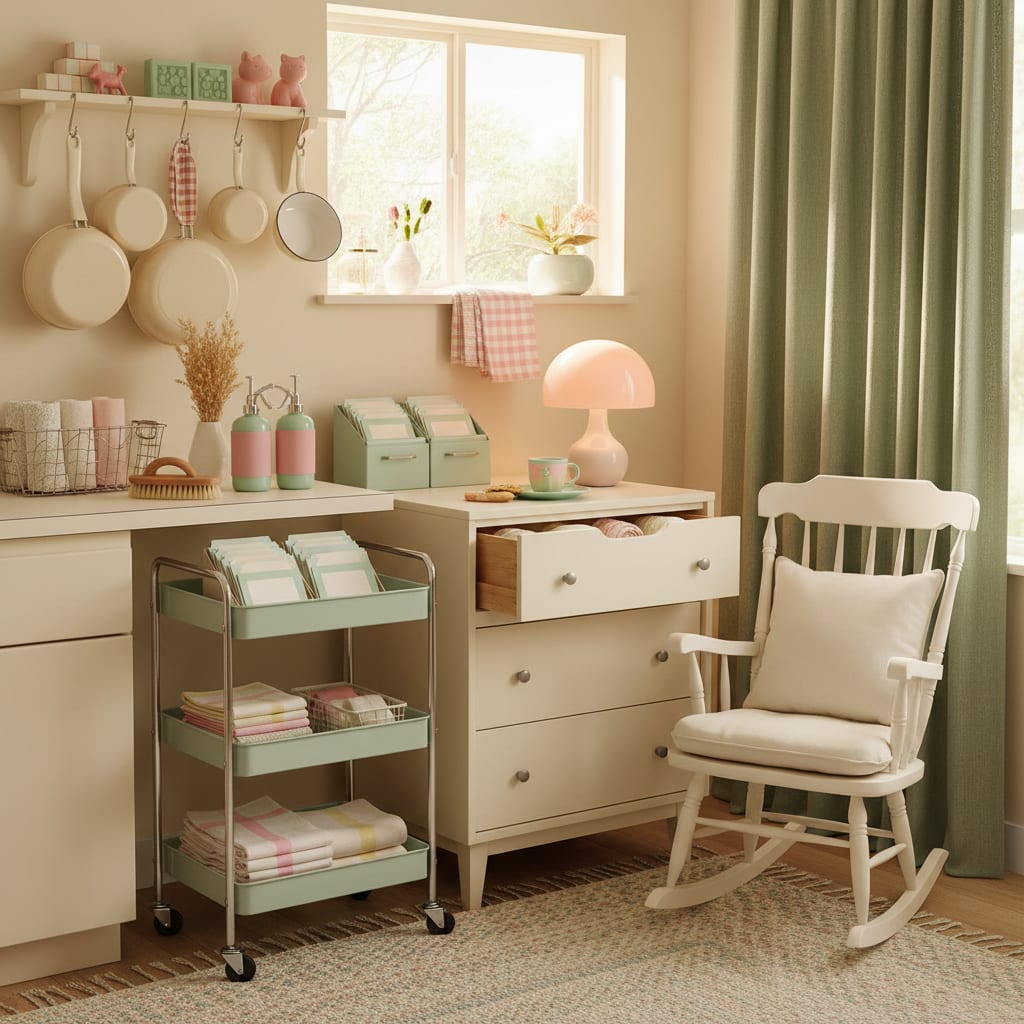
Honest exception: some sheets aren’t worth the fold. Jersey and flannel fitted sheets are so springy that a folded stack decompresses on the shelf within a week. Roll those — nest the corners as above, then roll the bundle from the short end like a sleeping bag and stand it upright. Crib sheets are small enough that rolling is simply faster, and standing them in a shallow bin beside the changing table means you can grab one one-handed in the dark, which is the actual design brief in a nursery at 2am.
The other exception is the sheet that comes out of the dryer at 9pm on a night that has already been long. Onto the bed it goes, unfolded and directly onto the mattress. Folding a sheet you’re about to use is a chore invented purely to be skipped.
Making it a habit, not a project
Sheets get folded well when folding happens warm and immediately — the same rule that governs everything else on wash day. A sheet folded straight out of the dryer is pliable and holds a crease. The same sheet cold, two hours later in a basket, is a stiff mass with set wrinkles, and that’s when people give up and shove it on the shelf.
So: bedding load times itself to finish when you can stand at the dryer. Nest, square, fold, bundle, shelf. Under two minutes for a full set, and the payoff arrives every time somebody vomits at midnight and the spare set comes out in one piece.
FAQ: folding fitted sheets
Do you fold a fitted sheet inside out or right side out?
Inside out, elastic seam facing you. It lets you push each hand fully into the corner pocket, which is the move the whole method depends on.
How do you fold a fitted sheet by yourself?
Exactly this way — the nesting method is designed for one person and two hands. You never hold more than two corners at a time, and a bed or table takes the weight of large sheets.
Why won’t my folded fitted sheets stay flat on the shelf?
Usually one of two causes: the curved elastic edge was never squared into a straight line before folding, or the fabric is springy (jersey, flannel) and wants rolling instead. Storing sets bundled inside a pillowcase also keeps them compressed.
Is it better to fold or roll sheets?
Fold cotton and percale — they hold a crease and stack neatly. Roll jersey, flannel and crib sheets, and stand them upright in a bin, where they take less shelf depth and don’t decompress.
Next cards in the file
Nursery Organization: Set Up for the 2am You
July 17, 2026
How to Clean Silver: The Foil Bath and When to Polish
October 7, 2026
How to Get Coffee Out of Carpet (Fresh or Set)
September 27, 2026