How to Clean Blinds (Slats, Cords and All)
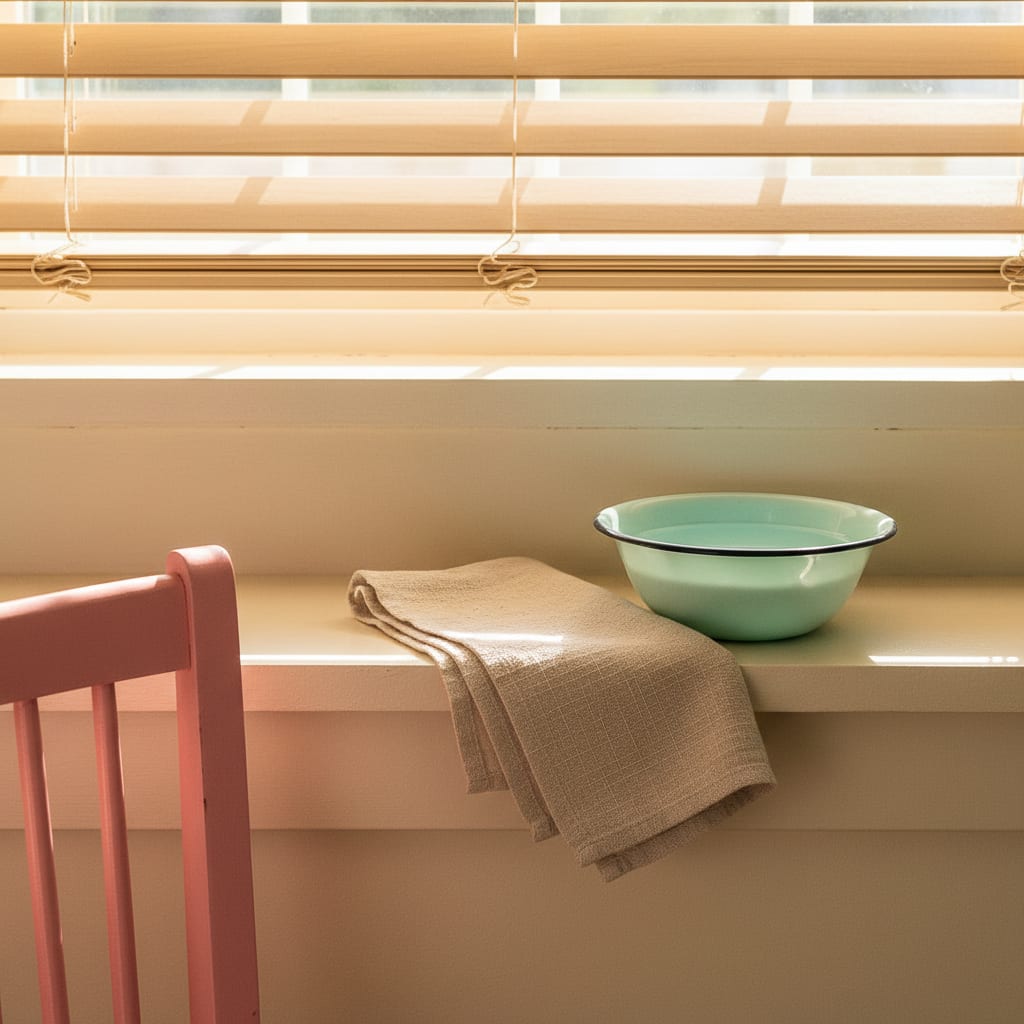
How to clean blinds: lower them fully, tilt the slats almost closed, and dust with a soft cloth or the vacuum’s brush attachment, then tilt the other way and do the back. That handles most weeks. For grime, wipe metal, vinyl and faux-wood slats with a cloth wrung out of warm water and a little mild detergent; some metal blinds can even be soaked in the tub, if the maker allows it. Real wood blinds never get wet — dust and a barely-damp wipe only. And while you are standing at the window, check the cords, because with small children in the house that matters more than the dust.
Start by knowing what the slats are made of
The method changes by material, and the wrong one ruins a blind faster than dust ever will.
- Metal (aluminium) slats: the most forgiving. Dust, damp-wipe, and in some cases soak.
- Vinyl and faux wood: damp-wipe freely; avoid anything abrasive, which dulls the finish.
- Real wood: dust and dry methods only. Water warps and marks it.
- Fabric, cellular and honeycomb shades: mostly a vacuum job; follow the maker’s care guide, because some fabrics are treated.
If there is a label on the headrail or a care sheet in a drawer somewhere, it beats any general guide, this one included.
The dust: slats almost closed, then the other way
Hunter Douglas’s cleaning guidance gives the technique that works on every hard slat: “Lower blind to its full length, tilt slats almost all the way down and dust. Not closing all the way allows dusting where the slats overlap.” Then reverse the tilt and do the other face.
Work top to bottom so the dust falls onto slats you have not done yet, and onto a floor you will vacuum last. A dry microfiber cloth grabs dust rather than pushing it along — a twelve-pack of all-purpose cloths means you can swap to a clean one as each gets grey. The same page says blinds “may be vacuumed using a brush attachment”, which is the faster route on a wide window.
The old trick of pulling a sock over your hand and running each slat between thumb and fingers still earns its place for a quick pass. It is the same grab-the-dust-don’t-move-it logic as the damp tea towel in the old-fashioned cleaning tips — just keep the sock barely damp at most.
The grime: a damp wipe, slat by slat
Kitchen blinds collect cooking film; bathroom blinds collect steam spots. Dust alone won’t lift either.
Mix warm water with a small squirt of mild dish soap, wring a cloth out until it is only damp, and wipe each slat from the cord end outward, holding the slat still with your other hand so it does not bend. Follow with a clean damp cloth and then a dry one. On a stubborn kitchen blind, let the damp cloth sit on the slat for a moment before wiping — patience lifts grease better than pressure.
Spray the cloth, not the blind. Hunter Douglas makes the same point about glass cleaner: spray it on the cloth rather than the window, so it does not splatter the finish. It also warns that “ultrasonic cleaning or use of chemical solvents and scrubbing cleansers are not recommended. They will damage the product.” Abrasive powders and scrub sponges stay in the bathroom cabinet.
The bathtub method, for metal blinds that allow it
Heavily greasy metal blinds can sometimes be taken down and washed whole. Hunter Douglas lists it for some of its own aluminium blinds: “Immerse entire shade assembly in lukewarm water with mild detergent,” then “wash for five minutes by gently moving liquid around with your fingers.” Note the exceptions in the same guidance, though — it is not recommended for blinds with decorative tapes, and certain motorised or cordless lift headrails must not be immersed at all. That is exactly why the maker’s instructions come before the tub.
If yours qualify: line the tub with an old towel to protect both surfaces, keep the blind fully lowered and the slats open so water reaches every face, rinse with clean lukewarm water, then hang it back on its brackets with the slats open to drip-dry over a towel. Refitting it wet and closed traps water between the slats and leaves spots.
Wood blinds: dry methods only
Wood is the blind people most often ruin with good intentions. Hunter Douglas advises protecting “all fine wood products from exposure to steam, high moisture areas, rain or sprinkler systems to ensure their long life,” and suggests treating stained wood blinds “periodically with lemon oil or other wood preservative”, as you would wood furniture.
So: dust, vacuum with the brush, and if there are sticky marks, a cloth that is only just damp, dried immediately. Never soak them, and don’t hang them in a steamy bathroom in the first place.
The cords: the part that actually matters
When you are standing at a window with small children in the house, the cords deserve more attention than the dust. The U.S. Consumer Product Safety Commission’s Go Cordless page is direct about it: “Cordless window coverings are the only option to eliminate the strangulation hazard,” and “window cord strangulation is often silent, so parents or caregivers nearby may not realize that a tragedy is happening.”
Its interim advice, for corded blinds that can’t be replaced yet, is to “move all cribs, beds, furniture and toys away from windows and window covering cords, preferably to another wall” — while noting that such steps “will not eliminate the hazard; they will only reduce it.” The Window Covering Safety Council’s safety-month release adds the practical checks: keep cords out of reach, eliminate dangling cords, anchor continuous-loop cords on draperies and vertical blinds to the floor or wall, and check that cord stops are installed and adjusted. It also notes that a 2018 standard made stock blinds sold in stores and online cordless or with inaccessible cords, and a revised standard from June 2024 extended that to the vast majority of custom window coverings.
So cleaning day doubles as an inspection. Blinds older than those standards, blinds that came with the house, and any corded blind in a child’s room are the ones to replace first. The one-handed-in-the-dark nursery layout in nursery organization already puts the crib away from the window, which is where this rule starts.
Venetian blinds came down twice a year, went into a tub on the back step, and got scrubbed slat by slat with a brush and soap flakes before drying on the line. The card also says "tie up the cords" — a habit, not a regulation, in her day.
A quick weekly dust, a damp wipe when it shows, and the tub only for metal blinds whose maker says yes. Her "tie up the cords" became "replace the corded ones" — the same instinct, with better options.
How often to clean blinds
Dust them on the same day you dust the room — they are a surface like any other. Give them the damp wipe when grime shows, which may be roughly monthly in a kitchen and far less often in a bedroom; slot it into the rotating deep tasks on the monthly cleaning schedule.
FAQ: how to clean blinds
What is the easiest way to clean blinds?
Lower them, tilt the slats almost closed, and dust top to bottom with a microfiber cloth or the vacuum’s brush attachment, then tilt the other way and repeat. Regular dusting means you rarely need anything wetter.
Can you put blinds in the bathtub?
Some metal blinds, yes, if the manufacturer allows it: lukewarm water, mild detergent, a gentle swish. Wood blinds never, and blinds with decorative tapes or certain motorised or cordless headrails should not be immersed. Check the care instructions first.
How do you clean wood blinds without damaging them?
Dust or vacuum with a brush, and use a barely-damp cloth for sticky marks, drying immediately. Keep them away from steam and water, and treat stained wood occasionally with a wood preservative, as you would furniture.
Are corded blinds safe with young children?
Safety agencies recommend cordless window coverings where young children are present, because cords pose a strangulation risk. If corded blinds can’t be replaced yet, keep cords out of reach and move beds, cribs and furniture away from the window.