How to Change a Bed at 2am (Without a 40-Minute Wake-Up)
Make the bed twice before anyone sleeps in it: waterproof protector, fitted sheet, second protector, second fitted sheet. Then a 2am accident means peeling off two layers and finding a dry bed underneath — ninety seconds, one lamp on its lowest setting, no trip to the linen closet. Keep a change of pyjamas, a dry towel and a laundry bag inside the room, and the whole event stays small. Almost all of the damage from a night-time leak is done by the search: for the sheet, for the pyjamas, for the light switch, while everyone gets progressively more awake.
Make the bed twice
The double-layer bed is the whole trick, and it works in a crib, a toddler bed and a full-size bed alike.
Bottom to top: waterproof mattress protector, fitted sheet, second waterproof protector, second fitted sheet. Every layer is fitted or elasticated and pulled taut — this matters especially in a crib, where a loose flat pad laid on top of the sheet is not something to have in the bed at all. For a baby, the sleep surface stays firm and flat with nothing loose on it, and both protectors go underneath their own tight sheet.
A zippered encasement is the layer worth buying properly, since it’s the one protecting the mattress from every side rather than just the top; the standard-size versions such as this zippered crib protector are the common shape. The second protector can be a cheaper flat-fitted one — it only has to survive being stripped in the dark twice a month.
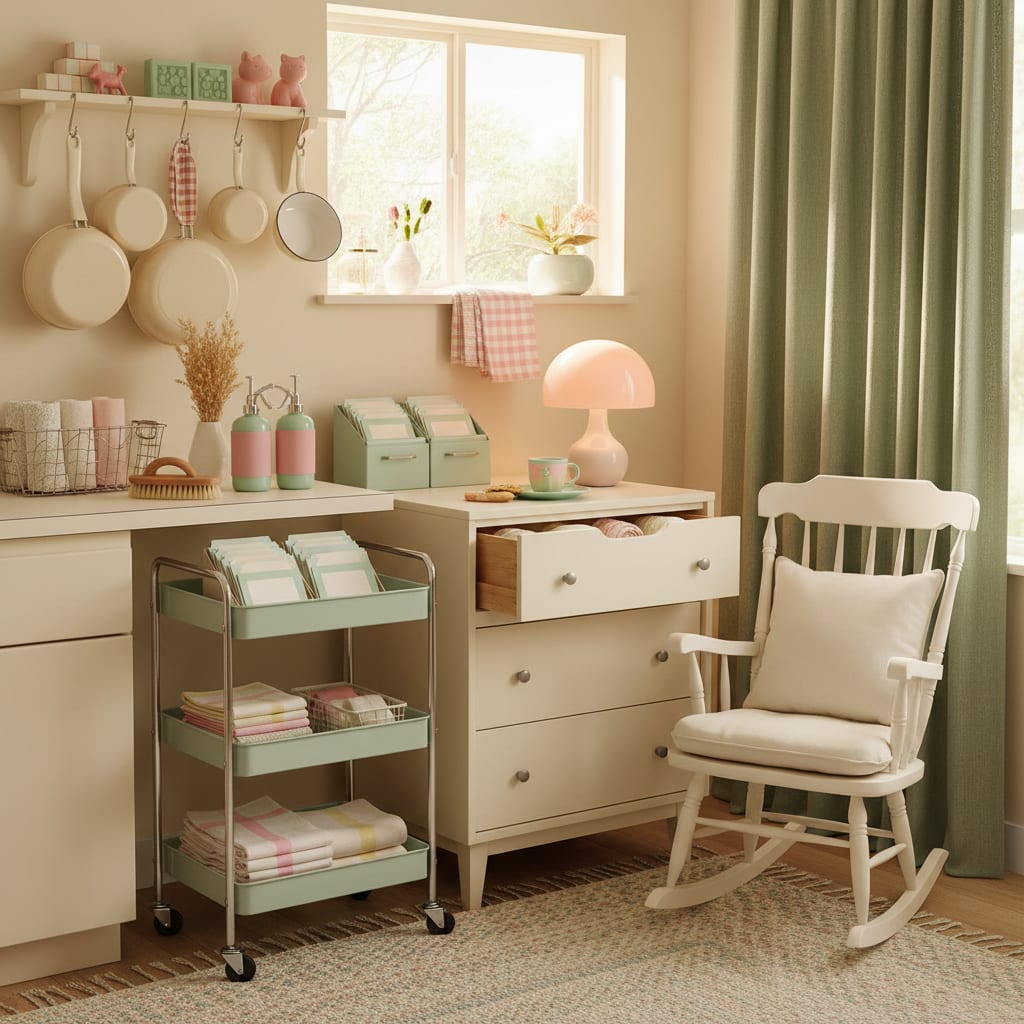
Two full sets is the minimum, three if you’re in a phase. Keep the spare set in the child’s room, not in the linen closet down the hall — the correct storage location for a spare crib sheet is the bottom drawer of the dresser two feet from the crib.
The 2am sequence, in order
Order matters more than speed, because doing it in the wrong order means turning on more light and doing more thinking.
- Child first, out of the wet. Lift them to the changing mat, the rug, or a towel on the floor — not the hallway, not another room, because a change of scene wakes them further.
- One low light only. A lamp on its lowest setting, or a warm-toned nightlight you leave plugged in permanently for this purpose. No overhead light and no phone screen.
- Dry them, change them. Wipes and clean pyjamas from the kit below. Skip the bath — it takes twenty minutes and resets the night.
- Strip the top two layers together. Sheet and protector come off as one bundle. Don’t separate them now; that’s a morning job.
- Bundle straight into the laundry bag, not onto the floor and not into your arms while you do the next step.
- Child back down, quietly, and leave. Same words, same short exit as any other night. The bed is already made — that’s the point of layering it.
If the mattress itself got wet, blot it now with a towel, leave it, and deal with it properly in daylight; the baking-soda method in how to clean a mattress is the daytime job and it can’t be rushed at 2am anyway.
The night kit, within arm’s reach
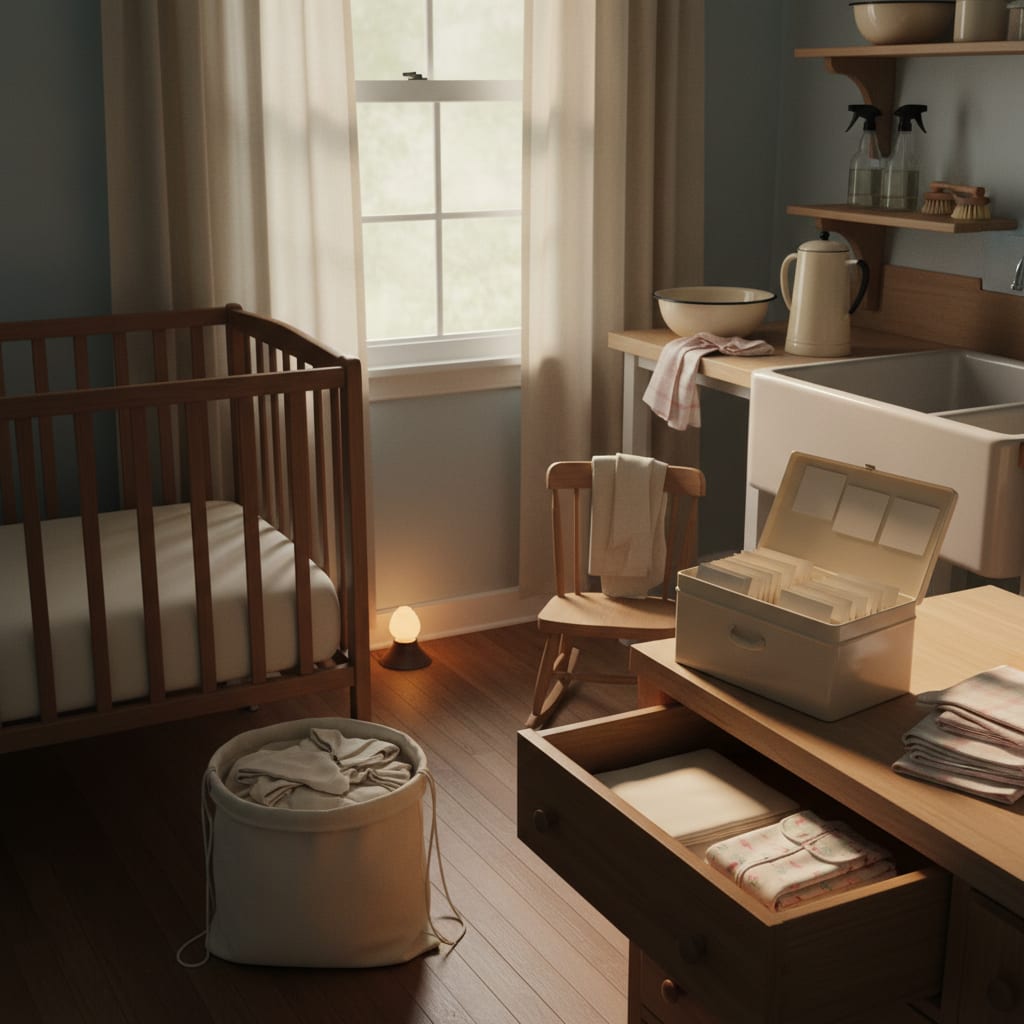
Set this up once and it saves you every time. In a basket or a drawer in the child’s room:
- a full change of pyjamas, and a spare sleep sack if they use one
- a pack of wipes and a small towel
- a folded spare set of bedding (protector plus fitted sheet, already paired)
- a drawstring laundry bag or lidded hamper for wet bedding
- the nightlight or lamp, positioned so you can reach it without crossing the room
That’s the same principle as setting the nursery up for the 2am version of yourself rather than for the daytime one: everything the night needs is inside the room, at the height of someone kneeling in the dark.
A rubber sheet under a draw sheet — a small extra sheet across the middle of the bed that could be whipped out and replaced without remaking the whole thing. Hospital linen practice, borrowed for children.
The same idea with modern materials and none of the loose pieces: quiet fitted protectors, doubled, so the "draw sheet" is just the top half of a bed that was already made twice. The card file called it laying the bed up. It's the best inherited trick in this house.
Keep it a change, not an event
Two things turn a ninety-second change into a forty-minute wake-up. The first is light — bright light at 2am tells a small body that the night is over, and it’s the single most common self-inflicted wound of the whole exercise. The second is talking. Warm, brief and boring is the register: the same four or five words you’d use on any other night waking.
The third, honestly, is us. Standing in a dim room holding wet bedding, it’s very tempting to also open a window, wipe the mattress, find the other bunny and reorganize the drawer you had to rummage in. Put the bundle down, put the child down, and go. If they’re properly awake by then, Betteroo’s guide to getting a baby back down quickly is the right thing to read on a calm afternoon, not while you’re standing there.
The morning pile
Wet bedding does not improve in a bag, so it gets dealt with in the morning rather than the following evening. Rinse anything soiled in cold water first — hot water sets protein stains — then wash on the warmest cycle the fabric allows, with a normal dose of detergent and half a cup of white vinegar in the rinse to clear the smell. Don’t add extra detergent to compensate; a residue-heavy sheet holds smell more, not less, which is the ordering logic behind how to do laundry generally.
If you’re in a run of nights, run one dedicated bedding load rather than adding sheets to whatever else is going. Two protectors and two sheets fill a machine on their own, and protectors need room to move or they come out with unrinsed patches. Line-dry or tumble on low; high heat is what eventually delaminates a waterproof backing.
When it’s most nights, not most months
A layered bed makes the accidents cheap, but it doesn’t answer the underlying question, and it isn’t meant to. Occasional night leaks are ordinary at every age under about five, and a run of them often tracks something else — a growth phase, a new sibling, a cold, or a bedtime that drifted late.
If it’s become the pattern rather than the exception, the useful reading is about the pattern rather than the bedding: Betteroo’s guide to dry nights and how they actually arrive sets out what’s typical and what isn’t, and it’s worth a read before anyone starts limiting drinks or setting alarms. Anything that seems sudden, painful or out of character belongs with your pediatrician rather than with a bedding system.

FAQ: night-time bedding changes
How do you change a crib sheet in the middle of the night quickly?
Layer the crib in advance — protector, sheet, protector, sheet — so a change means peeling off the top two layers as one bundle. With the spare set and pyjamas already in the room, it takes under two minutes.
Is it safe to double-layer a crib mattress?
Yes, provided every layer is fitted and taut and nothing loose sits on top of the sheet. The sleep surface must stay firm and flat, so both protectors go underneath their own tight fitted sheet.
Should I bathe my child after a night-time accident?
Usually not. Wipes and a change of pyjamas are enough at 2am; a bath adds twenty minutes and wakes everyone properly. Save it for the morning unless there’s a reason not to.
How do you get the smell out of bedding and mattress protectors?
Rinse cold first, then wash warm with a normal detergent dose and half a cup of white vinegar in the rinse. Skip extra detergent — leftover residue traps odor rather than removing it — and dry on low heat to protect the waterproof layer.