How to Dress a Toddler for Bed in a Cold Room
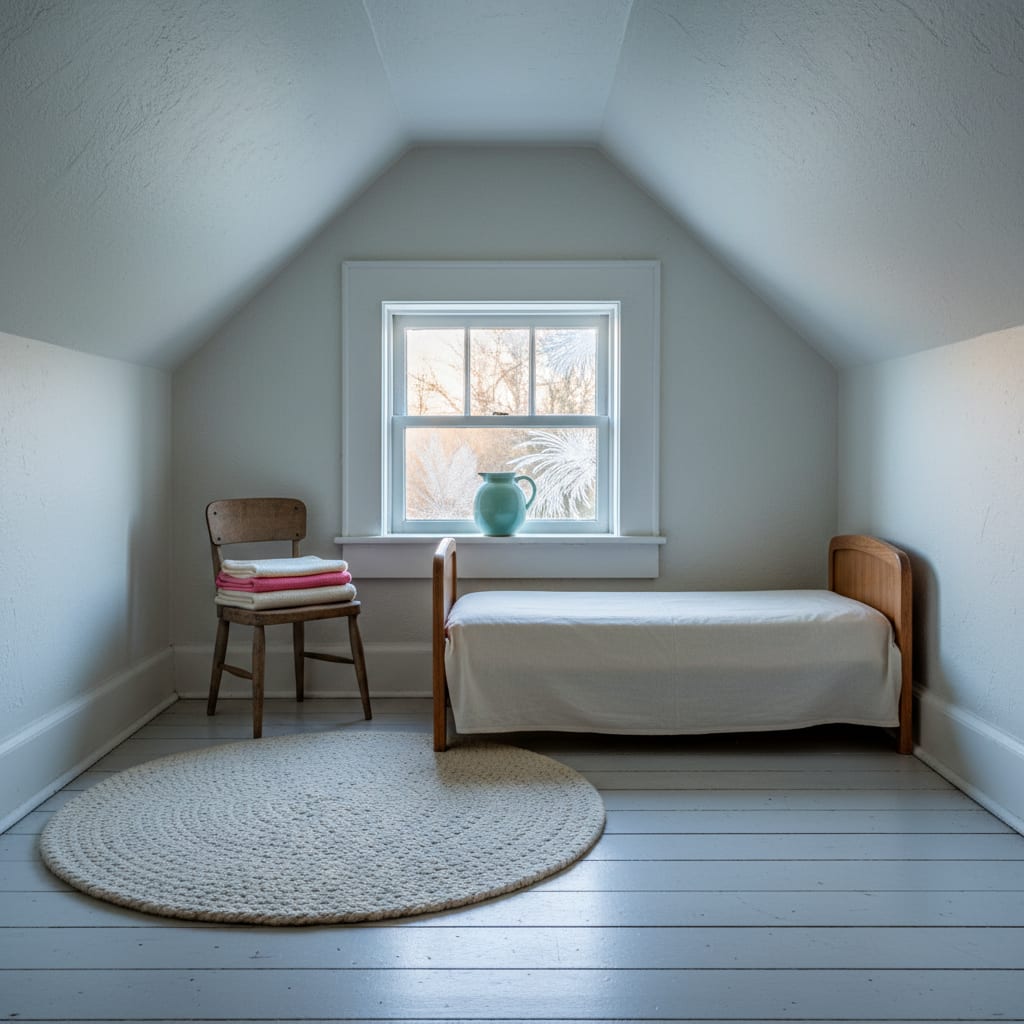
To dress a toddler for bed in a cold room, start with a thermometer, not the pajama drawer. Read the room at bedtime and again in the small hours, aim for about 68 to 72°F (20 to 22°C), and dress for the colder reading. Snug long-sleeved cotton or wool pajamas, socks or footed feet, then a warmer-weight sleep sack: layers a two-year-old cannot kick off. Check the back of the neck, not the hands. Leave the hat off, keep loose blankets out until after the first birthday, and keep hot water bottles and electric blankets out of the bed.
Why the upstairs room in an old house runs cold
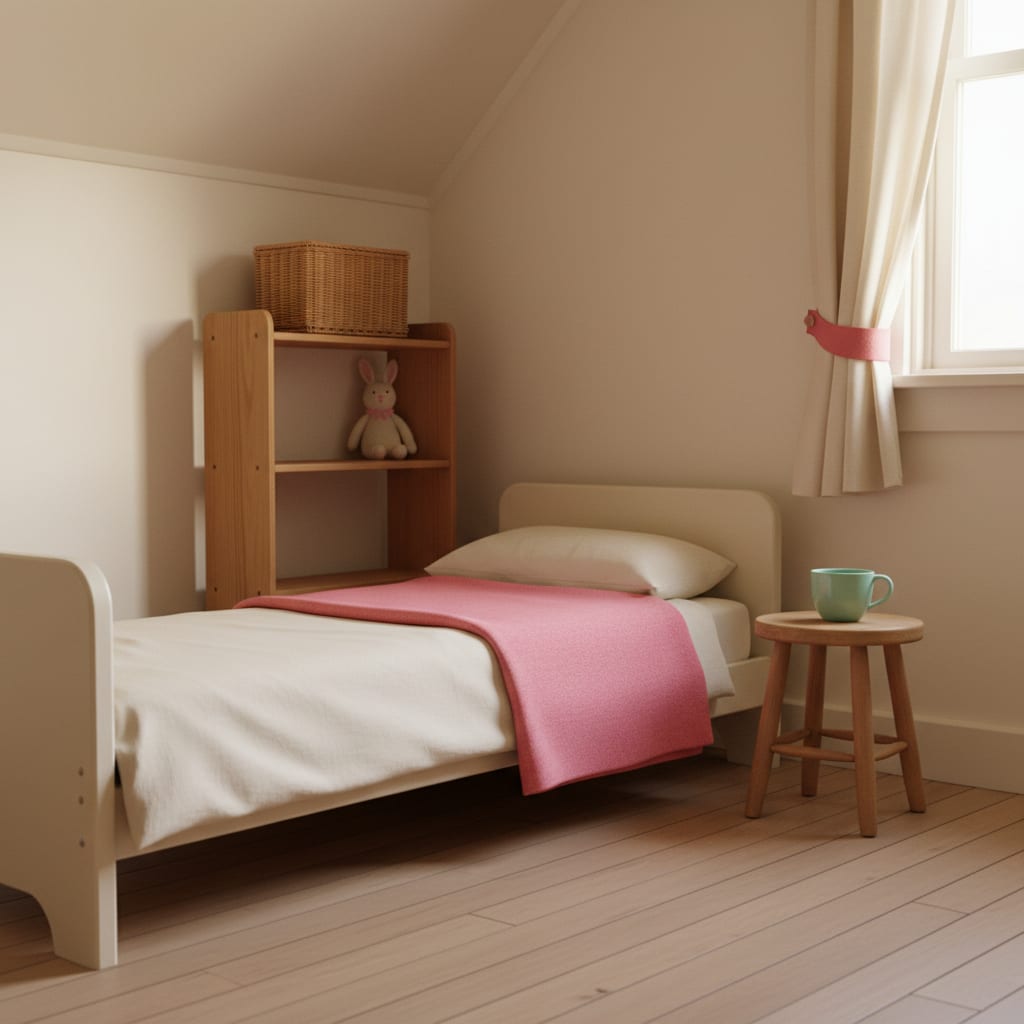
In an older two-story house the cold room is usually the one tucked under the roof. It sits below an attic that may hold a few inches of old insulation, at the far end of the ductwork from a basement furnace, often behind the original windows. The thermostat lives downstairs, where it is warm.
ENERGY STAR’s chart of common home problems lists “hot and cold rooms; uneven temperature between rooms” under both the attic and the ducts, and “drafty rooms” under the attic and under doors and windows. Its DIY attic check says insulation level with or below the floor joists probably means you need more. It also warns that some attics hold vermiculite, which may contain asbestos; do not disturb it until a lab has tested it.
That is spring’s job. The thermostat schedule, the draft under the door and the space heater are in the 4am cold-room audit; this post is about what goes on the toddler.
Measure the room twice before you buy a thing
The card-file rule: one thermometer, two readings. Set it on the dresser at child height, away from the window and the vent, and read it at bedtime and again in the night. The gauge from the nursery humidifier post does this job too. Dress for the lower number: a child put down warm into a room that cools by three o’clock is under-dressed for the hours that matter.
The layers, by what the room reads
Betteroo’s guide to moving past the sleep sack carries a general warmth table, and it says plainly that the sack maker’s own chart takes priority. Its bands, read for a toddler:
| Room reads | Sleep sack weight | Underneath |
|---|---|---|
| 69 to 74°F (21 to 23°C) | about 1.0 TOG | short- or long-sleeved layer |
| 61 to 68°F (16 to 20°C) | about 2.5 TOG | long sleeves or light pajamas |
| Below 61°F (16°C) | about 3.5 TOG | long-sleeved pajamas, and warm the room |
TOG is a sack’s warmth rating: higher is warmer. Take the bottom row seriously in an old house. Below about 61°F the guide says to consider warming the room, so use the table for a cold night, not as a reason to keep the room cold.
For a child still in a crib, a sack is the easiest overnight layer, because it cannot end up at the foot of the bed. For a child who climbs or walks to the bathroom, the same guide suggests a sack with foot openings as the middle step. A merino-and-cotton walker such as the Woolino 4 Season sleep bag with feet keeps the warmth and frees the feet. Betteroo rounds up other walking sacks if wool is not your fiber.
A long flannel nightgown, a knitted cap, two quilts and a hot brick wrapped in a towel at the foot of the bed. The window was frosted on the inside, and everybody was warm.
The same warmth worn instead of piled on: snug pajamas, wool socks and a sack that stays put at two in the morning. The cap, the quilts and the brick have all retired.
Snug, not loose: what changed about the flannel nightgown
Grandma’s long, loose nightgown is exactly what the federal sleepwear rule was written around. Under 16 CFR Part 1615, children’s sleepwear up to size 6X has to pass a flammability standard unless it is a “tight-fitting garment” cut to set maximum measurements. Snug-fit sets that take that route must carry a yellow hangtag reading: “For child’s safety, garment should fit snugly. This garment is not flame resistant. Loose-fitting garment is more likely to catch fire.” The size label at the back of the neck must also say “Wear Snug-fitting, Not Flame Resistant.”
In a house with a fire or a space heater in the evening, two habits follow:
- Buy the size that fits now. A snug-fit set sized up to grow into no longer fits snugly, which is the case the tag warns about.
- Choose pajamas that are either labeled flame resistant or labeled snug-fitting. A cotton footed sleeper sold as snug fit, like the Burt’s Bees Baby organic cotton snug-fit footed sleeper, does the job and covers the feet in one piece.
Feet, hands, head: where to check and where not to
Feet get cold first: socks under the sack, or footed pajamas. Merino socks such as Woolino’s washable wool toddler socks stay warm without bulk. Wash wool cool, as in how to wash a wool blanket.
Hands and feet are the wrong instrument. The Betteroo guide says to check the back of the neck or the chest, because hands and feet are cool in most sleeping children however warm the rest of them is. The American Academy of Pediatrics’ safe sleep guide on HealthyChildren lists the overheating signs as sweating, a hot chest or flushed skin, and says overheating can increase the risk of SIDS. Warm and dry is right; damp is a layer too many.
Leave the head bare. The AAP page says no hat indoors once a baby is home from the hospital. That is written for babies under one; we keep the habit at two and three, because a cap in a toddler bed ends up anywhere but on the head.
Blankets, bottles and plugs
- Under 12 months, nothing loose. The AAP lists quilts, comforters, blankets and pillows among the soft bedding that raises the risk of suffocation and strangulation. If you worry about cold, it says, use layers of clothing or a wearable blanket, with one layer more than you are wearing.
- After the first birthday, Betteroo’s guide suggests a small, light, breathable blanket at first, not a large heavy one. A toddler who kicks will still lose it by two, so in a cold room the clothing is the overnight layer and the blanket is the extra.
- No hot water bottle and no electric blanket in a child’s bed. A bottle can warm the sheets before bedtime and come out before the child goes in, as in the hot water bottle post.
 Warm room, warm toddler, still up at three? Look at the schedule next.
Betteroo builds a sleep plan around your child's age, with naps, wake windows and bedtime that change as they grow.
Take the sleep quiz →
FAQ: dressing a toddler for a cold bedroom
What should a toddler wear to bed in a cold room?
Snug long-sleeved pajamas, socks or footed feet, and a warmer sleep sack, its weight picked from the room’s coldest reading and the maker’s chart.
How warm should a toddler’s bedroom be at night?
Aim for about 68 to 72°F (20 to 22°C). Measure it in the small hours as well as at bedtime, because an upstairs room in an old house can drop several degrees overnight.
Can a toddler sleep with a blanket in a cold room?
Not before 12 months: the AAP says nothing loose in the sleep space. After that a small light blanket can be added, but clothing should carry the night, because blankets get kicked off.
Is a sleep sack or footed pajamas better for a cold room?
Often both: footed pajamas underneath, a sack on top. For a child who walks at night, a sack with foot openings keeps the warmth without the tripping.
Sources loaded and read on 2026-11-07: ENERGY STAR, “Identify the Problems You Want to Fix” and “What to Look For: DIY Checks and Inspections”; HealthyChildren.org (AAP), A Parent’s Guide to Safe Sleep; 16 CFR Part 1615, Standard for the Flammability of Children’s Sleepwear: Sizes 0 through 6X (govinfo.gov, 2024 edition); Betteroo, When to Stop Using a Sleep Sack.
Next cards in the file
How Much Vinegar to Add to Laundry (and When Not To)
August 11, 2026
Coming Home Late Without Waking the Toddler
August 31, 2026
Downsized? Bedtime When Their Room Is the Smallest
September 23, 2026