How to Wash a Wool Blanket Without Felting It
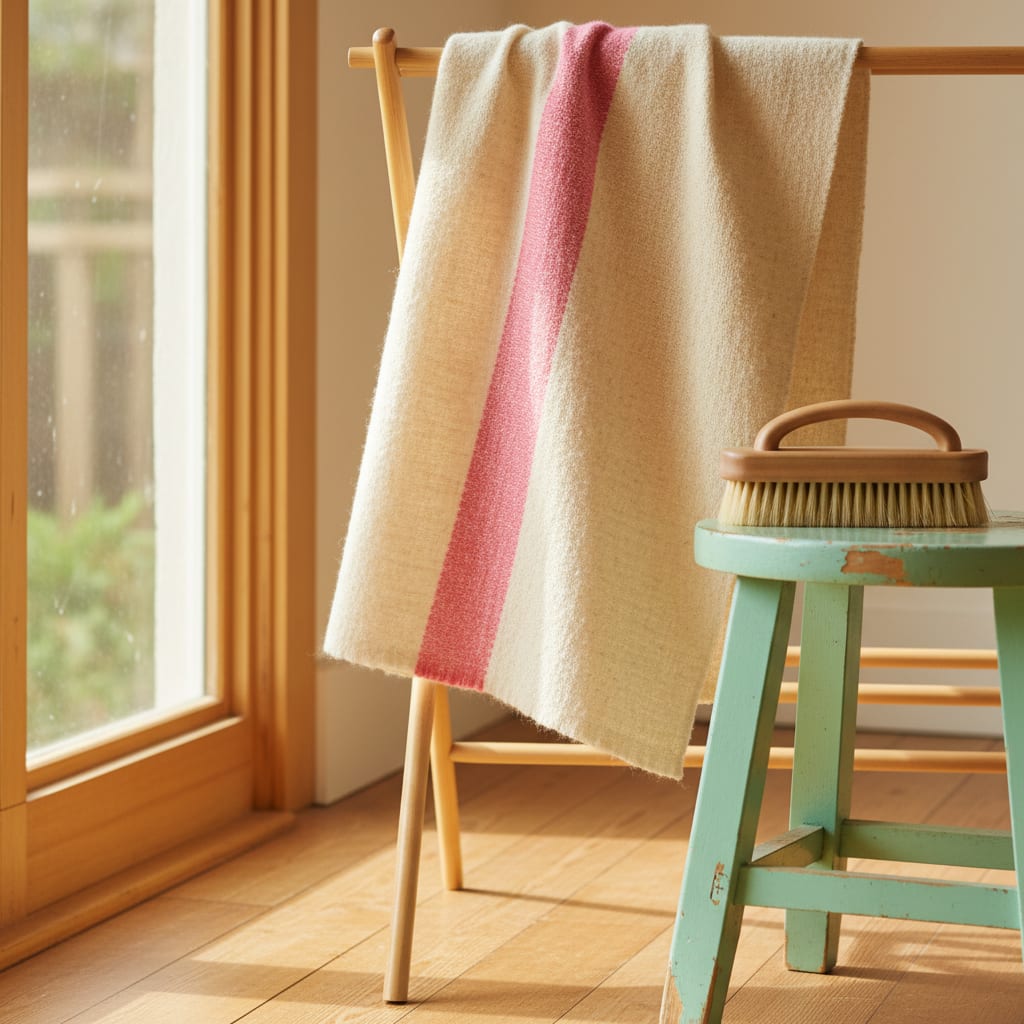
To wash a wool blanket, read its care label before anything else. If it says dry clean only, don’t put it in water: makers warn that washing shrinks a traditional wool blanket and can ruin it. Air it, brush it, spot-clean with cold water, and dry-clean it when it truly needs it. If the label says washable, wash it on its own in cold water on a gentle cycle with a detergent made for wool, skip the fabric softener, and line-dry or dry it flat. Heat and agitation are what felt wool, so avoid both.
Why wool blankets shrink and felt
Wool fibers are covered in tiny overlapping scales. Pendleton, the Oregon blanket mill, explains in its wool care guide that agitation “can cause the scales of wool fibers to knit together in a process called ‘felting.’ This cannot be undone!” The same page warns that “exposure to high, direct heat will damage wool fabric.”
So the enemies are rubbing, tumbling, hot water and a hot dryer, usually in combination. A blanket that comes out of a normal wash small, thick and stiff has felted, and no amount of stretching brings it back. Pendleton’s product care page puts numbers on it for blankets not labelled washable: even mild washing can cause “3-6 inches of shrinkage (increasing with repeated washings)” and “permanent stiffening.”
Start with the label
| Label says | What to do |
|---|---|
| Dry clean only | Air, brush and spot-clean at home; dry-clean when it truly needs it |
| Hand wash | A basin or tub, cold water, a wool wash, no machine cycle |
| Machine washable wool | Cold, gentle cycle, washed alone, wool detergent, no softener |
| No label (vintage) | Treat it as dry clean only |
Makers differ on the dry-clean-only row, which is worth knowing. Pendleton says its traditional blankets “should only be dry-cleaned” and that washing “will shrink the blanket and ruin it.” Faribault Woolen Mill’s wool care page recommends dry cleaning for its dry-clean products but adds: “You can also hand wash in cold water with a mild cleaning agent designed for wool.” Follow the maker of your blanket. For an unlabelled vintage one, the safe default is the cautious row: treat it as dry clean only, which is also what Pendleton advises for its own vintage wool garments that have lost their tags.
Between washes: air, brush, spot-clean
Wool needs washing far less often than cotton. Pendleton says wool “releases dirt and odors on its own, and doesn’t need constant cleaning,” so most of the work happens between washes:
- Air it. Faribault’s refresh is to “simply shake or gently brush the woolens and hang them outdoors.” Pendleton suggests taking blankets outside every few months for shaking, brushing and “a short exposure to sunlight.”
- Brush it. A lint brush or a nylon-bristled clothes brush, used regularly, lifts surface dust and lint before it works in.
- Steam it. Hang the blanket in a steamy bathroom for a while, then let it air. Pendleton says the fibers “open up to release soil and odors.”
- Spot-clean spills straight away. Blot small stains with cold water or seltzer and pat dry with a clean cloth. Don’t scrub.
Washing a machine-washable wool blanket
Only for a blanket whose label says so. Faribault’s instructions for its machine-wash wool:
- Wash it alone in cold water on a gentle cycle. Faribault notes that “side load washing machines are the gentlest.”
- Use a gentle cleaning agent designed for wool, such as Eucalan’s unscented delicate wash.
- Skip fabric softener, “as it can increase pilling.”
- Line-dry it, “taking care to rotate the woolen to prevent stretching.” A double line or two parallel airers spread the weight better than one.
- No bleach, and if it needs ironing, “iron only on low, only if necessary.”
Some washable wool can be tumble-dried. Pendleton says its Easy Care Eco-Wise blankets are “treated with a special finish to prevent felting” and can go in the dryer. That permission belongs to the label, not to wool in general.
Hand-washing a wool blanket
Faribault makes the point that catches people out: “Hand wash does not mean the Gentle or Hand Wash cycle in a washing machine.” It means a tub of water and your hands. University of Georgia Extension’s textile heirloom guide, written for old and fragile pieces, sets the gentlest standard:
- Keep the water cool. UGA says wool “should not be cleaned in temperatures higher than 90°F.”
- Don’t scrub or rub. The only agitation is “an up-and-down movement with the open hand gently pressing down and lifting up.”
- Rinse until the water runs clear, the same press-and-lift way.
- Support the weight. UGA notes wool is “weakened when wet” and that wet textiles get much heavier, so lift a soaked blanket in a bundle, never by a corner.
- Press out water; never wring. Rolling it in towels, Pendleton’s method for hand-washed wool, takes out a surprising amount.
- Dry it flat for anything old or fragile. UGA says heirloom textiles should never go in a dryer.
The wool blankets came off the beds in May, went over the porch rail for a beating and an afternoon in the sun, and were folded into the cedar chest until the first frost.
The porch-rail airing is still the main event. The beating is now a clothes brush, the spills get blotted the day they happen, and the cedar chest has been replaced by sealed storage bags.
Storing wool blankets for summer
Clothes moths are the summer risk. Pendleton’s product care page says their larvae feed on wool, and that damage “most often occurs during storage.” Its prevention list:
- Clean before storing. “Soiled wool, including items with invisible body oils, attracts moths more easily.”
- Store it airtight, in a sealed bag or container, once it is clean and fully dry.
- Don’t rely on cedar. Pendleton says cedar and herbal products offer “only limited effectiveness.”
- Shake, brush and refold every few months. Pendleton’s best defense against moths is regular use.
Pendleton also mentions mothballs. UGA describes the chemical in them as toxic to humans, so in a house with small children the clean, sealed, regularly checked bag is the practical choice. A sealed bag on the top shelf is the seasonal row of a working linen closet.
The rest of the winter bedding
A wool blanket is the delicate end of the winter bed. The sturdier layers have their own methods: how to wash a comforter covers down and synthetic fills, and how to wash pillows covers what goes underneath.
FAQ: washing wool blankets
Can you put a wool blanket in the washing machine?
Only if its label says machine washable: cold water, gentle cycle, washed alone, with a wool detergent. A traditional dry-clean-only blanket can shrink by inches in even a mild wash.
Can you put a wool blanket in the dryer?
Not unless the label specifically allows it. Heat and tumbling cause felting, which cannot be reversed. Line-dry, or dry it flat if it is old or fragile.
How often should you wash a wool blanket?
Rarely. Wool releases dirt and odors on its own, so airing, brushing and spot-cleaning cover most of the year. Wash or dry-clean it when it is visibly soiled, and always before storing it.
How do you freshen a wool blanket without washing it?
Shake it, brush it and hang it outdoors for a few hours, or hang it in a steamy bathroom and then let it air.
Sources loaded and read on 2026-10-27: Pendleton Woolen Mills (wool care guide, wool blanket guide and product care page), Faribault Woolen Mill wool care page, University of Georgia Cooperative Extension textile heirloom guide. Woolmark’s blanket care page refused automated fetches that day and is not cited.
Next cards in the file
A Daily Cleaning Routine That Takes 15 Real Minutes
July 17, 2026

How to Sleep in a Heatwave With No Air Conditioning
August 15, 2026
Laundry Bluing: How to Use It for Whiter Whites
October 15, 2026