Fireplace Safety With a Toddler: Fire Nights and Bedtime
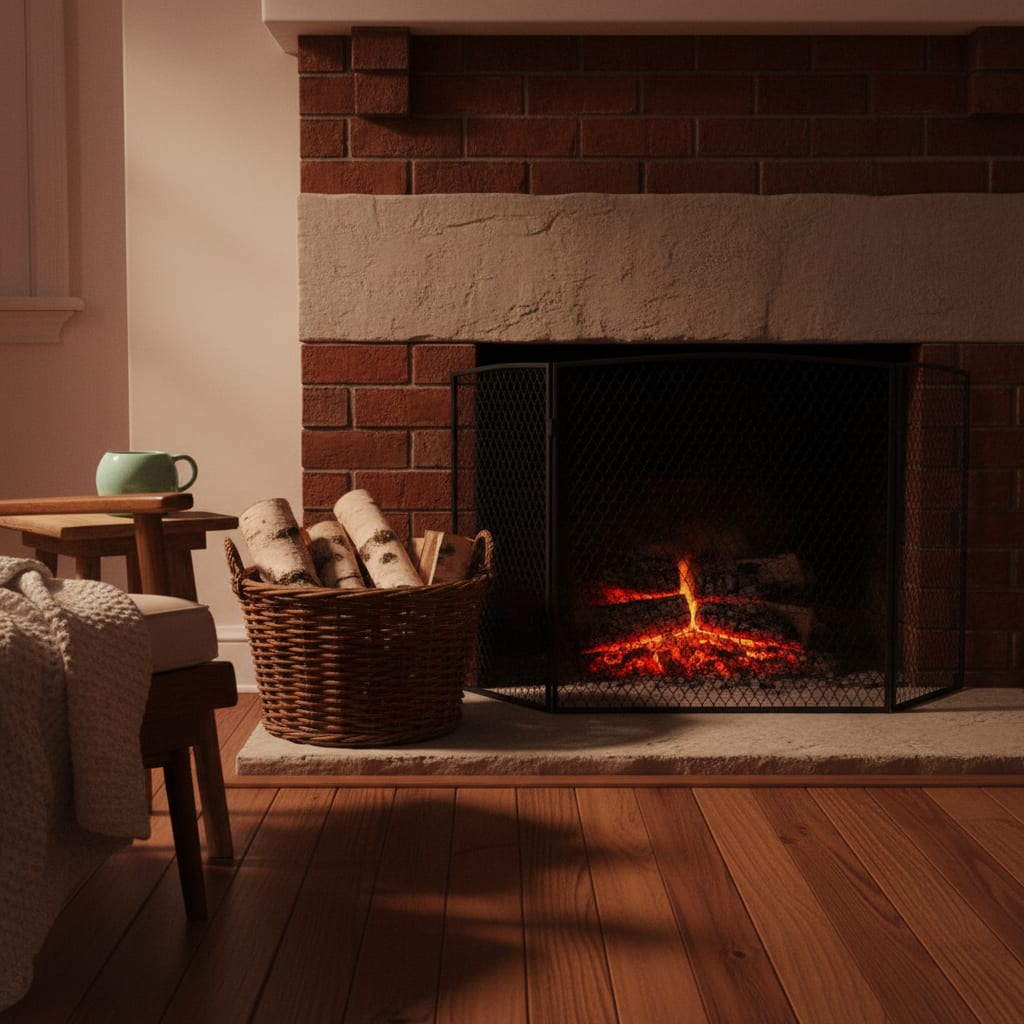
Fireplace safety with a toddler comes down to three rules on a fire night: a sturdy screen or gate between the child and the hearth, a three-foot kid-free zone around it, and a fire that is out before anyone goes to bed. Glass and screens stay hot after the flames die, so plan the fire around bedtime rather than the other way round. Dress the child for the cooler bedroom, not the warm front room. Put cool ashes in a covered metal container outdoors, and keep carbon monoxide and smoke alarms working outside every sleeping area.
Why the front room is the hard part
A log fire makes the best evening of the winter, and the front room becomes the trickiest place in the house for a two-year-old. Nationwide Children’s Hospital’s fireplace safety page puts it plainly: to a baby, toddler or young child, “flames in a fireplace are a new thing they want to explore.” It adds that kids’ skin is thinner than adults’, so “serious burns can happen quickly,” and gives a rule worth writing on the card: “If it feels warm to you, it’s too hot for kids to touch.”
Gas fireplaces carry their own version of the problem, because the flames sit behind glass that looks touchable. The U.S. Consumer Product Safety Commission said in a December 2014 release that the glass front “can reach temperatures of 500 to 1000 degrees F,” and that from January 1, 2015, all new gas fireplaces would come with a protective barrier to stop children touching it.
Set up the room before the match is struck
The card-file rule: the room is ready before the fire is.
- A screen, every time. NFPA’s heating safety tip sheet says to make sure the fireplace “has a sturdy screen to stop sparks from flying into the room.” Nationwide Children’s says the same and adds the catch: “These screens can get hot too, so remind children to look but not touch.”
- A three-foot kid-free zone. NFPA asks for a three-foot “kid-free zone” around open fires and space heaters, and for anything that can burn to be kept at least three feet from the fireplace. The U.S. Fire Administration’s heating fire safety page gives the same three feet. That includes the kindling basket and the throw blanket.
- A gate if the toddler is mobile. Nationwide Children’s suggests “a multi-panel safety gate/adjustable playpen around fireplaces.” A hearth gate such as the Bonnlo 5-panel metal fireplace fence folds around the hearth and leaves a door for you.
For an older gas fireplace with no barrier, Nationwide Children’s says families with babies or toddlers “should purchase a barrier or fireplace covering.”
Plan the fire around bedtime
Most fire-night trouble is timing: the fire is at its best just as the bath should be running. Run it the other way.
- Light it early. Ours goes in after dinner, and the last log goes on about an hour before the children go up. That is a house habit, not an agency figure.
- Keep the stove doors shut. EPA’s Burn Wise guidance on best wood-burning practices says to keep the doors of a wood-burning appliance closed except when loading or stoking, because “harmful chemicals, like carbon monoxide, can be released into your home.” EPA’s carbon monoxide page also says to open flues when fireplaces are in use.
- Out before bed. Nationwide Children’s is direct: “Never leave a fire unattended and be sure to put out/turn off the fire before going to bed or leaving the house.” It adds that “screens and glass can remain hot even after the flames are out.”
- Gas: allow for the cool-down. Nationwide says gas fireplace glass “will be hot for an hour or two after the fire is turned off,” and asks for close supervision while the fireplace “is on or has been on in the last hour.” We switch it off when the bath starts.
Bank the fire with ash at bedtime so there are coals in the morning, set the guard in front, and go up. The card calls it "putting the fire to bed."
The fire goes in early and is allowed to burn out before the children go up. The screen and gate stay in place overnight, because the hearth is still warm at breakfast.
From the warm room to a cooler bedroom
A child who has spent the evening near a fire feels flushed, and the bedroom feels cold by comparison. Dress for the bedroom, not the front room. Betteroo’s pediatrician-reviewed guide puts a baby’s sleep room at about 68 to 72°F (20 to 22°C), and the layers should match that number.
To tell whether they are too warm, skip the hands and feet; the Betteroo guide on checking the chest or the back of the neck instead explains what warm-and-dry should feel like. The American Academy of Pediatrics’ safe sleep guide on HealthyChildren says overheating can increase the risk of SIDS.
If a baby dozes off by the fire, move them to their own sleep space before you settle in. The same AAP page warns that the risk of sleep-related infant death is “up to 67 times higher” when infants sleep with someone on a couch, soft armchair or cushion.
For an older child in a cold bedroom, warming the bed with a hot water bottle and taking it out again is the old trick. If the cold wakes them before dawn, see the cold-room early-waking post.
After they’re down: ashes and alarms
Ashes. NFPA’s tip sheet says ashes “should be cool before putting them in a metal container,” kept a safe distance from your home. EPA says to remove ashes regularly “into a covered, metal container” and to “store the container outdoors on a nonflammable surface.” A lidded bucket such as the Pure Garden metal ash bucket and shovel does the job. Keep a little cold, fine ash for a wood stove door: how to clean fireplace glass covers that morning-after job.
Alarms. EPA’s carbon monoxide page lists back-drafting from wood stoves and fireplaces, and blocked or leaking flues, among the sources of carbon monoxide. It quotes the CPSC recommendation that every home have CO alarms “on each level outside each sleeping area,” plus an annual professional inspection of fuel-burning appliances including fireplaces. A plug-in alarm with battery backup, like the Kidde plug-in carbon monoxide detector, suits the hall outside the bedrooms. NFPA adds: test smoke alarms at least once a month. If one starts chirping at midnight, the smoke alarm chirping post walks you through it.
 Fire's out, house is quiet, toddler's still up? Check the schedule.
Betteroo builds a sleep plan around your child's age, with naps, wake windows and bedtime that change as they grow, for about $20 a month.
Take the sleep quiz →
FAQ: fireplace safety with a toddler
How far should a toddler stay from a fireplace?
At least three feet. NFPA recommends a three-foot “kid-free zone” around open fires, plus a sturdy screen. A hearth gate makes the zone uncrossable.
How long does a gas fireplace stay hot after it is turned off?
Nationwide Children’s Hospital says the glass stays hot for an hour or two after the fire is turned off, so keep the barrier in place.
Can I leave the fire burning after the kids go to bed?
No. Nationwide Children’s says to put out or turn off the fire before going to bed or leaving the house.
Do I need a carbon monoxide alarm if I have a fireplace?
Yes. EPA lists fireplace back-drafting among carbon monoxide sources and cites CPSC’s advice: CO alarms on each level outside each sleeping area.
Sources loaded and read on 2026-11-03: Nationwide Children’s Hospital, Fireplace Safety; CPSC release “Protect Young Children from Burns on Glass Fronts of Gas Fireplaces” (Dec 23, 2014, via PR Newswire); NFPA Heating Safety tip sheet (PDF); U.S. Fire Administration, Heating Fire Safety; EPA Burn Wise, Best Wood-Burning Practices (kept by EPA as a record since the program ended in 2025); EPA, Carbon Monoxide’s Impact on Indoor Air Quality; HealthyChildren.org (AAP), A Parent’s Guide to Safe Sleep.
Next cards in the file
Downsized? Bedtime When Their Room Is the Smallest
September 23, 2026
Old-Fashioned Stain Removal That Beats the Spray
July 31, 2026
Bring Back Wash Day: One-Day Laundry for Modern Machines
July 31, 2026