How to Clean Fireplace Glass: Wood Stove Ash or Gas Cleaner
How you clean fireplace glass depends on what burns behind it. On a wood stove, wait until the stove is completely cold, then wipe the soot with dry paper; for heavier soot, dip a damp cloth in the stove’s own fine ash and rub. A stove maker, Contura, recommends exactly that. Gas fireplace glass is different: it gets a white mineral film, and makers such as Valor say to use a gentle cream cleaner and a soft cotton cloth on cold glass. Never use ammonia cleaners or anything abrasive on gas glass. Your manual comes first.
Know which glass you have
Two kinds of fireplace, two kinds of dirt.
- Wood-burning stoves and inserts get black or brown soot. It is smoke that settled on the glass instead of going up the flue.
- Gas fireplaces and gas inserts get a white or gray haze. Valor’s cleaning and maintenance page describes it as “a mineral which can show up as a white film on the ceramic glass”, and links it to “the varying sulphur content of the gas.” Kozy Heat’s glass-cleaning guide adds minerals in the fuel and in the outside air drawn into the vent.
The two methods aren’t interchangeable. The ash trick on a wood stove works by fine grit, and gas makers specifically rule out abrasives on their glass.
Wood stove glass: the ash method
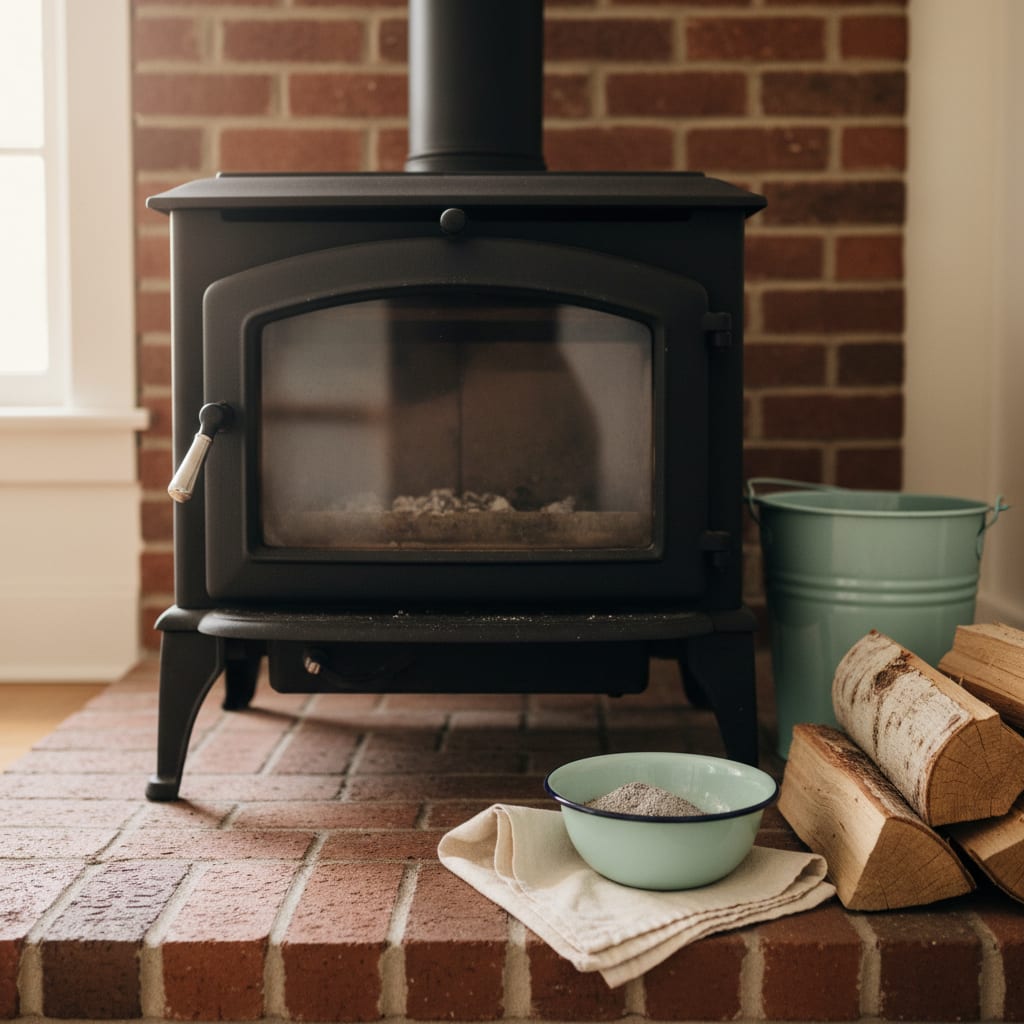
The old way is a wad of damp newspaper dipped in the stove’s own ash. It’s still in the manufacturer’s advice, with a cloth in place of the paper. Contura, a Swedish stove maker, says in its cleaning FAQ: “take a damp cloth and dip it in the stove ash. Then proceed to rub the cloth against the glass, the ash will help make the glass sparkling clean again!”
- Let the stove go completely cold. Clean the morning after a fire, not the evening of it. Glass stays hot long after the flames are out; Valor makes the same point about its fireplaces.
- Lay down an old towel on the hearth to catch drips and ash.
- Try dry first. Contura: “If you clean the glass regularly, wiping the glass with dry paper will usually be enough.”
- For heavier soot, use ash. Dampen a soft cloth (or the traditional crumpled newspaper), wring it out, and dip it in fine, cold, powdery wood ash. Rub in small circles. Re-dip as the cloth blackens.
- Wipe it clean. Go over the glass with a clean damp cloth to lift the gray film, then buff dry.
- For soot that won’t shift, Contura recommends “some sort of cleaning agent or a special soot remover”, sold at grocery stores or by stove dealers. A stove-glass cleaner such as Rutland Fireplace Glass and Hearth Cleaner is the usual kind. Use it as its label says, on cold glass.
Use wood ash only, and only the fine, powdery part with no grit or unburned bits. If your stove’s manual says not to use abrasives on its glass, follow the manual.
Gas fireplace glass: gentle, and soon
Gas glass is ceramic, and both makers treat it gently. Kozy Heat says to “always follow the specific instructions in your product manual or from the product manufacturer or dealer to clean the glass of your fireplace in lieu of any other advice.” Within that, the two makers agree on most of it:
- Turn it fully off, pilot light included (Kozy Heat), and let it cool. Valor warns that the glass is “extremely hot during operation and will remain hot for a period of time after the fireplace is turned off.”
- Open or remove the glass front as your manual describes. Kozy Heat says to leave hinged glass where it is, and lay removable glass on a soft, safe surface.
- Apply a cleaner made for it. Valor recommends “an emulsion type cleaner” and lists products its dealers have had good results with, including White Off by Rutland (White Off on Amazon). Kozy Heat says to let the cleaner sit, then buff it off in circles.
- Use a soft cotton cloth. Valor: “Most paper towels and synthetic materials are abrasive to ceramic glass and should be avoided.” Kozy Heat says the same about paper towels.
- Do both sides. Kozy Heat’s tip: wipe the second side in strokes going the opposite direction, so any streak you see tells you which side it’s on.
- Put it back properly. Valor: “Always securely replace the window and the barrier screen before lighting.”
Don’t wait. Valor says to clean the white film “as soon as you notice the buildup”, because “if the film is left for a longer period of time, it will etch into the glass. It is then much harder, if not impossible, to remove.” It also notes the film is “not covered under warranty.”
What never touches fireplace glass
- Ammonia cleaners on gas glass. Valor: “DO NOT USE Windex or ammonia based cleaners.” Kozy Heat: “Never use an ammonia-based cleanser – such as an oven cleaner.”
- Abrasives on gas glass. Valor: “NEVER use an abrasive cleaner on the ceramic glass. Any abrasion of the surface has the immediate effect of compromising the strength of the glass.”
- Paper towels on gas glass, for the same reason.
- Any cleaning on warm glass, gas or wood.
Newspaper, a splash of water and a dip in the ash pan, the morning after. The card says "the fire makes its own polish."
Still the ash for wood stove glass, with a soft cloth in place of newsprint, and only on cold glass. Gas glass gets its own cream and a cotton cloth, and never any ash.
Keeping wood stove glass clear longer
Soot on the glass is mostly smoke, so a cleaner-burning fire means a cleaner window. EPA’s Burn Wise page on best wood-burning practices says to “burn only dry, split, well-seasoned wood”, season it “for at least six months”, and notes that “wood burns best at a moisture content of less than 20 percent.” It also says to keep the doors closed except when loading or stoking.
Ash needs care too, because you’re keeping some for the glass. EPA’s rule is to “regularly remove ashes into a covered, metal container” and “store the container outdoors on a nonflammable surface.” Contura says ash should sit in a covered non-combustible container “for at least one week before disposal.” Take the ash for the glass only from a stove that is completely cold, and put the rest straight into the covered metal can.
The heating inspection and chimney side of the season are in the fall cleaning checklist and the yearly home maintenance checklist. This post is just the glass. For windows, the lint-free cloth that replaced newspaper is in old-fashioned cleaning tips.
FAQ: cleaning fireplace glass
Does wood ash really clean fireplace glass?
On wood stove glass, yes. Contura, a stove maker, recommends a damp cloth dipped in stove ash. Use fine, cold ash, and check your own stove’s manual first. Don’t use ash on gas fireplace glass.
Can I use Windex on fireplace glass?
Not on gas fireplace glass. Valor says not to use Windex or ammonia-based cleaners, and Kozy Heat says never to use ammonia-based cleansers. Use the cleaner your manual or dealer recommends.
Can you use vinegar on fireplace glass?
None of the manufacturer guides used for this post list vinegar. Valor recommends an emulsion-type cleaner for gas glass, and Contura a soot remover for wood stoves. Follow your manual.
What is the white film on gas fireplace glass?
A mineral deposit from burning gas, which Valor links to the sulfur content of the fuel. Clean it off soon after it appears, because left too long it can etch into the glass permanently.