Fall Cleaning Checklist: Close the House Before Winter
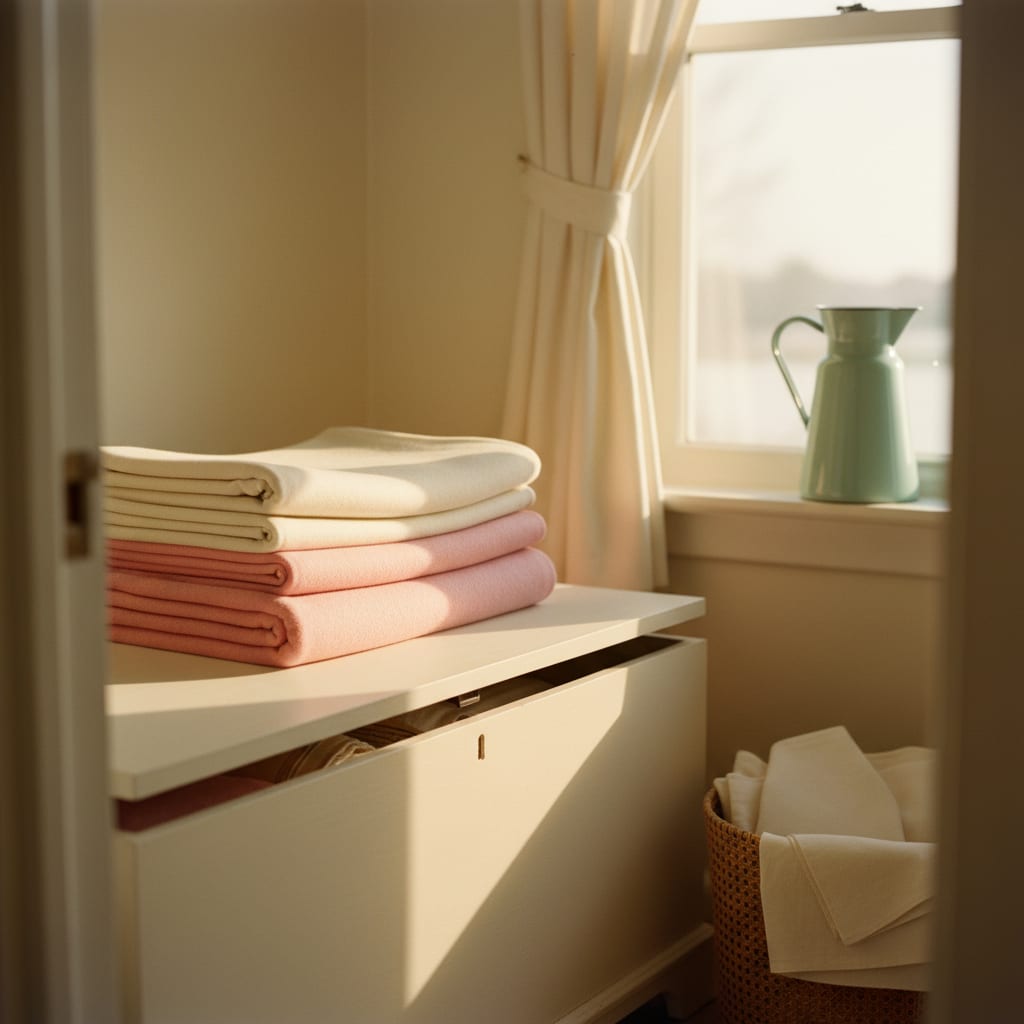
A fall cleaning checklist, with the fall home maintenance checklist built into it, has one job: get the house ready to be shut for the cold months. Work it in a fixed order. First the safety checks that only make sense before the heating comes on — smoke alarms tested, fuel-burning equipment inspected, the dryer vent cleared. Then the envelope: gutters, door sweeps, screens down. Then the inside, room by room, with the emphasis on textiles and gear, because those are what a closed house lives in all winter. Two weekends in September or October covers it.
Why fall gets its own list
The seasonal cleaning checklist gives fall a paragraph: the short card, six to eight jobs, the weather-driven ones only. This is the long version, for the year you want to do it properly. The reasoning is the same as spring’s in reverse. Spring opens the house and gets winter out of it; fall closes it, and anything you shut in with you — dust in the vents, a clogged dryer duct, summer’s sand in the entry — stays until April.
Fall is also the one season where the order matters. The safety pass goes first because it has a deadline: the first cold night, when the heating goes on whether you are ready or not.
Pass one: the fall home maintenance checklist, before the heat comes on
These are the jobs with real consequences, so they are sourced rather than handed down.
Test every smoke alarm. The U.S. Fire Administration’s smoke alarm guidance says to test alarms monthly, replace 9-volt batteries at least once a year, and replace the whole alarm every 10 years — “10 years from the manufacture date”, which is printed on the back. Fall is a sensible annual anchor for the battery swap. The same page says alarms belong inside and outside each bedroom and on every level, basement included, so the test doubles as a count.
Book the heating inspection. USFA’s heating fire safety page calls heating fires the second leading cause of home fires in 2021 and asks households to “maintain heating equipment and chimneys by having them cleaned and inspected each year by a professional.” EPA’s carbon monoxide page is more specific about timing: have fuel-burning appliances — furnaces, gas water heaters, gas ranges, gas dryers, fireplaces, wood stoves — “inspected by a trained professional at the beginning of every heating season.” That is a phone call, not a Saturday job, and it books up once the weather turns.
Put a CO alarm where people sleep. EPA describes carbon monoxide detectors as a back-up, “BUT NOT AS A REPLACEMENT” for maintaining the appliances — so the inspection comes first and the alarm second. A plug-in with a digital readout, like the First Alert CO615, lets you see a reading rather than only hear an alarm.
Clear the three-foot circle. USFA’s rule is to keep anything that can burn at least 3 feet from heat sources — radiators, space heaters, fireplaces, wood stoves. Summer drifts furniture, laundry baskets and toy bins up against radiators that were cold for months. Walk every room and pull them back.
Clean the dryer duct, not just the screen. USFA’s appliance and electrical page names failure to clean as the leading factor in home clothes-dryer fires, at 31% for 2018-2020. The lint screen is a daily job. The duct behind the machine and the flap outside are the fall job, because winter is when the dryer runs most and the line outside stops being an option.
Pass two: the envelope
Work from the outside in, on a dry day.
- Gutters and downspouts cleared after most of the leaves have come down, so it happens once rather than twice.
- Screens out, washed, dried and stored flat, with storm windows in where the house has them.
- Door sweeps and weatherstripping checked at every exterior door. A strip of daylight under a closed door in the evening is the whole diagnosis.
- Outdoor furniture and toys hosed off, dried, and stored or covered. Stored dirty, they come out in April worse than they went in.
- Garden hoses drained and brought in before the first hard frost.
Pass three: textiles, which is most of what a closed house is
When the windows stop opening, the house breathes through its fabrics. Curtains, rugs, bedding and upholstery hold the summer’s dust and hand it back all winter.
Curtains down and washed or aired before the closed-window months, rods and tracks dusted while they are empty. Rugs taken outside and beaten, then the floor underneath cleaned. The bedding swap: heavier blankets and duvets out of storage and aired on a dry day, summer sheets washed, dried completely and folded into their sets before they go in. Folding them as sets is what stops the closet unravelling by Christmas — the method is in linen closet organization.
Pass four: the kids’ gear
This is the job that goes wrong in November if it waits. Pull every child’s coat, boots, hats and gloves forward and try them on while there is still time to replace what does not fit. Last winter’s coat on a child who grew all summer is a discovery you want to make in September, not on the first icy morning.
Then do the swap in both directions: summer clothes out of the drawers, washed and stored by size, cold-weather clothes in. The size-by-size bin system that keeps hand-me-downs findable is in kids’ closet organization.
Fall turning-out meant the screens came down and the storm windows went up on the same Saturday, the summer curtains were washed and put away, and the heavy ones went back on the rods. The card simply says "close the house", as though everyone knew what that meant — and in her day, everyone did.
Same idea, written out, because most of us never watched it done. The additions are the ones her house did not need spelled out: a smoke alarm test, a carbon monoxide alarm, a dryer duct that runs inside a wall rather than out a window.
Pass five: room by room, briefly
The room pass is short on purpose, because the deep work lives on its own list in the deep cleaning checklist. In fall, only the jobs a closed house makes worse:
- Kitchen: range hood filter degreased and the oven cleaned before the baking and roasting months start.
- Bathrooms: exhaust fan covers washed, because the fan does the work an open window did all summer.
- Bedrooms: radiators and vents vacuumed before first use, so the first warm night does not smell of burnt dust. Under-bed storage checked for summer things that should be swapped out.
- Entry: summer’s sand and pool towels gone, a boot tray down, winter hooks cleared.
- Laundry room: the dryer duct from pass one, plus the lint housing behind the screen.
Running the list
Split it across two weekends. The first takes the safety checks and the envelope — both depend on the weather and the calendar. The second takes textiles, kids’ gear and the room pass, which can happen in any weather. If only one weekend is available, do the safety pass and the kids’ gear and let the rest slide to winter. Nothing else on the list gets dangerous if it waits a month.
FAQ: fall cleaning
What should be on a fall cleaning checklist?
The safety checks that come before the heating season (smoke alarms, heating and chimney inspection, a CO alarm, the dryer duct), the house’s envelope (gutters, screens, door sweeps), textiles (curtains, rugs, bedding swap), and children’s cold-weather gear. Routine cleaning stays on the weekly schedule.
When should you do fall cleaning?
September or October, before the first cold night puts the heating on. Book the heating inspection first, since it depends on someone else’s calendar.
Is fall cleaning the same as spring cleaning?
It is the reverse of it. Spring opens the house and clears out winter; fall closes the house and prepares it for months with the windows shut, so the emphasis moves to heating safety, draughts and fabrics.
How often should the dryer vent be cleaned?
The lint screen after every load, as ordinary housekeeping. The duct and the outside flap once a year — fall is a good time, because the dryer does its heaviest work over the winter.
Next cards in the file
Nursery Organization: Set Up for the 2am You
July 17, 2026
Nursery Humidifier: Dry Air, Stuffy Noses, Safe Setup
September 27, 2026
How to Wash Pillows (Down, Fiber and Foam)
October 11, 2026