Under Sink Organization: A Cleaning Zone That Stays Put
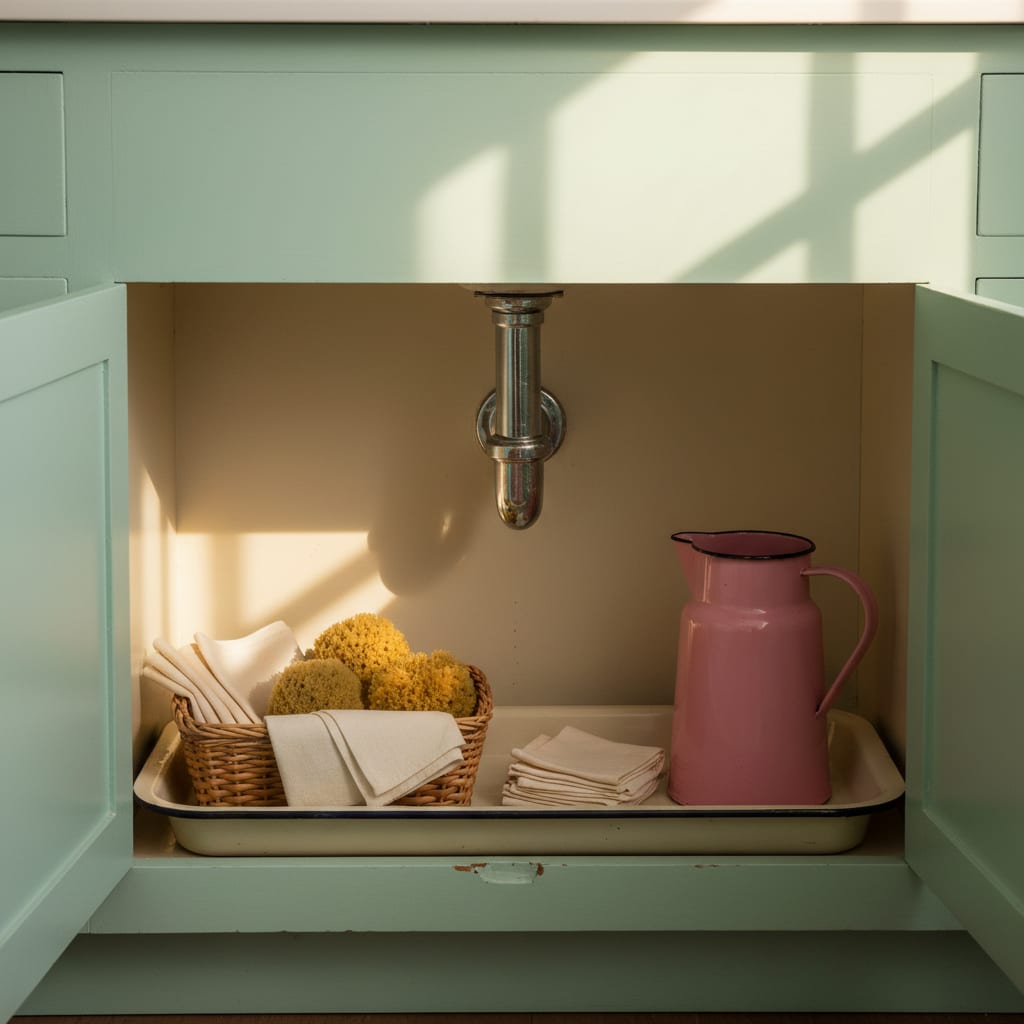
Under sink organization comes down to four moves: empty the cupboard and check for leaks; cut the bottles down to what you actually use; decide what is safe to keep at toddler height and latch or move the rest; then zone the space around the pipe — the caddy at the front, refills behind, cloths and sponges to one side, a tray underneath to catch drips. Organizers help, but the cupboard stays sorted because every item has one place and the everyday kit sits at the front.
Step one: empty it and look at the cupboard itself
Take everything out — all of it, onto a towel on the floor. Then look at the empty cupboard with a torch before you put anything back.
- Check for leaks. Run the tap and watch the trap, the supply lines and the joins at the back. Look for water marks, a swollen or soft cupboard floor, or a musty smell. A slow drip under the sink is far easier to catch now than after it has lifted the cabinet base.
- Wipe and dry the base before anything goes back, and leave the doors open for an hour if it is damp.
- Note the pipe. The trap and drain take up the middle of the space and determine the whole layout. Everything that follows is working around it.
Step two: cut it down to what you use
Most under-sink cupboards hold two or three of everything: the spray you use, the one you bought instead, the free sample, the bottle with an inch left in it. Sort the heap into three piles:
- Keep — the products you actually reach for in an ordinary week.
- Use up — near-empty bottles; they go to the front and get finished first.
- Out — the dried-up, the unlabelled, and anything you cannot identify. Dispose of those according to your local household hazardous waste guidance rather than down the sink.
If you make your own sprays, like the homemade all-purpose cleaner, make sure every bottle is clearly marked with what is in it. A homemade spray in an unmarked bottle is how people end up mixing things they should never mix — and never mix vinegar and bleach, or any two cleaners, in a bottle or on a surface.
Step three: decide what is safe at toddler height
This is the step that matters most in a house with small children, because the cupboard under the sink sits at exactly crawling height.
Nemours KidsHealth’s poison-prevention guidance is direct: “Store household cleaning products and aerosol sprays in a high cabinet far from reach,” and “use safety latches for all cabinets containing cleaning or other chemicals.” It adds three rules that apply to every bottle under a sink:
- “Keep cleaning products in their original bottles. Don’t put cleaning products in old soda bottles or containers that were used for food.”
- “Keep laundry and dishwasher supplies out of sight and in a locked cabinet.”
- “Laundry and dishwasher pods are more dangerous than other detergent types. If you have children under 6 years old, consider using liquid or powder instead.”
So there are two honest options while children are small. Move the chemicals up to a high cupboard and use the under-sink space for things that are safe at floor level — spare sponges, cloths, bin bags, the scrub brush. Or latch the cupboard so the cleaning zone can stay where cleaning starts. An adhesive magnetic lock, like the Safety 1st Adhesive Magnetic Lock System, fits inside the door with no drilling and opens only with a magnetic key kept up high. The same page lists the Poison Control number, 1-800-222-1222, worth putting on the inside of a high cupboard door where the adults will find it.
Step four: zone it around the pipe
With the heap cut down and the safety call made, put things back in zones rather than rows.
At the front: the caddy. Whatever you carry round the house on cleaning day lives at the very front, ready to lift out in one movement. The twelve-item kit and why a caddy beats a crowded cupboard are in build a cleaning caddy — the under-sink cupboard is where it lives between uses.
Behind the caddy: refills and backstock. One spare of each thing you actually use, in a clear lidded bin so you can see what is running low without unpacking it.
The sides of the pipe: tall and narrow. Spray bottles stand on either side of the trap, where a shelf will not fit. A small tension rod across the back, below the top of the cupboard, lets spray bottles hang by their triggers and frees the floor.
The doors: flat things. A small hook or a slim rack on the inside of the door holds rubber gloves and a scrub brush.
Underneath everything: a tray. A shallow plastic tray or a washable mat (a silicone under-sink mat has a raised lip) on the cupboard floor catches drips from bottles and gives early warning of a leak from above. It also lifts out to be washed.
Keep bottles upright and caps closed, and store anything bleach-based on a different side of the cupboard from anything acidic, so a leak cannot bring them together.
Under her sink: a tin of scouring powder, a bar of laundry soap, a bottle of ammonia, a jug of vinegar, rags in a coffee can. Everything else in the house was cleaned with those. The card's only rule for the cupboard is "wipe it out when you wipe the stove".
More bottles than she had, so the cupboard needs zones she never did. We kept the idea of a short list, and we latched the door, because under the sink is exactly where a crawling child looks first.
The bathroom sink, too
The bathroom vanity is the same job, smaller. It usually holds a mix of cleaning products and toiletries, and the same KidsHealth page names cosmetics and toiletries — perfume, hair dye, nail polish remover among them — as things to keep away from children as well. Sort it into what is used daily, what is backstock, and what needs to move higher or behind a latch; keep the toilet brush and bathroom cleaner together; and put a tray down here too, since bathroom supply lines leak just as kitchen ones do.
Keeping it sorted
A cupboard that is zoned stays sorted as long as each thing goes back to its zone, and the caddy makes that easy — it comes out full and goes back full. Put a short under-sink check on the rotating list in the monthly cleaning schedule: look at the pipes and the tray, move near-empties to the front, and bin anything that crept in and does not belong.
FAQ: under sink organization
How do you organize under the kitchen sink?
Empty it, check for leaks, and cut the products down to what you use. Then zone around the pipe: the cleaning caddy at the front, refills behind in a clear bin, tall bottles on either side of the trap, gloves and brushes on the door, and a tray underneath to catch drips.
Is it safe to keep cleaning products under the sink with a toddler?
Child-safety guidance recommends storing cleaning products up high and using safety latches on any cupboard that holds them. If the under-sink cupboard keeps its cleaning supplies, latch it, keep everything in its original bottle, and keep laundry and dishwasher pods locked away.
What should not be stored under the sink?
Anything you cannot identify, unlabelled homemade mixtures, products in food or drink containers, and — with small children in the house — any cleaner or pod that is not behind a latch. Keep bleach-based products away from acidic ones.
How do you stop the under-sink cupboard getting messy again?
Give every item one zone and keep the everyday kit together in a caddy at the front, so it comes out and goes back as one unit. A quick monthly check keeps drips, duplicates and strays from building up.