How to Wash Baby Clothes: When to Start and What to Use
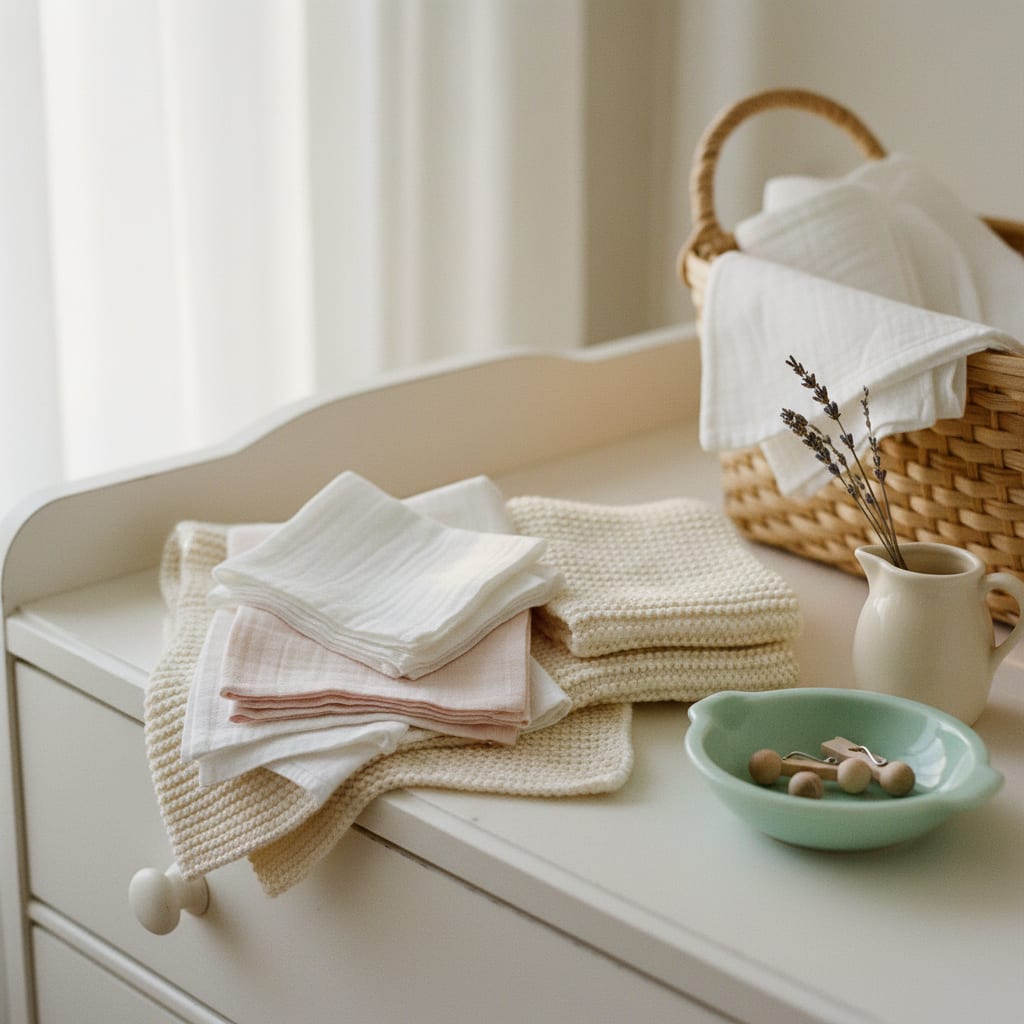
Wash baby clothes before the first wear, on a gentle cycle with a fragrance-free, dye-free detergent, and follow each label. A Cleveland Clinic dermatologist recommends washing all new clothes first, to remove color that can bleed and finishing chemicals that can irritate skin. Blankets and towels should be washed first too. A special “baby” detergent isn’t required: Ireland’s health service says there’s no evidence that biological powders or fabric conditioners irritate baby skin. If your baby has eczema or sensitive skin, the advice tightens. A good time to start is the last few weeks before the due date, washing only what you’ll use first.
Why new baby clothes get washed first
New clothes aren’t as clean as they look. In a Cleveland Clinic article on washing new clothes, dermatologist Shilpi Khetarpal, MD, gives two reasons. Bright colors “can bleed onto our skin or other fabrics before the first wash,” and washing removes “any like harsh chemicals or irritants.” She says manufacturers sometimes add “formaldehyde or other preservatives to new clothing to prevent wrinkling and mold,” which can irritate skin, and that “bacteria can also be spread from people trying on the same clothes at the store.” Her advice covers bedding too: blankets and towels “should always be washed first.”
That applies to gifts and hand-me-downs alike. Anything that has sat in a box, a closet or a store needs one wash before it goes on the baby.
When to start washing
No health source we found sets a date. The common “three or four weeks before the due date” advice comes from retailers, not from any guideline. What matters is that the first clothes are clean and dry before the baby arrives, so here’s the house version:
- Start in the last few weeks of pregnancy, once the nursery drawers are set up. Babies don’t always wait for the due date.
- Wash the first wave only. A week or so of newborn sleepsuits and bodysuits, the crib or bassinet sheets, swaddles and burp cloths, and the hospital-bag outfit.
- Leave the tags on the rest. Bigger sizes and duplicate gifts are easier to exchange unwashed. Wash each size as the baby grows into it.
- Fold and put away by size, so the 2am change comes out of one drawer. The drawer setup is in nursery organization.
The method
- Read every label. Most baby clothes are cotton and easy, but knits, wool and anything decorated can need a cooler or gentler wash.
- Zip, fasten and turn. Close zips and fasteners so they don’t snag, and turn printed items inside out.
- Bag the small things. Socks and mittens are easy to lose. A small zip mesh bag, such as Muchfun’s honeycomb mesh laundry bags, keeps them together.
- Gentle cycle. Khetarpal says a gentle setting is best for new clothes “so it doesn’t damage the fabric.”
- Measure the detergent. More detergent means more residue left in the fabric, not cleaner clothes. Our dosing method is in how much laundry detergent to use.
- Dry as the label says, then fold while warm.
Do baby clothes need a separate load?
Not necessarily. Nothing in the sources used here calls for a separate baby load. If the whole household’s wash already uses a fragrance-free detergent, the baby’s clothes can go in with the family’s gentle loads. Keep heavily soiled work clothes, muddy sports kit and anything treated with solvents out of the baby’s load. A small separate load is easiest in the early weeks anyway, because babies go through so many clothes.
What detergent to use
Fragrance-free is the defensible choice. Khetarpal recommends “free and clear” detergent, adding: “many brands make them, even generic brands do.” A widely sold example is Tide Free & Gentle; check that the label says free of perfumes and dyes.
“Fragrance-free” and “unscented” aren’t the same. The American Academy of Dermatology explains on its eczema-friendly products page that “unscented means that a fragrance is masked, so you cannot smell it. Fragrance-free means the products is free of all fragrances, even ones that you cannot smell.”
Bio or non-bio? Ireland’s Health Service Executive says on its baby skin page: “It’s OK to use biological washing powders (powders with enzymes) or fabric conditioners. There’s no evidence that these irritate baby skin.” If your child has sensitive skin, it says to talk to your doctor or nurse, who “may tell you to try non-bio washing powder.”
Homemade soap is not a gentler option. Grated-soap recipes leave residue in the fabric; the reasons are in why homemade laundry soap is bad.
If your baby has eczema or sensitive skin
The advice tightens, and your pediatrician comes first. The NHS’s atopic eczema page lists “soap, washing detergent” and “some fabrics” among the things that can make eczema worse. What dermatology and allergy bodies suggest for laundry:
- Fragrance-free and dye-free detergent. The AAD’s atopic dermatitis skin care page says to use one, and to “wash new clothes before wearing them.”
- An extra rinse. The American Academy of Allergy, Asthma & Immunology suggests “adding an extra rinse cycle if you find your clothes still irritate your skin.”
- Cotton next to the skin. For children with eczema, the AAD advises “loose-fitting clothes made from 100% cotton” and avoiding “wool and synthetic fibers like polyester.” It also advises cutting out tags.
- Bedding washed hot. The AAD says to wash bedding “in hot water, using laundry detergent that is fragrance-free and dye-free”, where the fabric’s label allows it.
A safety note on emollients. The NHS warns that emollients “are not flammable on the skin, but when they get on fabrics such as dressings, clothing and bedding they can catch fire more easily.” Wash clothes and bedding that are regularly in contact with emollient, and keep them away from open flames.
Spit-up, milk and formula stains
Baby stains are mostly protein, with some fat. The house rule for protein stains is cold water first, never hot.
- Rinse from the back in cold water as soon as you can.
- Soak. The American Cleaning Institute’s stain guide says to “pretreat or soak stains using a product containing enzymes” for baby formula, “for at least 30 minutes or several hours for aged stains.” That’s the same enzyme cleaning the HSE says is fine for baby skin.
- Check before drying. ACI’s general rule is not to put an item in the dryer until the stain is removed.
The full protein-and-grease rows, including spit-up and formula, are in old-fashioned stain removal.
Everything for the baby boiled in its own pot, ironed, and stacked in the drawer by the eighth month. The card calls it "the layette wash", a whole day's job.
No boiling. One gentle machine load of the first-size clothes and bedding in fragrance-free detergent, a few weeks out, and the bigger sizes left in their tags until they're needed.
FAQ: washing baby clothes
Do you have to wash baby clothes before wearing them?
It’s recommended. A Cleveland Clinic dermatologist advises washing all new clothes before wearing, to remove dye that can bleed and finishing chemicals that can irritate skin. Blankets and towels should be washed first too.
When should I start washing baby clothes?
There’s no official date. The last few weeks of pregnancy is a practical time. Wash the first week’s clothes and bedding, and leave larger sizes unwashed with their tags on until the baby needs them.
Do I need a special baby detergent?
No. A fragrance-free, dye-free detergent does the job, and many brands make one. Ireland’s health service says there’s no evidence that biological powders or fabric conditioners irritate baby skin.
Can I use fabric softener on baby clothes?
The HSE says fabric conditioners are fine for most babies. If your baby has eczema or sensitive skin, ask your pediatrician, and choose a fragrance-free product.
Next cards in the file
Nursery Organization: Set Up for the 2am You
July 17, 2026
How to Wash Pillows (Down, Fiber and Foam)
October 11, 2026
Build a Cleaning Caddy: The 12-Item Retro Kit
July 19, 2026