Warm Milk Before Bed: Does the Old Remedy Work?
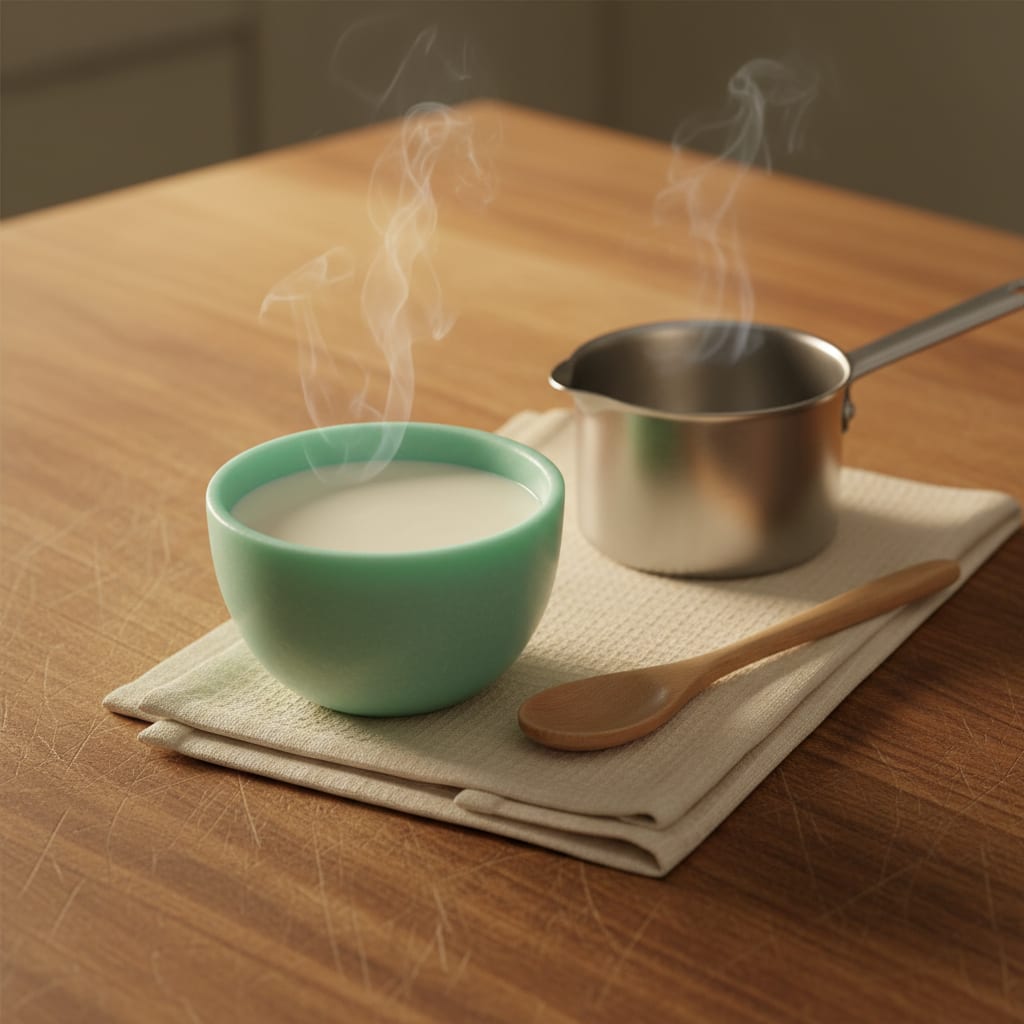
Warm milk before bed does less than the old remedy promises and more than nothing. A 2020 systematic review of 14 studies found milk’s effects on sleep “limited”, with any positive effects “considered to be small”, so it is not a sedative. The tryptophan in an ordinary cup is not why it seems to work. The likelier reason is the ritual: a warm, quiet drink at the same point every night tells a body the day is ending. Keep cow’s milk for children over 12 months, skip honey before the first birthday, and serve it before teeth are brushed, not in bed.
Where the remedy comes from
A cup of warm milk at bedtime is one of the oldest lines in family sleep lore: the small pan on the back burner, the cup in both hands. Nobody in that kitchen was thinking about amino acids. The drink was simply the last thing that happened before lights out, every night, and that turns out to be most of what it has going for it.
The Sleep Foundation’s medically reviewed page on the question puts it the same way. It says warm milk “may help some people relax and prepare for sleep,” that milk contains tryptophan and melatonin “though the amounts in milk may not be enough to improve sleep on their own,” and that “the comforting ritual of drinking a warm beverage before bed may help promote relaxation and signal to the body that it’s time to wind down.” Its reviewing sleep physician adds that consistent sleep schedules and other healthy sleep habits “matter more for good sleep.”
What the research actually says
The best single summary is a 2020 systematic review by Komada and colleagues in the International Journal of Environmental Research and Public Health. It gathered 14 studies on milk, dairy and sleep published between 1972 and 2019: four in older adults, three in toddlers, two in school-age children and six in adults.
What it found, in its own words:
- The effects were small. Trials of milk at night, malted milk drinks and fermented milk “showed partial, positive effects on sleep quality,” but “the effects were limited, and any positive effects were considered to be small.”
- The toddler results were about altered milk. Among toddlers, falling asleep got quicker with milk products that had extra tryptophan added. That is a fortified product, not the carton in your fridge.
- “Night milk” was inconsistent. In older adults, the effect of milk collected at night was “inconsistent”, and both night milk and normal milk improved sleep for some people and not others.
- The studies were weak. The authors say some results were mixed and their conclusions limited “as a result of small sample sizes and poor study quality.”
Their overall conclusion is about diet as a whole rather than one cup: a well-balanced diet that includes milk and dairy products “is considered to be effective for improving sleep quality,” and “it is important to consider all lifestyle habits.”
The tryptophan story, and why it falls short
The usual explanation is that milk contains tryptophan, the body turns tryptophan into serotonin and then melatonin, and melatonin makes you sleepy. Each step is real. The review notes that melatonin made from tryptophan “is known to induce sleep onset,” but also that “the relationship between the amount of tryptophan intake and sleep improvement requires elucidation.” The studies that found a clear effect in toddlers used milk with tryptophan added. So the chemistry explains why someone thought of milk, not why a plain cup would work.
A melatonin supplement is not a stronger version of the same idea; it is a different question with different risks. Betteroo’s guide on what the AAP says about melatonin gummies for small children covers it, starting with why routine changes come first.
Making it the old way
The card-file method is a small pan, low heat and plain milk.
- Use a small pan on low heat and stir, so the milk warms evenly without boiling over or catching on the bottom. A little spouted pan like the Farberware Classic butter warmer pours a single cup without drips.
- Warm, not hot. Pour it into the cup, let it stand a minute, and check it yourself before it goes into small hands.
- Plain milk. HealthyChildren, the American Academy of Pediatrics’ parenting site, calls water and plain milk the “best-choice beverages” for young children. It advises whole milk for children aged 12 to 24 months, and says flavored milks “contain added sugars,” which children under 2 should avoid.
- No honey for babies. HealthyChildren’s botulism page says the AAP recommends no honey before 12 months, because it can carry botulism spores. From a year old, honey is considered safe, though a sweetened drink just before brushing is still extra sugar on the teeth.
- Not for young babies. Cow’s milk as a drink starts at 12 months. Before that, the evening feed is breast milk or formula.
Milk warmed in the small pan on the back burner, a spoon of honey stirred in, drunk in bed with a grown-up waiting, and the cup collected on the way out.
Same small pan, same cup. Plain milk at the kitchen table after the bath, then teeth, then a book, then bed. The cup stays downstairs.
Where the cup goes in the evening
The one change worth making to the old version is the order. HealthyChildren’s page on preventing tooth decay says even the natural sugars in breast milk and formula can start decay. It warns against bottles in bed, because the sugars “linger on teeth.” Its suggested routine is to brush a child’s teeth after the last feed, then read a book, then bed: “brush, book, bed.”
- Milk first, then teeth. Serve the warm milk at the table or on the sofa, and brush afterwards.
- A cup, not a bottle. The same page suggests moving from bottle to cup around 12 months.
- Same time, same place. The ritual effect only works if it is predictable. Put the cup in the same spot every night, as one step of the wind-down, not an extra on top. If your evening has already grown long, trimming the bedtime routine to four steps leaves room for it.
- Warmth is half the comfort. A warm drink pairs naturally with a warm bath, though a bath taken too close to lights out can backfire for some children; why the bedtime bath winds them up covers the timing.
When milk isn’t the answer
The Sleep Foundation notes that people with a dairy allergy, lactose intolerance or dairy-sensitive digestion “probably should not use milk to promote sleep.” For a child, that conversation belongs with your pediatrician. Warm water in the same cup keeps the ritual without the dairy.
And if a child is fighting sleep every night, a cup of anything is not going to settle it. That is usually a schedule question: bedtime too early or too late, or naps that no longer fit their age. Like the hot water bottle, warm milk is a comfort, not a cure.
 The milk's lovely. Bedtime's still a battle? Check the schedule.
Betteroo builds a sleep plan around your child's age, with naps, wake windows and bedtime that change as they grow, for about $20 a month.
Take the sleep quiz →
FAQ: warm milk before bed
Does warm milk help kids sleep?
A little, at most. A 2020 review of 14 studies found milk’s effects on sleep small and limited, and the clearest toddler results came from milk with added tryptophan. Its value is mostly as a calm, predictable step in the routine.
Can I add honey to warm milk?
Not for a baby under 12 months: the AAP says no honey before the first birthday because of botulism. After that it is considered safe, but give the sweetened drink before teeth are brushed.
Should warm milk come before or after brushing teeth?
Before. HealthyChildren recommends brushing after the last feed, then a book, then bed, and warns against milk in a bottle at bedtime because its sugars linger on the teeth.
Sources loaded and read on 2026-10-31: Komada et al., “The Effects of Milk and Dairy Products on Sleep: A Systematic Review,” Int J Environ Res Public Health 2020 (PMC7766425); Sleep Foundation, “Does Warm Milk Help You Sleep?”; HealthyChildren.org (AAP) pages on recommended drinks for children 0 to 5, preventing tooth decay, and botulism.
Next cards in the file

The Sunday Reset: A 90-Minute Family Version
July 17, 2026
How to Get Candle Wax Out of Fabric and Tablecloths
October 11, 2026
Fall Cleaning Checklist: Close the House Before Winter
September 23, 2026