Head Lice Treatment Day: Laundry, Itch and a Calm Bedtime
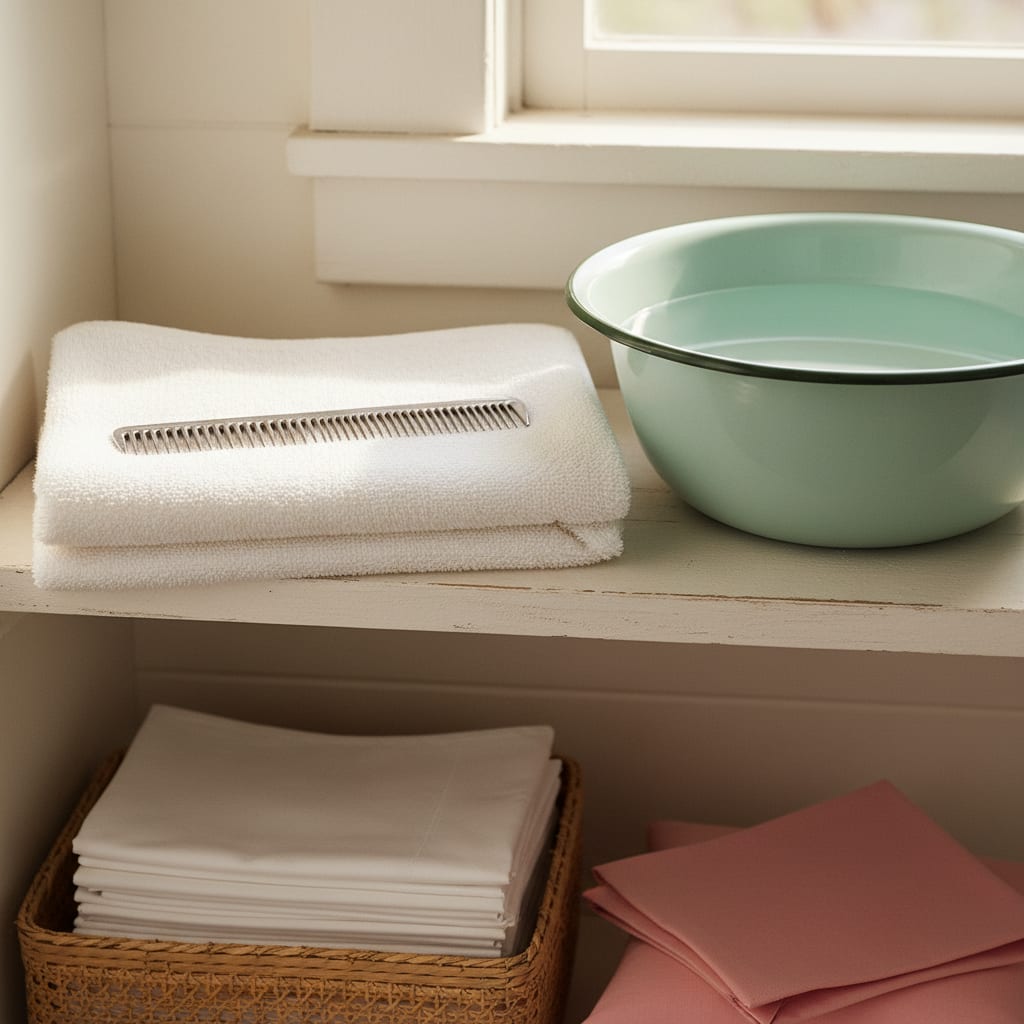
On a head lice treatment day, the hair comes first and the house second. Check everyone at home, and treat only the people with live lice, on the same day, with a product your child’s doctor or pharmacist agrees to. Follow its label exactly. Then comb out nits with a fine-toothed nit comb. The laundry is smaller than it feels: the CDC says extra household measures “are usually not necessary,” and limits them to items used in the two days before treatment. Expect the itch to outlast the lice, and keep bedtime as ordinary as you can.
First, confirm it’s lice, and who has it
“The only way to be sure someone has head lice is by finding live lice,” says the NHS head lice page, and a fine-toothed detection comb is how you find them. Nits are easy to mistake for dandruff. The American Academy of Pediatrics’ parent guide gives the test: nits are “firmly attached to hair,” and dandruff is not. Look first behind the ears and at the back of the neck.
Lice aren’t about cleanliness. The AAP says it “doesn’t matter if the hair is clean or dirty.” They “cannot jump, hop, or fly,” and spread mainly by close head-to-head contact. The CDC’s treatment page says to check everyone in the house, close contacts and anyone who shares the bed, and to treat those who need it at the same time. The AAP adds that medicine should be used “only when it is certain that your child has living head lice.”
The treatment: ask first, then follow the label
This post doesn’t pick a product or a dose. That’s for your child’s doctor, a pharmacist and the package. The AAP says to “check with your child’s doctor before beginning any head lice treatment.” The sources don’t fully agree on products, either: the NHS lists permethrin products among treatments “unlikely to work,” while the AAP still lists permethrin lotion among FDA-approved options.
The safety rules hold whatever the product:
- An adult applies it. “Never let children apply the medicine” (AAP).
- Rinse over a sink with warm water, not in the bath or shower, so it doesn’t run onto the rest of the skin (AAP).
- Never leave a child alone with medicine in their hair, and never place a plastic bag on a child’s head (AAP).
- No conditioner first, and don’t rewash the hair for 1 to 2 days after the medicine comes out (CDC).
- Check the label for a second round. Some medicines kill eggs and some don’t. The CDC says that if a few lice still move slowly 8 to 12 hours later, comb them out rather than reapplying. If none have died, call your provider.
Leave the folk remedies alone. The AAP says never to use gasoline, kerosene or animal medicines, and not to use petroleum jelly, mayonnaise, margarine, essential oils or olive oil, “because no studies prove they work.” The CDC says it has no scientific evidence that smothering lice works.
Combing out: the job that fills the evening
Set up in a bright spot with an old towel round the shoulders. The AAP’s comb-out method is to wet the hair and comb it in small sections with a fine-tooth louse or nit comb. Wipe the comb on a wet paper towel after each pass and look at the scalp, comb and towel. Keep going until all the hair is done. Both the AAP and the CDC say to repeat this every 2 to 3 days for 2 to 3 weeks. The NHS times its conditioner-based wet combing at about 10 minutes for short hair and 20 to 30 for long or curly hair, then a second full pass.
Any fine metal comb made for the job will do. One widely sold example is the Nit Free Terminator lice comb. The CDC notes that “flea combs made for cats and dogs are also effective.”
The laundry: two days of linens, not the whole house
Lice don’t last long off a head. The CDC says adult lice “will die within two days if they fall off a person and cannot feed,” and nits usually die within a week away from the scalp’s warmth. That’s why the list is short.
| Item | What the CDC and AAP say |
|---|---|
| Pillowcases, sheets, pajamas, towels, hats used in the last 2 days | Machine wash hot (130°F), dry on high heat |
| Things that can’t be washed | Dry-clean, or seal in a plastic bag for 2 weeks |
| Combs and brushes | Soak in water of at least 130°F for 5 to 10 minutes |
| Sofa, car seat, rug | Vacuum where the person sat or lay; the risk from a louse there “is very small” (CDC) |
| The whole house | No fumigant sprays, fogs or pesticides |
“You do not need to throw these items away,” the AAP adds. The NHS goes further: “You do not need to wash your laundry on a hot wash.” The house rule here is to do the short list hot when care labels allow, and stop there. For pillows themselves, how to wash pillows covers which fills go in the machine, and the normal bedding rhythm is in how often to wash sheets.
The card file treats a lice day like a siege: every bed stripped, every linen boiled, every chair scrubbed by nightfall.
Two days' worth of bedding, towels and hats in one hot load, the combs in a hot soak, one vacuum pass over the sofa. Every bit of energy saved goes into the combing, which is where the lice actually are.
Why bedtime is hard tonight, and how to soften it
The CDC says the itch “is caused by an allergic reaction to louse bites,” and lists “irritability and sleeplessness” among the signs. The AAP says it can last for weeks, “even after the lice are gone,” and is worst behind the ears and at the nape. Some lice medicines also cause itching or mild burning, the CDC notes. So an itchy first night doesn’t mean the treatment failed. Scratched sores can become infected, though, so a scalp that looks sore or weepy is a reason to call the doctor.
What helps:
- Make the bed up fresh. Clean sheets, pillowcase and pajamas, so the night starts on clean linen. The night sheet change layering trick makes any repeat change quick.
- Skip the hair-wash part of bath night. With no rewashing for a day or two, make it a body-only wash.
- Keep the rest of the routine. After a day of combing, familiar steps matter more than ever. Betteroo’s guide to keeping the same calm steps in the same order lays out a sequence worth holding onto.
- Nothing on the head overnight. No oils under a shower cap, and never a plastic bag.

School and the “no-nit” question
The CDC says “you do not need to send students with head lice infestation home early from school,” and the NHS says there’s “no need to keep your child off school.” Nits may stay in the hair after treatment, the CDC notes, but successful treatment kills the crawling lice. The AAP and the National Association of School Nurses both discourage “no-nit” policies. Some schools still have them, so check yours, and tell the teacher so other families can check too.
FAQ: head lice treatment day
Do I need to wash all the bedding in the house?
No. The CDC and the AAP limit the hot wash to items used in the two days before treatment, and the NHS says a hot wash isn’t needed at all. Dry-clean or bag anything you can’t wash.
Can my child sleep in their own bed tonight?
Nothing in CDC or AAP guidance says to move a child out of their bed. Put on clean sheets, pillowcase and pajamas after treatment. Lice that fall off die within about two days.
Why is my child still itchy after treatment?
The itch is an allergic reaction to the bites, and the AAP says it can last for weeks after the lice are gone. If live lice are still moving normally, or the scalp looks infected, call your child’s doctor.
Does mayonnaise or olive oil overnight work?
The CDC says it has no scientific evidence that smothering lice with mayonnaise or olive oil works, and the AAP advises against both. Never put a plastic bag on a child’s head.
Next cards in the file
Nursery Organization: Set Up for the 2am You
July 17, 2026
Move-In Cleaning Checklist: Clean It While It's Empty
October 15, 2026
Does Laundry Detergent Expire? What Actually Changes
August 15, 2026