The Evening Reset: 20 Minutes to a Morning You'll Like
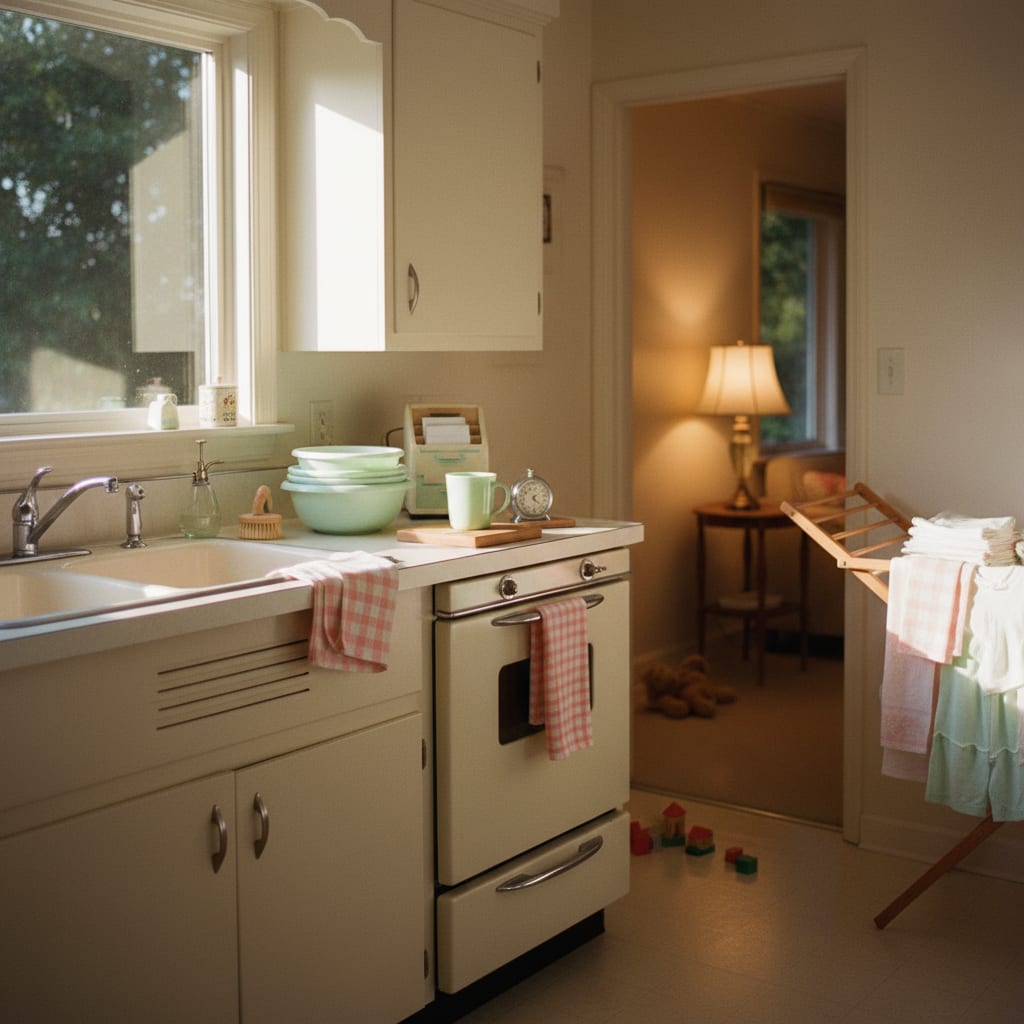
An evening reset is twenty minutes of fixed work after the children are down: kitchen to zero, one lap of the main floor, the laundry moved one step, tomorrow’s exits staged by the door, and lights and doors checked on the way to bed. Five jobs, always the same five, always in that order. It is not tidying until you feel better — it’s a short list with an end, and the end is the point. Done nightly, it removes the specific twenty minutes of scrambling that otherwise happens tomorrow between 7:00 and 7:20, when you have far less of them to spare.
Why it runs after bedtime, not during
Every attempt to do this reset with children awake turns twenty minutes into fifty. Things get un-put-away behind you, and the interruptions cost more than the tasks. So the reset starts when the last door closes — which makes bedtime itself the load-bearing part of the evening.
That’s worth saying plainly, because the most common reason an evening reset fails has nothing to do with the reset. If bedtime routinely runs long, ends in tears, or restarts twice, there is no twenty-minute window left to use. A bedtime that’s landing late often means the whole day’s timing has drifted rather than that the child is being difficult; Betteroo’s rundown of what an overtired evening looks like is a useful cross-check before you go blaming your own discipline for a routine that never gets to start.
Fix the exit from bedtime first. The reset is easy once the window exists.
The five jobs, in order
Order is not decoration. Each job leaves the next one easier, and the sequence means a reset cut short still lands somewhere useful.
1. Kitchen to zero (8 minutes). Dishes into the machine, machine started, sink empty and wiped, counters cleared, table wiped, one thing pulled out for breakfast. If you do only one of the five, do this. Waking to a clean kitchen is the difference between starting the day and repairing it.
2. One lap of the main floor (5 minutes). A basket in one hand, walk the loop, everything that lives elsewhere goes in. Deliver at the end, not as you go — deliveries take you upstairs and upstairs is where evening resets die. The pace is exactly the ten-minute family pickup from the daily cleaning routine, halved because the toys are already mostly down.
3. Laundry moved one step (2 minutes). Not a load done — a load moved. Washer to dryer, dryer to basket, basket to a bed to be folded tomorrow. One step a night keeps the mountain from forming, which is the entire premise of the laundry schedule.
4. Exits staged (4 minutes). Bags packed and by the door, shoes paired, water bottles filled, tomorrow’s clothes out for whoever needs them out. Put the things that must not be forgotten physically in the way of the door. The morning brain does not search; it collects what it trips over.
5. Lights, locks and the last look (1 minute). Doors, stove, the lamp you leave on. A fixed circuit, same route every night, ending at the stairs. This one is small and it is the reason the whole thing feels finished rather than abandoned.
The kitchen was scoured, the table laid for breakfast, shoes set out and the fire banked before anyone went up. "Never leave a room for morning that you can settle tonight" — and morning arrived to a house already dressed.
Same principle, twenty minutes and a dishwasher. We don't lay the table the night before, but we do stage the door, and we stop at the timer — because an evening that keeps going until the house is perfect is an evening nobody gets back.
Set the ending
The reset needs a hard stop more than it needs a start. Pick the timer or pick the finish line — the five jobs done, however imperfectly — and then stop, visibly, in the same way each night. Sit down. Make the tea. The stopping ritual is what stops twenty minutes from spreading into ninety, and it’s what makes the reset something the household will still do in February.
Two habits protect the ending. Nothing new gets started after job five, no matter how obvious the next task looks. And nothing on the list requires a decision — decisions are the expensive part of an evening, which is why the same five jobs run every single night without a planning step in front of them.
When twenty minutes isn’t there
Some nights it isn’t. Sick child, late dinner, a bedtime that took ninety minutes. The rule is the same one that governs every rhythm in this house: never double up tomorrow, just shrink tonight.
The three-minute version is job one, truncated: dishes in, machine on, counters cleared. That alone protects the morning. The eight-minute version adds the door. Everything else waits for a night that has room in it, and the full reset returns without ceremony the next evening.
There’s also a nap-shaped cousin to this routine for the daytime hours, sized to whatever window a nap actually gives you — that’s the nap-time reset, and the two together are most of what keeps a house upright between weekends.
What the evening reset is not
It is not deep cleaning; the week’s rhythm handles that on its own schedule. It is not the Sunday reset, which repositions every system for the week and takes ninety minutes with the whole family. And it is not a decluttering session — if you find yourself sorting a drawer at 9:40pm, you have left the reset and joined a different project, one that deserves daylight and a box.
Twenty minutes, five jobs, a hard stop. Tomorrow morning does the rest of the arguing for it.

FAQ: the evening reset routine
What should an evening reset include?
Kitchen to zero, one pickup lap of the main floor, laundry moved one step, tomorrow’s bags and shoes staged by the door, and a quick lights-and-locks circuit. Five jobs, same order nightly, about twenty minutes total.
How long should an evening reset take?
Twenty minutes for a small family in a normal-sized house, once the routine is familiar. If yours reliably runs to forty, the list has grown — something extra crept on, or you are cleaning rather than resetting.
What time should the evening reset start?
Right after the last child is down, and not before. Attempting it while kids are still up roughly doubles the time. If bedtime keeps ending after your own energy does, shift bedtime earlier rather than shifting the reset later.
Is an evening reset better than cleaning in the morning?
For most households, yes — evening you is tired but unhurried, morning you is hurried and out of options. The exception is anything loud, like a vacuum, which is better left for daylight hours when nobody is asleep down the hall.
Next cards in the file
Nursery Organization: Set Up for the 2am You
July 17, 2026

How to Get Red Wine Out of Carpet (Fresh or Dried)
October 7, 2026

Does Laundry Detergent Expire? What Actually Changes
August 15, 2026