To clean a shower head with vinegar, take it off if you can, pull out the little filter screen and rinse it, then submerge the head in a bowl of distilled white vinegar overnight. In the morning, poke any still-blocked holes clear with a needle or a straightened paper clip, rinse, and screw it back on with fresh thread tape. If it will not come off, fill a plastic bag with vinegar, tie it over the head so the nozzles sit in it, and leave it. Chrome takes the long soak. Brass, bronze, black and other special finishes get a short one, then a rinse.
Why showerheads clog
Hard water leaves minerals behind every time it dries, and the tiny nozzles are where they collect. The New Jersey Department of Health’s guidance for removing and cleaning a shower head puts it plainly: “Over time, naturally occurring minerals can build up and block the nozzles (holes) through which water passes.” The spray goes uneven, a few jets shoot sideways, and the pressure drops.
That guidance gives a second reason, and it is why the health department wrote it at all: “cleaning reduces the amount of harmful waterborne bacteria (including Legionella) on the shower head which you can be exposed to while showering.” So the monthly soak is about more than pressure.
What you need
From the NJ list, trimmed to what a household needs:
- Distilled white vinegar, enough to cover the head
- A bowl, or a sturdy plastic bag and a rubber band or twist tie
- An old toothbrush and a cloth
- A needle or a straightened paper clip
- An adjustable wrench, plus a rag to protect the finish
- Thread sealant tape, such as JACO ThreadPro PTFE tape, for putting it back on
Method 1: take it off and soak it in a bowl of vinegar
This is the health department’s method, and it is the thorough one.
- Remove the shower head. “First, try removing the shower head by hand,” the NJ guide says, turning counterclockwise. If it is stuck, wrap the shower arm “with a rag or cloth and use pliers to hold it in place”, then loosen the head with the wrench.
- Clean the arm’s threads. Peel off any old tape and brush off rust or mineral with the toothbrush. With the head off, run the water briefly to flush the pipe, then dry the threads.
- Take the head apart if it is designed to come apart. The guide suggests taking photos so you remember how the pieces go back.
- Clean the filter screen. Many heads have a small screen inside that comes out with needle-nose pliers. Rinse it, or scrub it with a toothbrush and dish soap.
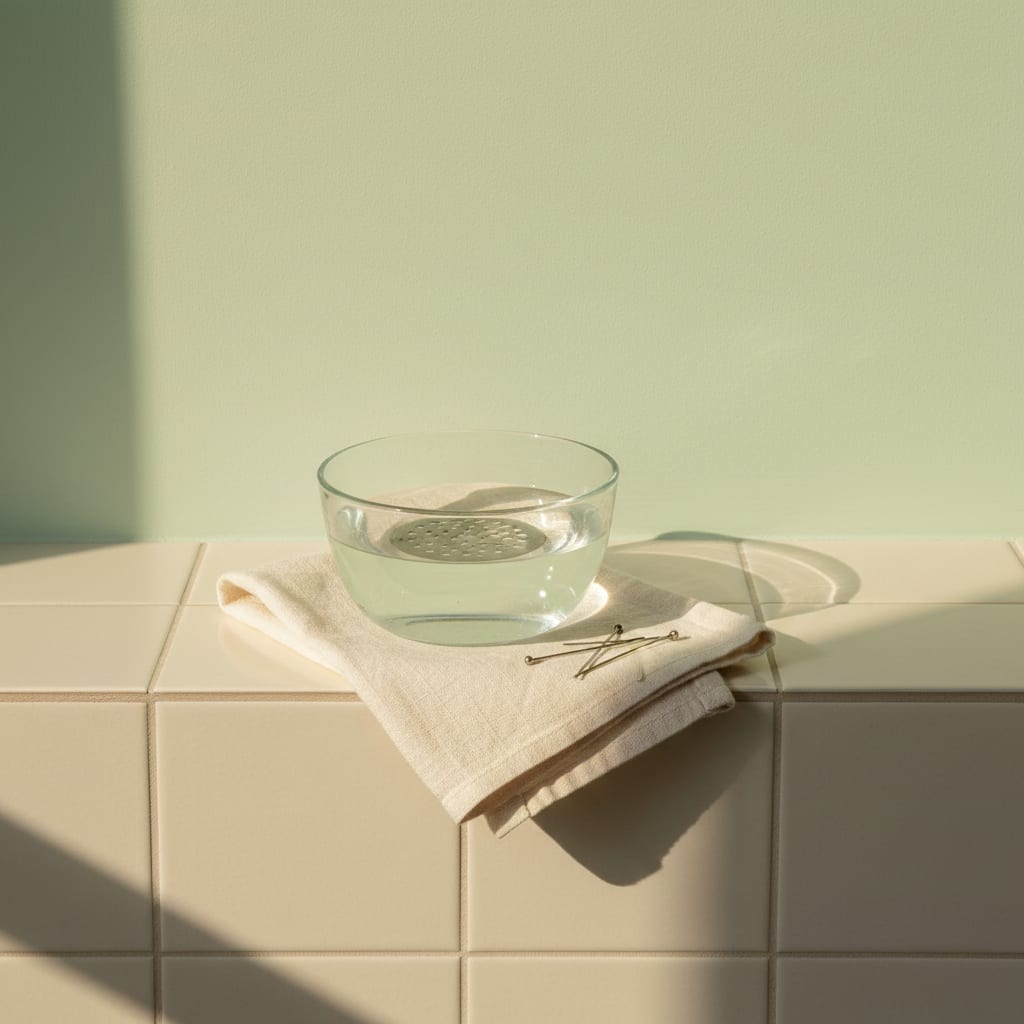
- Soak. “Fully submerge the shower head in a bowl of distilled white vinegar and let it soak overnight.”
- Clear the holes. “Use a needle or straightened paper clip to unblock any holes in the showerhead that are still clogged by mineral deposits.”
- Rinse and reassemble, then wrap fresh tape clockwise around the arm’s threads “two or three times”, press it in, and screw the head back on clockwise.
- Check for leaks. If the joint drips, the guide says to re-wrap the threads and tighten again carefully with the wrench.
Method 2: the bag of vinegar, for a head that will not come off
This is the card-file way, and it does the same job as the bowl, just without the wrench: the head sits in vinegar while it stays on the arm.
- Pour vinegar into a plastic bag, enough that the nozzle face will be under it.
- Lift the bag up around the head and tie it to the arm with a rubber band or twist tie. Check that the holes are actually submerged; a bag that only wets the rim cleans the rim.
- Leave chrome overnight. For special finishes, see the next section first.
- Take the bag off, run the shower hot for a minute to flush loosened scale, and rub the nozzles with your thumb or the toothbrush. Pin out any stubborn holes.
The bag method cannot reach the filter screen inside, which is why the bowl method is the better choice once or twice a year even if the bag is your monthly habit.
Check the finish before the long soak
Vinegar is an acid, and the finish on a showerhead is not always plain chrome. Moen’s faucet finish care and cleaning page sorts its finishes into groups, and the vinegar advice changes with the group:
- Its PVD “LifeShine” finishes, which include polished brass, brushed nickel, brushed gold and some bronzes: “A 50/50 blend of household vinegar and water can also be used, followed by rinsing with water and drying with a soft cloth.”
- Its electroplated finishes, including chrome and antique brass, and its powder coats, including oil rubbed bronze, matte black and the antique nickels: the same 50/50 blend “for a limited amount of time”, then a rinse and a dry.
- The powder coats also carry a list of things to avoid entirely: “abrasive sponges or steel wool”, alcohols, and “harsh cleansers (e.g., lime scale removers)”.
Moen adds that “failure to comply with these cleaning instructions may void Moen’s warranty.” It does not give a number of minutes. So on a brass, bronze, black or nickel head, our card says: half vinegar and half water, a short soak you watch rather than an overnight one, then rinse and dry. If you do not know your finish, look up the model or ask the maker before the overnight bowl.
A plain chrome rose on a fixed arm, and a jelly jar of vinegar held up to it with a dish towel tied round the pipe.
A freezer bag and a hair tie once a month. Twice a year the head comes off, the screen gets rinsed, and the threads get new tape.
How often to clean a shower head
Hard-water homes see it sooner. The monthly soak sits with the kettle in the vinegar guide, and Tuesday is bathroom day in the weekly cleaning schedule, so a quick thumb-rub of the nozzles fits there.
| Job | How often |
|---|---|
| Rub the nozzles with a thumb | Weekly, bathroom day |
| Vinegar bag on the head | Monthly, more in hard water |
| Off, screen out, bowl soak, new tape | Twice a year |
Never mix the vinegar with bleach or a bleach-based bathroom cleaner in the same bag, bowl or shower. Together they release chlorine gas.
FAQ: cleaning a showerhead with vinegar
How long should a shower head soak in vinegar?
The New Jersey health department soaks a removed head overnight in distilled white vinegar. For brass, bronze, black and other special finishes, Moen says a 50/50 vinegar and water blend “for a limited amount of time”, then rinse.
Can I clean a shower head without removing it?
Yes. Tie a bag of vinegar over it so the nozzles are submerged. It cannot reach the filter screen inside, so take it off once or twice a year.
Will vinegar damage my shower head?
It can, on some finishes. Moen allows a diluted blend on its finishes but warns that harsh cleaners such as lime scale removers and abrasive pads can damage them.
Why is my shower pressure still low after cleaning?
Check the filter screen inside the head. The NJ guide says many heads have one, and a soak with the head on the arm does not reach it.
Sources loaded and read on 2026-11-23: New Jersey Department of Health, Guidance for Removing and Cleaning a Shower Head (PDF, 200, 654KB); Moen, Faucet Finish Care and Cleaning (200, 72KB).
More cards under Old-Fashioned Methods in the file.