To clean baseboards without kneeling, do it in two passes from standing height. First, run the vacuum’s brush attachment along the top edge and the floor line to lift the dry dust. Then wipe with a long-handled flat mop or a baseboard tool and a microfiber pad dampened in warm water with a drop of dish soap, and follow with a dry pad. Dust first, damp second, dry last, one room at a time. In a house built before 1978, keep it damp and gentle: the EPA’s advice for old paint is to wipe, not scrub.
Why dust first, then damp
Baseboards collect two different kinds of dirt. The top ledge collects dry dust and hair, and the face collects scuffs, splashes and sticky handprints at toddler height. Wet a dusty ledge first and you make mud that dries in the corners. So the order matters:
- Dry dust off the top ledge and the crack at the floor.
- Damp-wipe the face and the ledge.
- Dry with a clean pad so no water sits on the paint or soaks into the floor seam.
That order is the same top-down, dry-then-wet rule that runs through the deep cleaning checklist, where baseboards sit on the room-by-room list.
What you need
- A vacuum with a soft brush attachment
- A flat mop with a long handle, or a baseboard tool on a pole
- Two or three microfiber pads or cloths
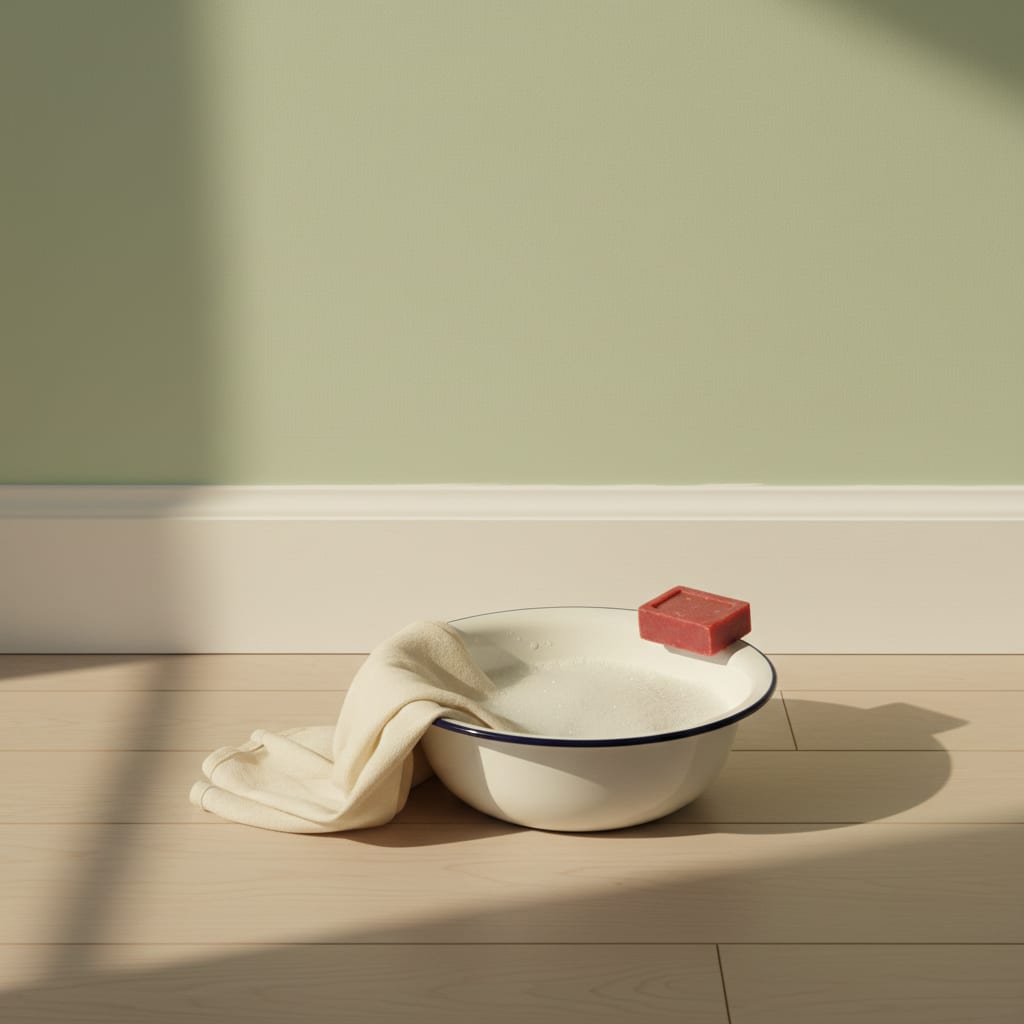
- A bucket of warm water with a small squeeze of dish soap
- An old toothbrush for corners and the gap behind door stops
The point of the long handle is the title of this post. A flat mop head held at an angle reaches the whole height of a standard baseboard from standing, and the pads come off for the wash. The worked example in this house is the Baseboard Buddy, a long-handled baseboard and molding tool sold with three reusable cleaning pads. Any flat microfiber mop works the same way.
Step 1: Vacuum the dust off
Use the soft brush attachment, not the bare hose and not a beater bar. Run it along the top ledge, then along the floor line, then into the corners. Lift the furniture-side runs last, after you have moved what you can.
If a room has a lot of fluff and pet hair, do this pass the day before. The damp pass goes much faster on a baseboard that is already dust-free.
Step 2: Damp-wipe with soapy water
Dip the pad, wring it until it is barely damp, and work along the board in arm-length sections. Press lightly on the ledge and use a little more pressure on the face. Rinse the pad in the bucket when it starts to gray.
For the scuffs that soap will not lift:
- Rubber-sole marks: a little more dish soap on a cloth, rubbed along the mark, not in circles.
- Crayon: the method in how to get crayon off walls works on painted trim too.
- Sticky patches: let a damp cloth sit on them for a minute before wiping.
Change the water when it turns cloudy. Dirty water is what leaves a gray film in the grooves of decorative baseboards.
Step 3: Dry it
Follow with a dry pad or cloth over the same section. Water left on the ledge runs down into the joint between the baseboard and the floor, and on wood floors that is the last place you want it.
Old houses: be gentle with the paint
A 1950s ranch house like this one may have lead paint somewhere under the newer coats. The EPA’s page on lead at home says homes built before 1978 are more likely to have lead-based paint, and that “if the lead-based paint is in good shape, it is usually not a problem.” It names surfaces “subject to constant friction like doors or window sills” as the places worn paint makes chips and dust, and baseboards take their share of knocks.
Its cleaning advice is the method above, slightly stricter:
- “Wipe down hard surfaces – such as countertops, window sills and door jambs – with a damp sponge, cloth or paper towel.”
- “Do not mop with a scrubber strip attached, power buff or use polishing machines or vacuums with beater bars, as they may wear away painted surfaces.”
- Where there is visible dust or debris from chipping or flaking paint, the EPA says to use only vacuums with HEPA filters, and not to dry sweep.
- If you see peeling, chipping, chalking or cracking paint, the EPA says to “clean the area immediately with a wet cloth, wipe, or sponge.”
So no scrubbing pads and no sanding off scuffs on old trim. The EPA’s “if you must sand” advice is a repair job, not a cleaning job: “wet the area first, sand the minimum area needed and clean up thoroughly.” If the paint on your baseboards is flaking, that is a question for a lead-safe painter, not for the cleaning caddy.
On her knees with a bucket and a rag every spring and fall, the whole house in one day, and a sore back to show for it.
Standing up, with the vacuum brush and a flat mop on a pole. Two rooms a month on floors week, so no baseboard waits longer than a season.
How often to clean baseboards
Most houses do not need baseboards cleaned every week. What they need is a rotation, so that no room goes a whole year.
| Where | How often | How |
|---|---|---|
| Kitchen and bathrooms | Monthly | Full three-step pass; splashes build up fastest |
| Entry and hallways | Monthly in winter, every other month in summer | Dust and damp; boots and wet coats mark the trim |
| Bedrooms and living rooms | Every two to three months | Dust pass monthly, damp pass when they look gray |
| Behind beds and big furniture | Twice a year | With the seasonal deep clean |
The monthly cleaning schedule already puts “baseboards in two rooms” in its floors-and-textiles week. That is the whole trick: two rooms at a time is twenty minutes, and the house comes round in a few months without a lost Saturday. The behind-the-furniture runs go on the seasonal list, when the beds get pulled out anyway.
Keeping baseboards clean longer
- Vacuum with the brush along the edges on your normal floor day. A ten-second pass along the floor line stops dust settling into a crust.
- Wipe splashes the day they happen, especially beside the toilet and under the kitchen sink.
- Put felt pads on chair legs that hit the trim.
- Mop the floor first, the baseboards second on the same day only if the floor is dry. A wet floor and a wet baseboard together leave a tide line.
FAQ: cleaning baseboards
What is the best thing to clean baseboards with?
Warm water with a small squeeze of dish soap on a microfiber pad, after vacuuming the dust off. Dry them afterwards. That cleans painted and finished trim without stripping it.
How do you clean baseboards without bending over?
Use a flat mop or a baseboard tool on a long handle for the damp pass, and the vacuum’s brush attachment for the dust. Both reach the whole baseboard from standing.
How often should you clean baseboards?
Kitchen and bathroom baseboards monthly, the rest every two to three months on a rotation, and behind furniture twice a year.
Is it safe to clean old painted baseboards?
Yes, if you keep it gentle. The EPA’s advice for homes built before 1978 is damp wiping, no scrubber strips or beater bars, a HEPA vacuum where paint is flaking, and no dry sweeping.
Source loaded and read on 2026-11-19: EPA, Reduce the Risk of Lead Exposure at Home (200, 109KB).
More cards under Cleaning Rhythms in the file.