Laundry Bluing: How to Use It for Whiter Whites
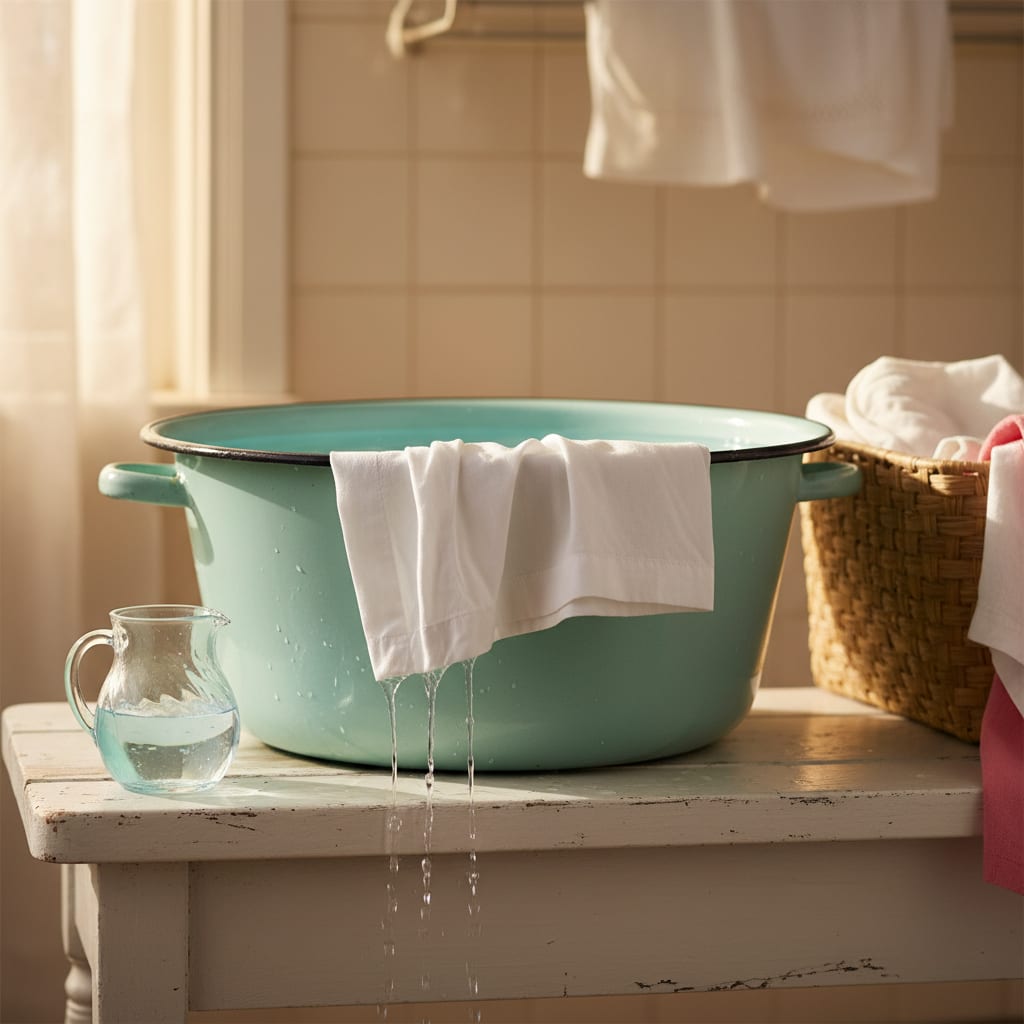
Laundry bluing is a very dilute blue liquid that makes grayed or yellowed whites look white again by adding a trace of blue, not by removing anything. To use it, the maker’s directions say to dilute a few drops, up to 1/4 teaspoon, in a quart or more of cold water first. Then add it to the wash water or the final rinse. The water should look light sky blue. Never pour it straight onto fabric. It isn’t a bleach or a stain remover, so get stains out first, and keep it out of a cycle that has bleach in it.
What bluing actually is
The brand used as the example here is Mrs. Stewart’s, whose first documented sale was in 1883. Its maker says the formula is proprietary, and describes it as “basically a blue iron powder suspended in water.” It works as an optical whitener, and the trick is about how eyes read color. In the maker’s words, “To our human eye, blue-white is the whitest white.”
The maker’s All About Bluing page explains why whites drift. Raw fabric is “far from white,” and manufacturers finish white sheets, towels and linens with bluing to get a bright product. That finish washes out over time. Soil, stains and repeated washing and drying wear the rest of the brightness down. Bluing puts a little blue back.
It used to be a fixed wash-day step. The maker describes three tubs, “the wash tub, the rinse tub, and the bluing tub.” A modern machine runs the first two, and the third is a pitcher.
How to use bluing, machine by machine
Every method starts the same way: dilute it in a container of cold water before it touches fabric. The details are from the maker’s instructions page.
| Machine | How much | How to add it |
|---|---|---|
| Top-loader, in the wash | About 1/4 teaspoon | Dilute in a 2-quart or gallon pitcher of cold water, then pour in |
| Top-loader, in the rinse | Less than 1/8 teaspoon | Same pitcher, poured into the rinse |
| Front-loader or HE, drawer stays open | 1/4 teaspoon or less, by load size | Dilute in 1-2 quarts, pour through the drawer once the drum has filled |
| Front-loader or HE, drawer locks | As above | Fill the bleach dispenser (wash) or softener dispenser (rinse) with diluted bluing |
| By hand | A few drops | Dilute in a quart or more, add to a sink of cool water, dip, air dry |
A few notes from the same page:
- On a top-loader, skip the softener dispenser. Most aren’t big enough to dilute the bluing properly, and spotting can follow. Once the bluing is diluted in the pitcher, you can pour it in with the clothes already in the drum.
- HE machines dilute it less, because they use less water. The maker suggests trying it on old sheets or rags before good bedding.
- Dip, don’t soak. “A simple dip or rinse is sufficient.”
- For heirlooms, repeat rather than add more. For an old christening gown or a crocheted tablecloth, wash and rinse it, dip it in pale blue water, and dry it, in sunlight if possible. Very old pieces may need two or three rounds. The maker says it is “better to repeat the procedure as directed than to use more bluing.”
A widely sold example is Mrs. Stewart’s Liquid Bluing.
The rules that keep it from going wrong
- More is not better. The maker says so in capitals. Too much leaves “a visible blue tint.”
- Not with bleach. The maker says “there is no worry of hazardous chemical reaction.” The reason to keep them apart is that bleach “encourages more permanent adherence of bluing to fabric.” Run them in separate loads.
- Not with fabric softener. The maker notes that most softener makers advise against combining softener with other laundry products.
- It can’t make cream into snow. If a piece started off-white or cream, bluing will brighten it a bit, but it “will NOT make the piece snow-white.”
- Give it a few loads. If the first try underwhelms, the maker’s FAQ points to hard water, the age of the fabric, past heavy bleaching and old stains. It suggests using bluing in every whites load and judging after three or four.
- Sensitive skin. The maker says it can’t guarantee against a reaction.
The maker also calls bluing safe for colored loads. Whites are what it’s for.
The wash-day card ends with one line: "Blue the whites, then out to the line." Every sheet and shirt went through the bluing tub, every week, whether it needed it or not.
A quart jar of cold water with a few drops stirred in, poured into the whites' final rinse. Sheets, pillowcases, white tees and dish towels, never the mixed loads. The bottle lives on the high shelf, because one spilled drop is a blue spot.
If it goes wrong: getting blue spots out
Splashed or overdosed bluing leaves blue spots or a tint. The maker says this is fixable, because bluing “is not a dye” and comes out of any washable fabric. Its removal method:
- Mix 1/2 cup household ammonia per quart of cold water, enough to float the clothes.
- Seal it. A 5-gallon bucket with a tight lid is best, because the ammonia has to stay in the water to work. Work somewhere ventilated, since the fumes irritate.
- Wait. It can take 24 hours or up to a couple of weeks, depending on the fabric and the spot. If the blue is fading, it’s working.
- Wash normally with a non-bleach detergent once the blue is gone.
Two warnings. Don’t reach for bleach, including oxygen bleach: the maker says bleach sets bluing in more permanently. And never let ammonia meet bleach. The Washington State Department of Health warns that bleach mixed with ammonia produces toxic chloramine gases. If you already tried bleach on the spot, rinse every trace of it out before the ammonia soak.
Why bluing won’t fix yellow pillowcases
This is the most common mismatch. A pillowcase that has gone yellow is usually holding body oil and sweat, and bluing doesn’t remove anything. In the maker’s words, “you are not removing anything from your fabric. Instead, you are adding a small amount of blue to the fabric.” Clean first, then blue.
The American Cleaning Institute’s stain guide treats it as a body-soil and perspiration job:
- Pretreat with a prewash stain remover or liquid detergent, or rub with bar soap, then wash in the hottest water the fabric allows.
- For yellowing from sweat, ACI says to apply ammonia to fresh stains or white vinegar to old ones, then rinse. Use one or the other, and never with bleach.
- For old stains, ACI suggests pretreating or soaking in a product containing enzymes, then washing.
- Oxygen bleach maintains, it doesn’t rescue. ACI’s laundry basics says color-safe oxygen bleaches “work best in maintaining whiteness, not in restoring it.”
When a whole stack of pillowcases and sheets has gone gray and filmy, the build-up is the problem, and laundry stripping is the reset. The stain-by-stain rescues are in old-fashioned stain removal. Bluing is the last step, on linen that’s already clean. To slow the drift next time, sort by soil as well as color: ACI says lightly soiled whites washed with heavily soiled things pick up soil from the wash water and “will slowly get grayer or yellower.” The sorting order is in how to do laundry.
FAQ: laundry bluing
Is laundry bluing the same as bleach?
No. Bleach removes color and stains. Bluing adds a trace of blue so white reads brighter. The maker calls it “NOT a dye-remover or a bleach,” and advises against using the two in the same cycle.
Can you use bluing in an HE or front-loading washer?
Yes, diluted. The maker suggests pouring diluted bluing through an unlocked dispenser drawer after the drum fills. If the drawer locks, put diluted bluing in the bleach or softener dispenser. Try it on old sheets first, because HE machines dilute it less.
How much bluing do you use?
A few drops up to 1/4 teaspoon, by load size, diluted in a quart or more of cold water. In a top-loader’s rinse, the maker says less than 1/8 teaspoon.
Does laundry bluing expire?
The maker says bluing has an indefinite shelf life. It’s water-based, though, so an old bottle may have concentrated a little through evaporation. Start with fewer drops.
Next cards in the file
Nursery Organization: Set Up for the 2am You
July 17, 2026
How to Make Towels Soft Again (Find the Cause First)
October 15, 2026
How to Wash Pillows (Down, Fiber and Foam)
October 11, 2026