To clean a bathtub, first work out what it is made of, because that decides how hard you can scrub. For every tub, the weekly clean is the same: run warm water, wipe the whole tub with a soft cloth and a little dish soap, rinse, and dry it. An old enamelled cast-iron or steel tub can take a baking soda paste now and then on stubborn marks. An acrylic or fiberglass tub takes no scouring powder and no green pad at all. Rust and dullness each have their own fix, below.
First, which tub do you have?
This matters more than the cleaner. Kohler’s care guide gives different rules for each material, and the rule that suits an old cast-iron tub will scratch a new acrylic one.
- Enamelled cast iron. Very heavy, and cold to the touch before the water warms it. Knock the side and it sounds solid, like stone. This is the classic tub of a 1950s house like ours. A fridge magnet sticks to it.
- Enamelled steel. It looks the same but is lighter and thinner. A knock sounds more hollow and metallic, and a magnet sticks.
- Acrylic or fiberglass. It feels warmer, gives slightly under a firm press, and sounds hollow and plasticky when knocked. A magnet will not stick. Most tubs fitted in the last few decades are one of these.
If you still have the installation papers, the maker’s care sheet beats anything here, including this card.
The weekly clean, every tub
This is the Tuesday bathroom job on the weekly cleaning schedule, done right after the toilet. It is the same on every material:
- Run a little warm water to loosen the film.
- Put a squirt of dish soap on a damp soft cloth or sponge and wipe the whole tub. Start with the rim and the wall line, then the sides, then the floor of the tub.
- Rinse with the hand shower or a jug of warm water.
- Dry it with an old towel. Kohler’s routine for both enamel and acrylic baths is to wipe them out with a soft cloth after each use. Drying is what keeps the soap scum and the hard-water film from building up in the first place.
Ten minutes a week keeps a tub from ever needing the deep clean. A tub left for a month gets a grey ring at the waterline, which is body oil and soap, and that is where the materials part ways.
Enamelled cast iron and steel: the old way works, gently
Kohler’s guide for enamelled cast-iron baths says to rinse thoroughly and wipe dry after each use, and to “use abrasive cleaners sparingly if needed for rare stubborn stains.” That one line is the whole card. A gentle scrub is allowed. A regular scrub is not.
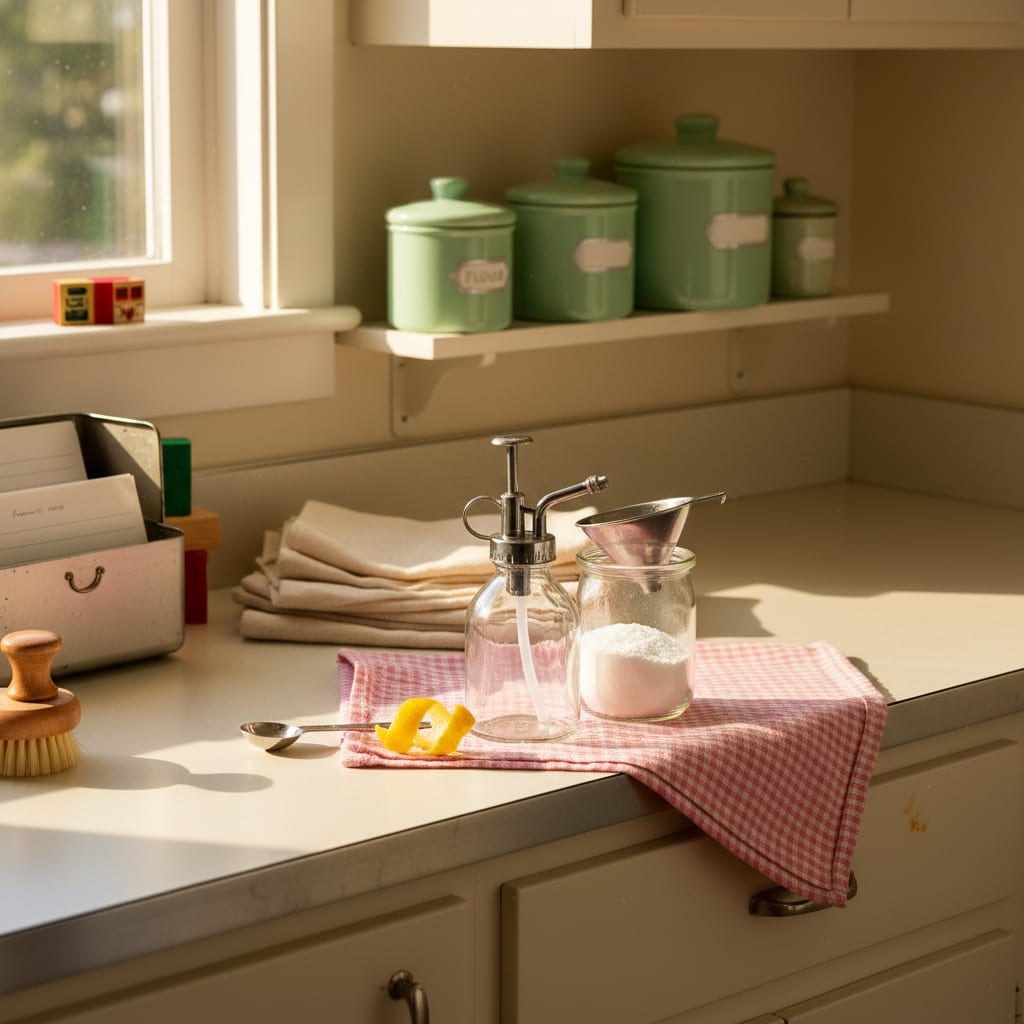
For a grey ring or a dull patch, use the paste on the baking soda card: baking soda with enough water to make a thick paste. Work it in with a damp cloth in small circles, rinse well and dry. Do it when the ring appears, not every week.
What Kohler rules out on enamel is just as clear: “Do not use steel wool, wire brushes or abrasive sponge pads.” It also warns against leaving staining materials on the enamel for long. In a house with children that means bath crayons, a wet flannel, and the hair dye somebody tried on a Sunday. Rinse them off the same day.
Rust. The orange stain under an old dripping tap is iron in the water, not damage to the tub. For enamelled cast iron, Kohler names Bon Ami powder or liquid, or a rust stain remover. It is a mild powder, and the most card-file product on the list. Make a paste, work it gently, rinse. Then fix the drip, or the stain comes back.
Slip-resistant floors. Some enamel tubs have a textured, slip-resistant panel. Kohler lists bathroom cleaners rather than powders for it, so wipe that panel with dish soap or a bathroom spray and a soft brush, not a scouring powder.
Acrylic and fiberglass: no scrubbing at all
Kohler’s rule for acrylic baths is short: “Do not use abrasive cleaners,” and avoid aerosol products on the bath surface. Baking soda counts as a mild abrasive, so on acrylic the paste is out. So are scouring powders, green pads and anything sold as a “scrub”. A scratched acrylic surface looks dull and holds the next ring faster.
For acrylic, the weekly dish-soap wipe and a towel dry is the whole routine. For a heavier film, use one of the non-abrasive bathroom cleaners Kohler lists, sprayed on, wiped with a soft cloth, and rinsed straight away. For fiberglass, read your own tub’s care sheet, and treat it as gently as acrylic until you have.
Dull or lightly scratched acrylic. This is the one place a bit of elbow grease is allowed. Kohler’s restore method is to rub white automotive polishing compound into the dull areas with a clean cloth, wipe off the residue, and follow with a coat of white automotive paste wax. Its own warning comes with it: do not wax the areas where you stand. A waxed tub floor is a slippery tub floor. Do the walls and the rim, never the base.
The taps, the grout and the drain
The tub is rarely the dirtiest part of the bath. The chalky crust on the taps is hard water, and the hard water stains card covers it finish by finish. The grout line where the tub meets the wall gets the brush and paste on the grout card. Keep vinegar off it. I keep it off the enamel too, since Kohler’s list for its baths has no acid products on it. Pull the hair out of the drain stopper while you are down there.
A jetted tub has one more job. Kohler’s method for flushing a whirlpool is to fill the bath with warm water 2 inches above the highest jets, and add 2 teaspoons of low-foaming powder dishwasher detergent and 20 ounces of household bleach. Run the jets for 5 to 10 minutes, then drain and rinse, twice a month or more depending on use. Bleach and detergent only, and nothing else in that water. Never add a second cleaner to bleach.
Scouring powder and a stiff brush on the cast-iron tub every Saturday, whether it needed it or not.
Dish soap, a soft cloth and an old towel after the children's bath, the baking soda paste only when the ring shows, and Bon Ami for the rust under the tap.
FAQ: how to clean a bathtub
What is the best way to clean a bathtub?
Wipe it with warm water, a soft cloth and dish soap, rinse, and dry it. Kohler recommends wiping both enamel and acrylic baths with a soft cloth after each use. Gentle cleaners suit every material.
Can I use baking soda on an acrylic tub?
Not as a scrub. Kohler says not to use abrasive cleaners on acrylic baths, and baking soda is a mild abrasive. Use dish soap or a non-abrasive bathroom cleaner instead.
How do I get rust stains out of an old enamel tub?
Kohler lists Bon Ami (powder or liquid) or a rust stain remover for enamelled cast iron. Work it gently and rinse. Never use steel wool or a wire brush, which scratch the enamel.
How often should you clean a bathtub?
Weekly for the full clean, with a quick wipe and towel dry after baths in between. That stops soap scum and the waterline ring from building up.
Sources loaded and read on 2026-11-27: KOHLER Care and Cleaning Guide, Bathing section (acrylic, enamelled cast iron, Lithocast and whirlpool flushing; PDF, 200, 1.08MB, via images.thdstatic.com). Kohler’s own care web pages returned 403 to curl that day. The tub-type tests (knock, warmth, magnet) are household checks, not from the guide.
More cards under Cleaning Rhythms in the file.